


Table of Contents
- Are Essential Oils Safe for Children?
- Top 10 Must-Have Essential Oils for Kids
- 1. Lavender (Lavandula angustifolia)
- 2. Roman Chamomile (Chamaemelum nobile)
- 3. German Chamomile (Matricaria chamomilla)
- 4. Sandalwood (Australian, Hawaiian or East Indian)
- 5. Sweet Orange (Citrus sinensis)
- 6. Vetiver (Vetiveria zizanioides)
- 7. Cedarwood (Atlas, Virginian, Himalayan or Texas)
- 8. Frankincense (Boswellia species)
- 9. Spearmint (Mentha spicata)
- 10. Tea Tree (Melaleuca alternifolia)
- What About Eucalyptus for Kids?
- How to Use Essential Oils Safely with Children
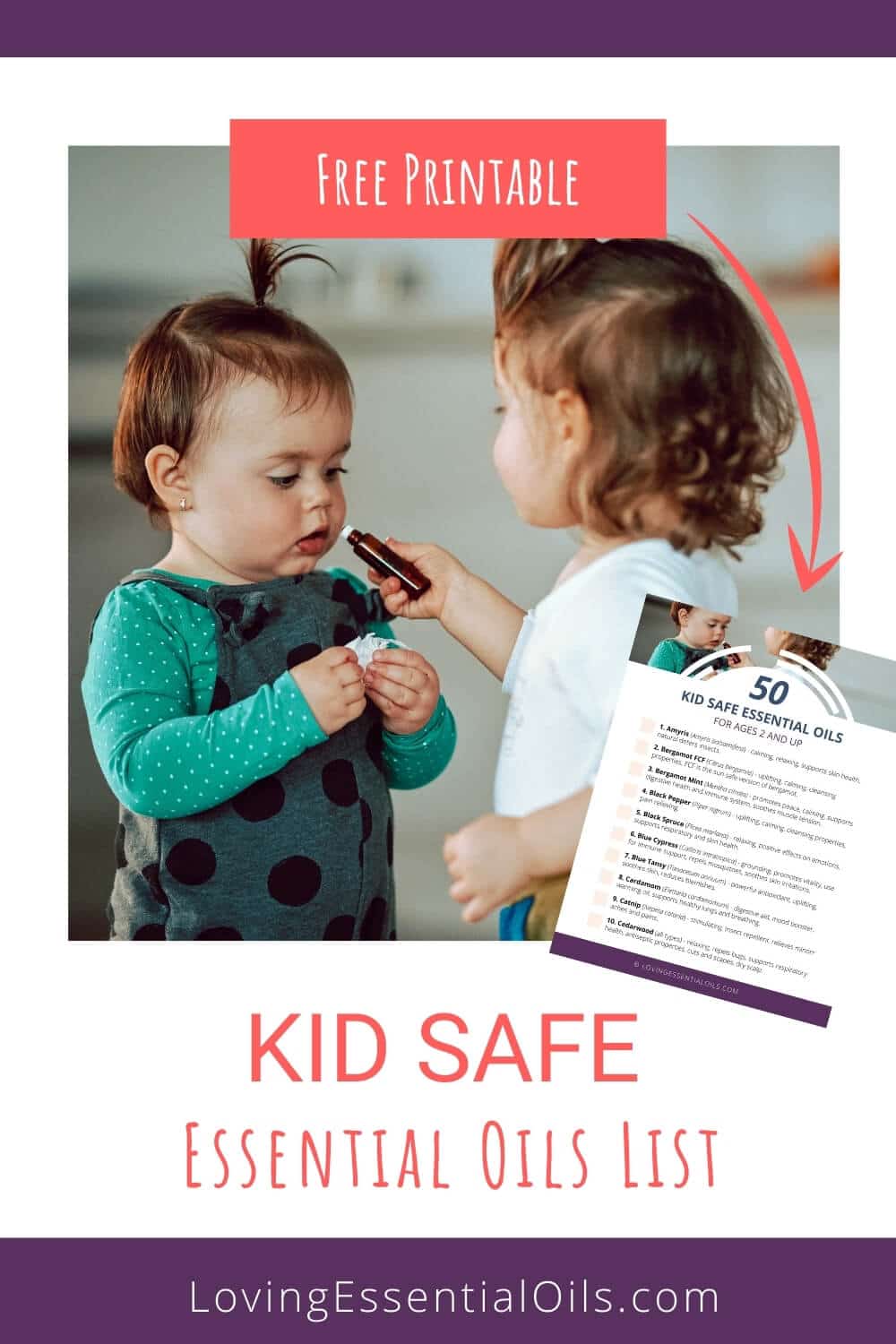
- 50 Kid Safe Essential Oils List
- Free Printable: Kid Safe Essential Oils List
- 7 Kid Friendly Essential Oil Combinations
- FAQs
Updated October 2026
Kid safe essential oils are gentle oils that are generally considered safe for children 2 and up when they're diluted to 1% for skin or diffused for short periods. Some of the best are lavender, Roman chamomile, sweet orange, cedarwood and frankincense. I don't use essential oils with babies under 2 without guidance from a trained aromatherapist or your pediatrician. Below you'll find my top 10 oils for kids, how to use them safely, a kids' dilution chart, my full list of 50 kid safe essential oils and a free printable. Jump to the list of 50 oils.
Kids and essential oils: my ground rules
- Ages 2 and up only, unless a professional guides you.
- Dilute to 1% for skin. That's 3 drops per tablespoon of carrier oil.
- Diffuse for 30 to 60 minutes at a time in a ventilated room, then take a break.
- No peppermint or rosemary under 6, and no eucalyptus radiata or globulus under 10.
- Keep every bottle out of reach, and never let children ingest essential oils.
Are Essential Oils Safe for Children?
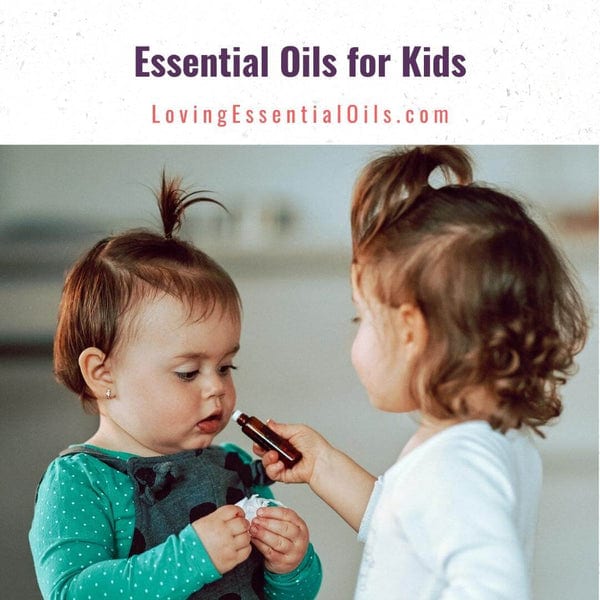
Some essential oils can be used safely with children, and some should be avoided. Children have smaller bodies, thinner and more sensitive skin, and airways that are more easily irritated, so they need gentler oils and lower dilutions than adults.
The oils on this list are ones I'm comfortable using with children 2 and up, used the right way. Every child is different, so start slowly, patch test, and stop using any oil that seems to bother your child. Kids love the fun of aromatherapy too, and it can be a nice part of back-to-school routines.
Top 10 Must-Have Essential Oils for Kids
These are the 10 kid-friendly oils I'd reach for first. All are for ages 2 and up.
1. Lavender (Lavandula angustifolia)
Lavender is my number one oil for kids. Its soft floral scent is traditionally used to create a calm, peaceful feeling, so it's perfect for bedtime routines and quiet time. Diffuse it in the bedroom before sleep, or add it to a 1% body oil for a gentle bedtime massage.
2. Roman Chamomile (Chamaemelum nobile)
Roman chamomile has a sweet, apple-like scent and is one of the gentlest oils there is. It pairs beautifully with lavender for a calming bedtime blend, and a little goes a long way.
3. German Chamomile (Matricaria chamomilla)
German chamomile is deep blue and has a sweet, herbaceous scent. It's traditionally used in gentle skin care, and I like it in a diluted body oil or a bath for dry skin. Learn more in my German chamomile spotlight.
4. Sandalwood (Australian, Hawaiian or East Indian)
Sandalwood has a soft, warm, woody scent that's traditionally used to promote calm. It's lovely after a bad dream or a big day. The types share a similar scent profile and can be used interchangeably. Try one of my sandalwood diffuser blends.
5. Sweet Orange (Citrus sinensis)
Kids love the happy, sweet scent of orange. It's traditionally used to lift the mood and is a great everyday diffuser oil for playrooms and homework time. Sweet orange isn't known to make skin sun-sensitive. Read more about citrus essential oils.
6. Vetiver (Vetiveria zizanioides)
Vetiver has a deep, earthy, smoky scent that's traditionally used to feel grounded and settled. It's thick and strong, so 1 drop in a blend is plenty. Diffusing vetiver with lavender or orange makes a lovely wind-down blend.
7. Cedarwood (Atlas, Virginian, Himalayan or Texas)
Cedarwood has a warm, woody, comforting scent that's traditionally used for relaxation. It's one of my favorites for kids' bedtime blends. Read more about cedarwood essential oil for sleep.
8. Frankincense (Boswellia species)
Frankincense has a sweet, earthy, resinous scent that's traditionally used to feel calm and grounded. Try it with lavender or Roman chamomile at bedtime. For skin, I keep frankincense at 2% or less for adults and 1% for kids.
9. Spearmint (Mentha spicata)
Spearmint is the kid-friendly mint. It's sweeter and gentler than peppermint, which I don't use with children under 6. It's traditionally used to feel refreshed and alert, so it's nice for homework time. Read all about spearmint essential oil.
10. Tea Tree (Melaleuca alternifolia)
Tea tree has a fresh, earthy scent, and I use it most in kid-friendly cleaners and for freshening sports gear. Use fresh oil, since older tea tree is more likely to irritate skin, and keep it away from cats. See my tea tree essential oil guide.
What About Eucalyptus for Kids?
Most eucalyptus oils, like Eucalyptus radiata and Eucalyptus globulus, are high in 1,8-cineole. Cineole-rich oils can be too strong for young children's breathing, so I don't use those around kids under 10.
Two eucalyptus species are different. Eucalyptus dives (peppermint eucalyptus) and lemon eucalyptus (Eucalyptus citriodora) contain very little 1,8-cineole, so they're generally considered kid-friendly for ages 2 and up. Always check the botanical name on the label, because "eucalyptus" alone usually means radiata or globulus. Learn more in my Eucalyptus dives guide.

How to Use Essential Oils Safely with Children
Always Dilute for Skin
Never apply undiluted essential oils to a child's skin. For kids 2 and up, I use a 1% dilution in a carrier oil like jojoba or fractionated coconut oil.
| Kids' dilution (1%) | Drops of essential oil |
| 1 teaspoon (5 ml) carrier oil | 1 drop |
| 1 tablespoon (15 ml) carrier oil | 3 drops |
| 10 ml roller bottle | 2 drops |
For more sizes, see my dilution chart.
Bath Time
Never add undiluted essential oils to bath water. Oil and water don't mix, so the drops float on top and can land on your child's skin full strength. Stir 1 to 2 drops into a tablespoon of carrier oil or unscented castile soap first, then add it to the bath. Oils make the tub slippery, so help your child in and out.
Diffuse Safely
Diffusing is one of the easiest ways for kids to enjoy aromatherapy. Use a well-ventilated room, start with fewer drops than you'd use for yourself, and diffuse for 30 to 60 minutes at a time. Keep the diffuser out of reach and away from your child's face. Here's more on how long to diffuse essential oils.
Aroma Jars and Inhalers
Aroma jars are a fun alternative to a diffuser. Fill a small jar with cotton balls, add a few drops of a kid-safe oil and close the lid. When your child wants a scent break, they open the jar, take a few breaths and close it again. Kids love making their own with your supervision. You can do the same with essential oil inhalers.
Keep Oils Away From
- Eyes, the inside of the nose and ears, the mouth and other sensitive areas
- Little hands. Store every bottle out of reach, ideally up high or locked. Swallowing even a small amount of essential oil can be dangerous for a child.
- Pets. Diffuse in rooms pets can leave, and take extra care with cats and birds.
Do a Skin Patch Test
Before using a new oil on a larger area of your child's skin, do a patch test and check the spot over 24 to 48 hours. Stop using any oil that causes redness, itching, a headache, nausea or breathing trouble.
Watch for Sun-Sensitive Citrus
Some citrus oils, like cold-pressed lemon, lime and grapefruit, can make skin sensitive to the sun. Keep those for the diffuser, or keep your child's skin out of the sun for 12 hours after use. Learn more about photosensitive essential oils.
Use Fresh Oils
Citrus, pine, fir, spruce and tea tree oils oxidize faster than most, and old oils are more likely to irritate skin. Here's how to tell if essential oils have expired.
Essential Oil Guide for Beginners - Getting Started
$ 5.99
Beginner's Essential Oil Guide - Download/Printable Learn how to safely and effectively make essential oils a part of your everyday life. Everything you need to know about essential oils. If you have ever been around anyone who loves using essential… Read More
50 Kid Safe Essential Oils List
These oils are generally considered safe for children ages 2 and up when diffused or diluted to 1% for skin. Every child is different, so stop using any oil that causes a reaction. Oils marked with a sun note can make skin sun-sensitive.
- Amyris (Amyris balsamifera): soft, woody scent; traditionally used for relaxation.
- Bergamot FCF (Citrus bergamia): bright citrus scent; the "FCF" version is made to be sun-safe. Regular bergamot is sun-sensitizing.
- Bergamot Mint (Mentha citrata): soft, floral mint scent; traditionally used to feel calm. Not the same as peppermint.
- Black Pepper (Piper nigrum): warm, spicy scent; a nice accent in cozy blends.
- Black Spruce (Picea mariana): fresh forest scent; traditionally used to feel grounded.
- Blue Cypress (Callitris intratropica): woody, slightly sweet scent; traditionally used for grounding.
- Blue Tansy (Tanacetum annuum): sweet, herbal scent; traditionally used in gentle skin care.
- Cedarwood (Atlas, Virginian, Himalayan or Texas): warm, woody scent; a bedtime favorite.
- Chamomile, German (Matricaria chamomilla): sweet, herbal scent; traditionally used in gentle skin care.
- Chamomile, Roman (Chamaemelum nobile): sweet, apple-like scent; traditionally used for calm and bedtime.
- Cilantro (Coriandrum sativum, leaf): fresh, green, herbal scent.
- Citronella (Cymbopogon winterianus): fresh, lemony-grassy scent; popular for outdoor time. Can irritate skin, so keep it at 1% or less and patch test.
- Clary Sage (Salvia sclarea): soft, herbal scent; traditionally used to feel relaxed.
- Clementine (Citrus clementina): sweet, juicy citrus scent; traditionally used to lift the mood.
- Copaiba (Copaifera officinalis): soft, woody, balsamic scent; traditionally used for relaxation.
- Coriander (Coriandrum sativum, seed): sweet, spicy scent; traditionally used for calm.
- Cypress (Cupressus sempervirens): fresh, clean, woody scent.
- Douglas Fir (Pseudotsuga menziesii): bright, sweet forest scent; traditionally used to feel refreshed.
- Eucalyptus, Lemon (Eucalyptus citriodora): fresh, lemony scent; very low in 1,8-cineole, unlike most eucalyptus.
- Eucalyptus Dives (Eucalyptus dives): minty-eucalyptus scent; very low in 1,8-cineole, unlike radiata and globulus.
- Fir Balsam (Abies balsamea): sweet, woodsy, holiday scent.
- Frankincense (Boswellia species): warm, resinous scent; traditionally used for calm and grounding.
- Geranium (Pelargonium graveolens): rosy, green floral scent; traditionally used in skin care.
- Ginger (Zingiber officinale): warm, spicy scent; cozy in blends.
- Grapefruit (Citrus x paradisi): bright, juicy citrus scent; traditionally used to uplift. Sun note: cold-pressed grapefruit can be sun-sensitizing.
- Helichrysum (Helichrysum italicum): warm, honey-herbal scent; traditionally used in skin care.
- Ho Wood (Cinnamomum camphora ct. linalool): soft, floral-woody scent; traditionally used to relax. Only the linalool chemotype is kid-safe. Camphor-type oil from this plant is not.
- Juniper Berry (Juniperus communis): fresh, woody, slightly fruity scent.
- Lavender (Lavandula angustifolia): soft floral scent; traditionally used for calm and sleep routines.
- Lemon (Citrus x limon): bright, clean citrus scent; kids love it. Sun note: cold-pressed lemon is sun-sensitizing.
- Lime (Citrus x aurantifolia): zesty citrus scent; great for freshening the air. Sun note: cold-pressed lime is sun-sensitizing. Steam-distilled lime isn't.
- Mandarin (Citrus reticulata): sweet, gentle citrus scent; traditionally used for calm.
- Neroli (Citrus aurantium, flower): sweet, honeyed floral scent; traditionally used to soothe.
- Orange (Citrus sinensis): sweet, cheerful citrus scent; a kid favorite.
- Palmarosa (Cymbopogon martinii): sweet, rosy-grassy scent; traditionally used in skin care.
- Patchouli (Pogostemon cablin): rich, earthy scent; traditionally used for grounding.
- Petitgrain (Citrus aurantium, leaf): fresh, green, floral-citrus scent; traditionally used to feel balanced.
- Pine (Pinus sylvestris): crisp forest scent; traditionally used to feel refreshed. Use fresh oil.
- Pink Pepper (Schinus molle): light, spicy-fruity scent.
- Rose (Rosa x centifolia or Rosa damascena): rich floral scent; traditionally used for comfort. Rose absolute works too.
- Rose Geranium (Pelargonium roseum): sweet, rosy scent; traditionally used to feel balanced.
- Sandalwood (Australian, Hawaiian or East Indian): soft, creamy, woody scent; traditionally used for calm and sleep.
- Siberian Fir (Abies sibirica): fresh, sweet, woodsy scent; lovely in winter blends.
- Spearmint (Mentha spicata): sweet, gentle mint scent; the kid-friendly mint.
- Sweet Marjoram (Origanum majorana): warm, herbal scent; traditionally used for relaxation.
- Tangerine (Citrus reticulata): sweet, tangy citrus scent; traditionally used for calm and cheer.
- Tea Tree (Melaleuca alternifolia): fresh, earthy scent; great in kid-friendly cleaners. Use fresh oil and keep away from cats.
- Vetiver (Vetiveria zizanioides): deep, earthy, smoky scent; traditionally used for grounding.
- Ylang Ylang (Cananga odorata): rich, sweet floral scent; traditionally used to relax. Very strong, so 1 drop is plenty.
- Yuzu (Citrus junos): bright, tart citrus scent; traditionally used to uplift. Sun note: treat cold-pressed yuzu as possibly sun-sensitizing.
Free Printable: Kid Safe Essential Oils List
Download my free printable Kid Safe Essential Oils List. Keep it on the fridge or in your essential oil box for quick reference.

7 Kid Friendly Essential Oil Combinations
Here are some of my favorite two-oil combinations for kids 2 and up. Use them in the diffuser, an aroma jar or an inhaler, or in a 1% body oil. For more ideas, see my favorite essential oil combinations.
- No Tears: black spruce and bergamot FCF
- Smile: lemon and orange (diffuser only, since lemon is sun-sensitizing)
- Warm Hug: tangerine and ginger
- Focused Mind: spearmint and orange
- Sweet Dreams: lavender and cedarwood
- Calm and Cozy: frankincense and Roman chamomile
- Spark Imagination: clary sage and vetiver
With supervision, let your child choose which oils to combine. It's a fun way to learn what scents they love.
Share on Pinterest
More Posts for Families
- 5 Essential Oil Blends for Back to School
- Essential Oils for Beginners
- 7 Essential Oil Safety Tips
- Diluting Essential Oils Guide with Dilution Chart
- Eucalyptus Dives Essential Oil Uses
Ready to make kid-friendly blends? My Aromatherapy Supply Kits have the roller bottles and supplies you need, and my free essential oil guides are full of family-friendly ideas.