

Table of Contents
Rosemary essential oil is a lovely emotional support oil for stressful seasons and big life changes. Its clear, herbaceous scent can help you feel more focused, hopeful and grounded when life feels overwhelming. Below you'll find how to use rosemary for emotions, plus 3 simple rosemary diffuser blends.
Our emotions are complex, and no single oil can fix a hard season. But scent can be a gentle, comforting part of how you care for yourself while you work through it.
This post contains affiliate links. If you buy through them, I may earn a small commission at no extra cost to you.
Rosemary Essential Oil For Emotional Support
Rosemary is often used during times of pressure and transition, when there is a lot to process and it feels like too much to handle.
In Daniel Macdonald's book Emotional Healing With Essential Oils, rosemary is called "The Oil of Knowledge & Transition."
Many people find that breathing in rosemary helps them feel clearer as they move through a hardship. It reminds us that we don't have to understand everything right away, and to trust what we know is true.
Rosemary's bright scent can help you feel hopeful and self-assured in difficult times, and grounded in the knowledge that this, too, shall pass.
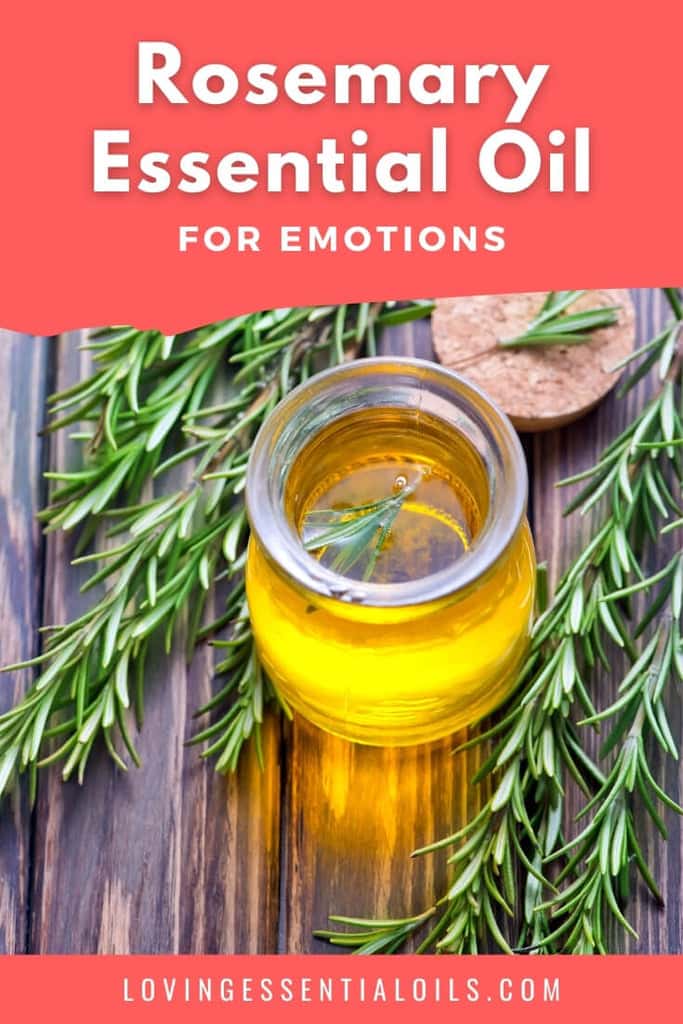
How to Use Rosemary Essential Oil for Emotions
The key to using rosemary for your emotions is to smell it. Your sense of smell is processed close to the parts of the brain involved in emotion and memory, including the amygdala. That's why scents can bring back feelings and memories so quickly.
Have you ever smelled pumpkin pie and been taken right back to a Thanksgiving with your family? That's your sense of smell and memory working together. Try one of these simple ways to use rosemary:
- Tissue or cotton ball: Add 2 to 3 drops of rosemary to a tissue and breathe in the scent. Keep it in your pocket or on your desk and use it as needed throughout the day.
- Aromatherapy inhaler: Add 10 to 15 drops of rosemary to the wick of a personal inhaler for a portable, mess-free option.
- Diluted roll on: Add 4 drops of rosemary to a 10 ml roller bottle and top with jojoba or another carrier oil. Roll on the back of your neck or behind your ears. Never apply undiluted oils to your skin.
- Diffuser: Diffuse rosemary by itself or with other oils. Try the emotional support blends below, or find 10 more recipes in my rosemary diffuser blends.
Essential Oils for Beginners Guide
Learn all about essential oils and how to use them safely and effectively in this Beginner's Guide, written by Jennifer Lane, Loving Essential Oils owner and Certified Aromatherapist:
Rosemary Diffuser Blends for Emotions
Add one of the recipes below to your diffuser with the recommended amount of water. I like to use a diffuser with a 100 to 200 ml water tank, but you can use whatever size you prefer. Want more ideas? See all 10 rosemary diffuser blends for focus, energy and a fresh home.
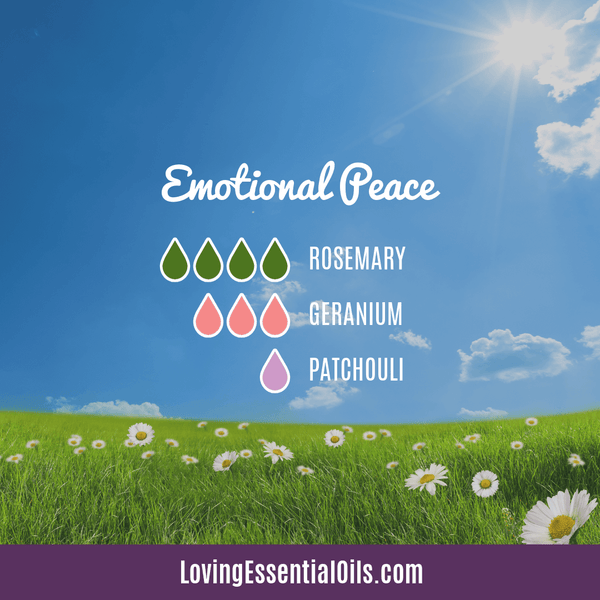
1. Emotional Peace Diffuser Blend
A soft, floral and earthy blend for peaceful moments.
- 4 drops Rosemary
- 3 drops Geranium
- 1 drop Patchouli
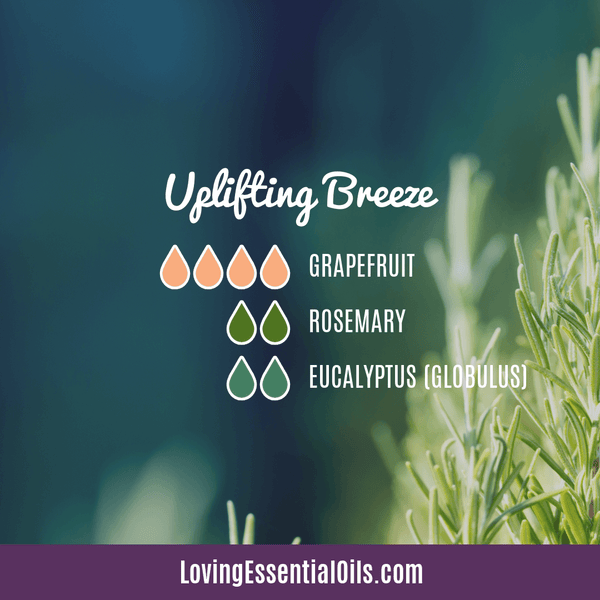
2. Uplifting Breeze Diffuser Blend
Diffuse this bright, uplifting blend in the morning before a big day. Because it contains eucalyptus, it is for adults and older children only.
- 4 drops Grapefruit
- 2 drops Rosemary
- 2 drops Eucalyptus
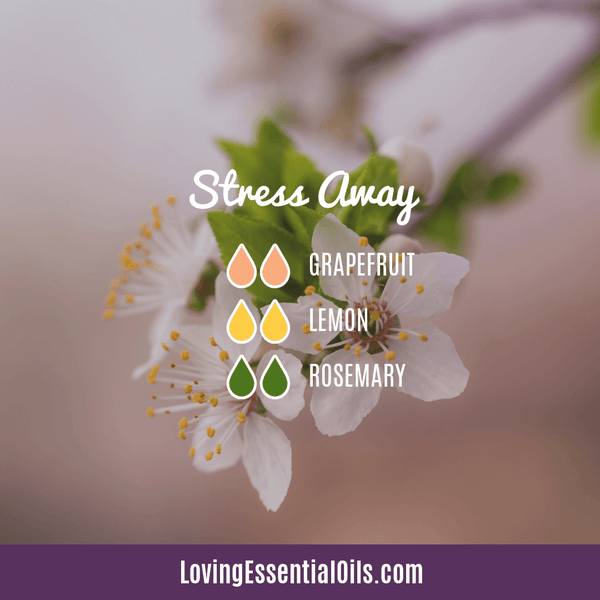
3. Stress Away Diffuser Recipe
When stress starts to take over your thoughts, diffuse this fresh citrus and rosemary blend and take a few slow, deep breaths.
- 2 drops Grapefruit
- 2 drops Lemon
- 2 drops Rosemary
General Essential Oil Precautions
Never use essential oils undiluted, in the eyes or on mucous membranes. Do not take them internally unless working with a qualified practitioner. Keep out of reach of children and pets.
Avoid diffusing rosemary around children under 6, since it is high in 1,8-cineole, which can affect young children's breathing. Use essential oils with extreme caution on children, and be sure you have researched the oil and that it is safe for kids. Plant Therapy clearly labels its oils "KidSafe" on the bottle if the oil can be used for children ages 2–10.
If applying an essential oil topically, you may perform a small patch test first, using 1 to 2 drops in a teaspoon of carrier oil like jojoba oil. Read more about patch testing here.
If you are pregnant, breastfeeding, epileptic or under a doctor’s care, consult your physician. Read more about essential oil safety here.
Essential oils can be a comforting support, but they are not a replacement for professional care. If you are struggling with grief, anxiety or depression, please reach out to your doctor or a counselor.
Essential Oils for Emotions and Emotional Healing

$ 0.00
Essential Oils and Emotions Guide Do you ever wonder why our emotions often dictate how we feel physically? Learn how to use Essential Oils to support your emotional wellness. You will also find out about the connection between emotions and… Read More
Share on Pinterest