
Table of Contents
Updated November 2026
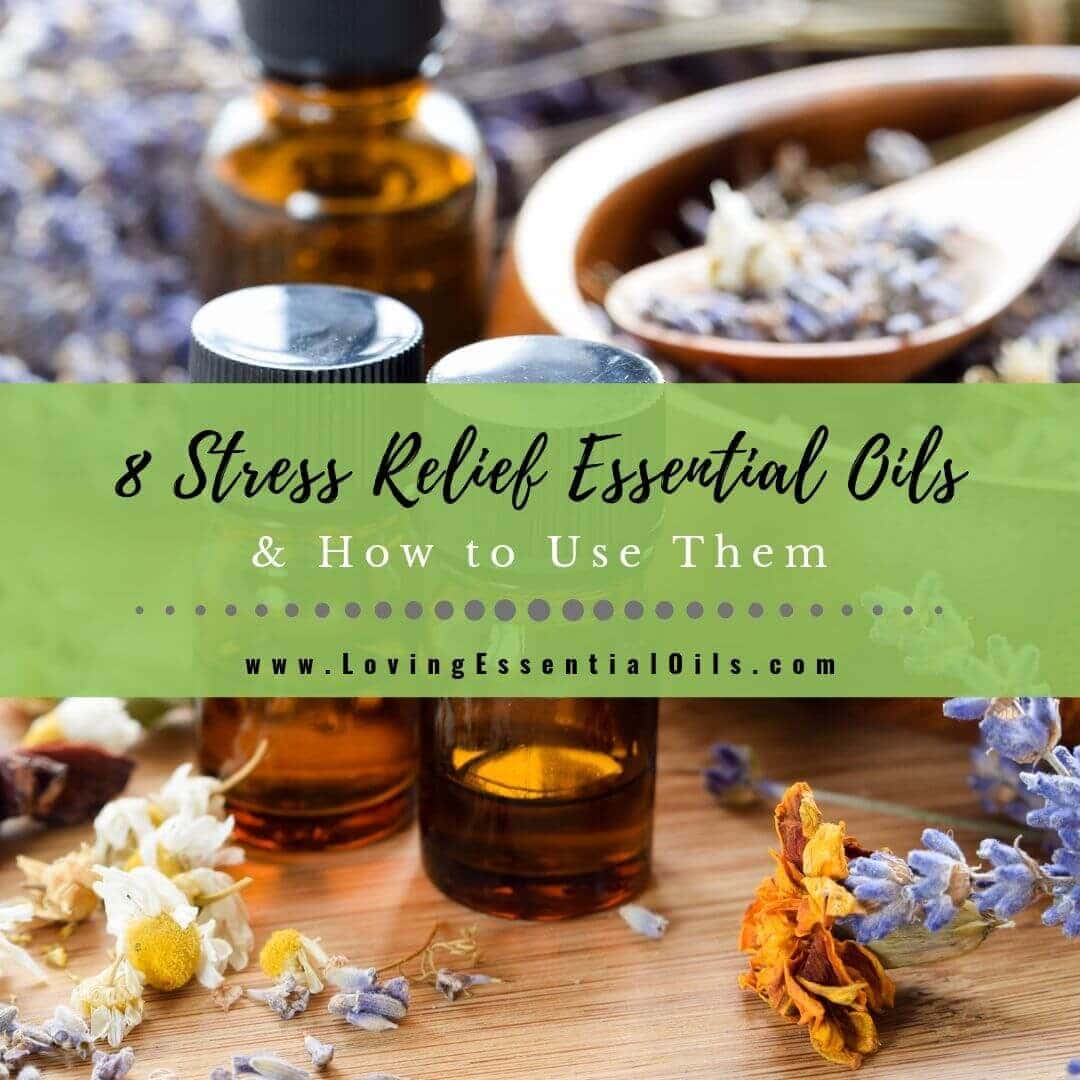
The best stress relief essential oils are soft, comforting scents like lavender, sweet orange, Roman chamomile, and frankincense. Breathing them in won't make stress go away, but a scent you love and a few slow breaths can bring a calmer, more settled feeling at the end of a long day. Below are my top 8, how to use each one, and an easy diffuser blend. Jump to the blend.
For more moods and blends, see my full guide to essential oils for emotions.
This post contains affiliate links. If you buy through them, I may earn a small commission at no extra cost to you.

What Essential Oil Helps with Stress?
Finding small, everyday ways to manage stress is one of the best things you can do for yourself. Scent is an easy one to add. When you breathe in an essential oil, your nose sends signals straight to the limbic system, the part of the brain tied to emotion and memory (Harvard Gazette). That's why a familiar, comforting scent can change how a moment feels.
Lavender and Roman chamomile are the classic calming choices, and citrus oils like sweet orange and bergamot add a bright, cheerful lift. Stress relief essential oils are a natural comfort measure alongside healthy habits and what your doctor recommends.
8 Stress Relief Essential Oils
Stress is something everyone deals with, but sometimes it can feel overwhelming. The key is finding what works for you and making it part of your daily routine. Here are the top 8 stress relief essential oils I like to use.
| Oil | Scent | Ages |
|---|---|---|
| Sweet orange | Cheerful, sweet citrus | 2+ |
| Lavender | Soft floral | 2+ |
| Magnolia | Soft, creamy floral | 5+ |
| Roman chamomile | Sweet apple | 2+ |
| Frankincense | Warm, lemony resin | 2+ |
| Himalayan cedarwood | Soft, sweet wood | 5+ |
| Sweet marjoram | Warm, gentle herb | 5+ |
| Rose | True rose | 5+ |
1. Sweet Orange Essential Oil
- Citrus sinensis · Ages 2+
- A citrus scent like a freshly cut orange, cheerful and bright
- Gentle enough to use in blends for children
- Leaves you feeling relaxed and uplifted
2. Lavender Essential Oil
- Lavandula angustifolia · Ages 2+
- A soft floral with a calm, settled feeling
- A favorite at bedtime
3. Magnolia Essential Oil
- Michelia alba · Ages 5+
- A soft, creamy floral that makes a room feel calm and serene
- Its scent is high in linalool, the same compound found in lavender
- Read More: Magnolia Essential Oil Recipes and Uses
4. Roman Chamomile Essential Oil
- Chamaemelum nobile · Ages 2+
- A sweet, apple-like scent with a soothing, end-of-the-day feel
- Skip it if you have a ragweed or daisy allergy
5. Frankincense Essential Oil
- Boswellia carterii · Ages 2+
- A warm, lemony resin, lovely for meditation and quiet moments
- Brings a centered, steady feeling
6. Himalayan Cedarwood Essential Oil
- Cedrus deodara · Ages 5+
- A soft, sweet wood with a steady, secure feeling during busy seasons
- Nice for meditation and prayer
- Read More: Himalayan Cedarwood
7. Sweet Marjoram Essential Oil
- Origanum majorana · Ages 5+
- A warm, gentle herb that feels cozy before bed
- Comforting on heavy days
- Read More: Sweet Marjoram Spotlight
8. Rose Essential Oil
- Rosa damascena (rose otto or rose absolute) · Ages 5+
- A sweet, true rose scent that feels warm and comforting
- Rose is strong on skin, so keep it to 1 drop in a 10 ml roller

How to Use Stress Relief Essential Oils
Here are easy ways to work these oils into your daily routine. Check the age for each oil before you start.
| Method | How |
|---|---|
| Diffuser | 3 to 8 drops in a 100 to 200 ml diffuser, for 30 to 60 minutes. See how to use an essential oil diffuser. |
| Diffuser necklace | 1 to 2 drops on the felt pad, ages 12+. |
| Roller | 4 to 6 drops in a 10 ml roller (2 to 3%), ages 12+. Roll on wrists or the back of the neck. |
| Lotion | 6 to 12 drops per ounce of unscented lotion (affiliate link), 1 to 2%, ages 12+. |
| Inhaler | 10 to 15 drops on the wick for adults, half that for kids 5 to 11. See how to make an essential oil inhaler. |
| Room spray | Mix oils into high-proof alcohol before adding water. See my essential oil sprays. |
| Bath | Stir up to 6 drops into 1 tablespoon of castile soap, then add to warm bath water. See how to use essential oils in the bath. |
| Shower | 2 to 4 drops on a washcloth on the shower ledge, out of the water stream. |
When to Talk to Your Doctor
• If stress or worry lasts more than a couple of weeks, or makes daily life hard, please talk to your doctor.
• If you ever feel hopeless or have thoughts of harming yourself, reach out right away. In the US, call or text 988 to reach the Suicide and Crisis Lifeline.
• Essential oils are a comfort measure, not a treatment for anxiety or depression. Use them alongside the care your doctor recommends.
5 Essential Oil Combinations for Stress Relief
These pairs blend well together. Try 3 to 4 drops of each in your diffuser.
- Lavender and Roman chamomile (ages 2+)
- Bergamot and geranium (ages 5+)
- Rosemary and peppermint (ages 10+)
- Sweet marjoram and sandalwood (ages 5+)
- Ylang ylang and grapefruit (ages 5+; ylang ylang is strong, so start with 1 to 2 drops)
For more ideas, see my stress relief essential oil blend recipes.
A Few Safety Basics
• Keep essential oils away from babies under 2, including diffusing in a room they're in.
• Always dilute oils before they touch skin, and patch test a new blend on your inner forearm for 24 to 48 hours.
• Check the age on each recipe. Kids 2 to 4 use only six starter oils at 0.5%, after checking with your pediatrician. Kids 5 to 11 stay at 0.5 to 1%, and their inhalers use half the drops.
• If you're pregnant, check with your doctor or midwife first. For the first 16 weeks I use only six oils, and only in a diffuser or inhaler: lavender, sweet orange, lemon, ginger, cedarwood (Virginian), and frankincense. After that, skin blends stay at 0.5 to 1%, and inhalers use half the drops.
• Diffuse for 30 to 60 minutes, then take a break.
• Never put oils on pets, and diffuse with a door open so they can leave. Cats are especially sensitive, including to tea tree, citrus, peppermint, eucalyptus, pine, wintergreen, cinnamon, clove, and ylang ylang.
• Never swallow essential oils. If someone does, call Poison Control at 1-800-222-1222.
Stress Relief Essential Oil Diffuser Blend
Stress Relief Diffuser Blend
Diffuser · Ages 5+ · 7 drops per 100 to 200 ml
Bright bergamot with warm frankincense and soft lavender, for winding down after a busy day.
- 3 drops bergamot (Citrus bergamia)
- 2 drops frankincense (Boswellia carterii)
- 2 drops lavender (Lavandula angustifolia)
Add to your aromatherapy diffuser (affiliate link) with the water your machine calls for.

Additional Ideas for Stress Management
Alongside your stress relief essential oils, here are more ideas for managing stress:
- Physical activity
- Good nutrition
- Meditation or relaxation
- Yoga
- Positive thinking
- Read Bible verses or pray
- Social connections
- Deep breathing
- Take a walk outside
- Enjoy a sunrise or sunset
- Take a warm bath
Share on Pinterest

More Posts on Essential Oils and Emotions
- Essential Oils for Emotions with Aromatherapy Blend Recipes
- Stress Relief Essential Oil Blend Recipes
- Essential Oils for Fear and Worry
- Essential Oils for Letting Go
- Sleep Essential Oil Diffuser Blends
Ready to make your own blends? My Aromatherapy Supply Kits have the bottles and supplies you need, and my free essential oil guides have even more recipes.
Essential Oils for Emotions and Emotional Healing
$ 0.00
Essential Oils and Emotions Guide Do you ever wonder why our emotions often dictate how we feel physically? Learn how to use Essential Oils to support your emotional wellness. You will also find out about the connection between emotions and… Read More