

Table of Contents
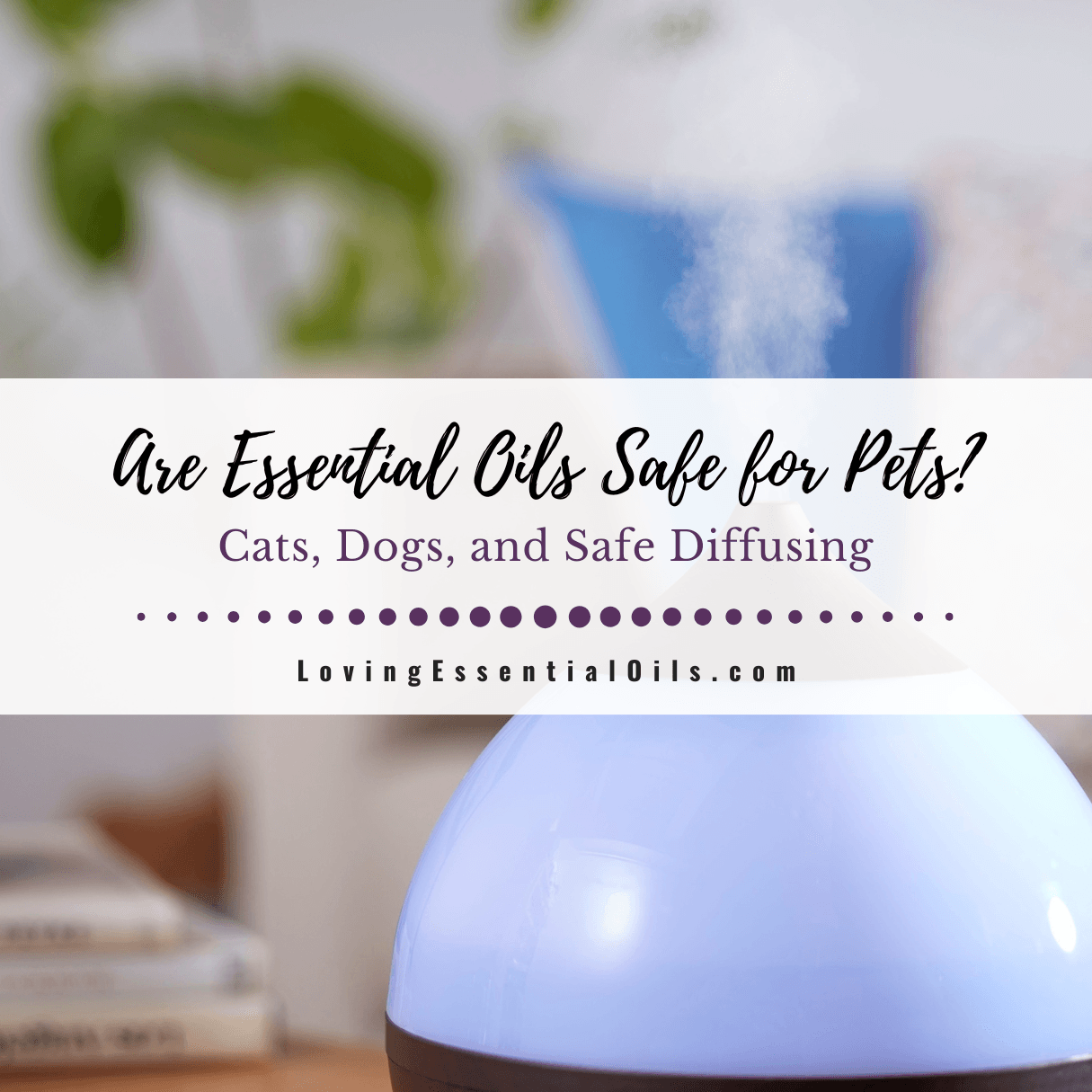
Are essential oils safe for pets? They can be, if you use them carefully and never put them on your pet. Diffuse for short sessions in a ventilated room, keep a door open so your pet can leave, and keep bottles, rollers, and diffusers out of reach. Cats, birds, and small animals need the most care. Below I explain why cats are extra sensitive, how to diffuse safely around pets, the signs of trouble, and what to do if your pet is exposed. Jump to safe diffusing tips.
I'm Jennifer Lane, a certified aromatherapist, and the question "Are essential oils safe for pets?" comes up all the time. Here's what the research and the experts say.
The Short Answer
Essential oils aren't automatically safe or unsafe for pets. What matters most is how much your pet is exposed to and how. Essential oil safety expert Robert Tisserand explains that risk depends mainly on overall exposure, not on a list of "safe" or "toxic" oils. Low-level, short diffusing in a room your pet can leave is very different from oil on their fur or in their mouth.
- Never put essential oils on your pet, including on bandannas, collars, or bedding, and never in their food or water.
- Diffuse for 30 to 60 minutes at a time in a ventilated room, with a door open so your pet can leave.
- Skip small, closed rooms where cats, birds, or small animals spend their time.
- Keep bottles, rollers, sachets, and diffusers where pets can't reach or knock them over.
- If your pet has health issues, especially breathing or liver problems, ask your vet first.
Why Cats Are Extra Sensitive
Cats process many essential oil compounds differently than people and dogs do. Their livers are low in certain enzymes (called UGTs) that break down many of these compounds, so they clear them more slowly. Tisserand notes, for example, that menthol is about 3 to 4 times more toxic to cats than to rats.
Cats are also constant groomers. Oil that lands on their fur, from a spill, a diffuser mist, or your hands, can end up in their mouth. Kittens, older cats, and cats with liver disease are even more sensitive, according to VCA Animal Hospitals.
Cats are especially sensitive, including to tea tree, citrus, peppermint, eucalyptus, pine, wintergreen, cinnamon, clove, and ylang ylang. Phenol-rich oils like oregano and thyme are best kept away from cats too.

Dogs, Birds, and Small Pets
- Dogs are usually more tolerant than cats, but they have very sensitive noses, and oils on their coat or skin can still cause problems. Tea tree oil applied to pets has caused poisonings, so never use it on your dog.
- Birds have very delicate airways. The ASPCA advises avoiding diffusers around birds, so don't diffuse in a home area your bird shares.
- Rabbits, guinea pigs, hamsters, and other small animals are sensitive too. Keep diffusers out of the rooms where they live.
Oils to Be Most Careful With Around Pets
Any essential oil can cause problems at high enough exposure, but these come up most often in pet safety guides:
| Essential oil | Why it needs extra care |
|---|---|
| Tea tree (Melaleuca alternifolia) | Undiluted tea tree applied to pets has caused serious poisonings in cats and dogs |
| Pennyroyal (Mentha pulegium) | Highly toxic. It's on my never-use list, and it should never be used as a flea treatment |
| Wintergreen and sweet birch | Methyl salicylate, an aspirin-like compound |
| Cinnamon, clove, oregano, and thyme (thymol type) | Phenol-rich "hot" oils |
| Citrus oils | Limonene-rich oils that cats are sensitive to |
| Peppermint | Menthol, which cats handle poorly |
| Eucalyptus and pine | Strong, cineole- and pinene-rich oils that can irritate airways |
| Ylang ylang | Strong floral oil on most cat caution lists |
You'll see some websites list "pet-safe essential oils." I'd be careful with those lists. No essential oil is safe on or in a pet, and even gentle oils like lavender can bother a pet in a small room for hours.
How to Diffuse Safely Around Pets
- Use fewer drops. Start with 3 to 4 drops in a standard ultrasonic diffuser.
- Keep sessions short. Run it for 30 to 60 minutes, then take a break.
- Keep air moving. Diffuse in a ventilated room, and leave a door open so your pet can leave whenever they want.
- Place it out of reach. Set the diffuser up high, where pets can't knock it over or drink from it.
- Skip certain rooms. Don't diffuse where your bird or small animals live, or in a small room where your cat naps.
- Watch your pet. If they leave the room, sneeze, or seem bothered, turn it off.
- Skip it for pets with breathing problems, like a cat with asthma, unless your vet says it's okay.
A personal aromatherapy inhaler is a great pet-friendly option, since the scent stays with you. Here's more on how to use an essential oil diffuser.
Other Ways Pets Get Exposed
- Your skin: Wash your hands after applying oils, and don't let pets lick skin with a roller blend on it.
- Cleaning: Let floors and surfaces dry before pets walk on them, and wipe up spills right away.
- Carpet and furniture powders: Pets walk through these and lick their paws, so vacuum thoroughly and keep pets out of the room until you're done.
- Simmer pots and potpourri: Never leave them unattended where curious pets can reach.
- Reed diffusers and open bottles: Keep them where they can't be knocked over or chewed.
See my natural cleaning mistakes to avoid for more tips on cleaning safely.
Signs of Trouble
Watch for these signs after a pet is exposed to essential oils:
- Drooling or pawing at the face or mouth
- Coughing, sneezing, watery eyes, or trouble breathing
- Wobbliness, weakness, or trouble standing
- Muscle tremors
- Vomiting or diarrhea
- Low energy or acting depressed
What to Do If Your Pet Is Exposed
- Turn off the diffuser, and get your pet to fresh air.
- If oil got on their fur or skin, keep them from licking it, and call your vet for how to clean it off.
- Call your vet, or an animal poison control center right away: the ASPCA Animal Poison Control Center at (888) 426-4435 or the Pet Poison Helpline at (800) 213-6680. A fee may apply.
- Bring the bottle or product with you so the vet knows exactly which oil it was.
A Few Safety Basics
• Never put oils on pets, and diffuse with a door open so they can leave. Cats are especially sensitive, including to tea tree, citrus, peppermint, eucalyptus, pine, wintergreen, cinnamon, clove, and ylang ylang.
• Keep essential oils away from babies under 2, including diffusing in a room they're in.
• Always dilute oils before they touch your skin, and patch test a new blend on your inner forearm for 24 to 48 hours.
• If you're pregnant, check with your doctor or midwife first. For the first 16 weeks I use only six oils, and only in a diffuser or inhaler: lavender, sweet orange, lemon, ginger, cedarwood (Virginian), and frankincense.
• Never swallow essential oils. If someone does, call Poison Control at 1-800-222-1222.
Sources
- Tisserand Institute: Cats and Essential Oil Safety
- ASPCA: Essential Oils and Pets
- VCA Animal Hospitals: Essential Oil and Liquid Potpourri Poisoning in Cats
- Pet Poison Helpline: Essential Oils
More Essential Oil Safety Posts
- 7 Essential Oil Safety Tips Every Beginner Should Know
- How Long Should You Diffuse Essential Oils?
- 50 Kid Safe Essential Oils List
- 7 Common Essential Oil Mistakes
Ready to start blending? My Aromatherapy Supply Kits have the bottles and supplies you need, and my free essential oil guides are a great place to begin.
Essential Oil Guide for Beginners - Getting Started
$ 5.99
Beginner's Essential Oil Guide - Download/Printable Learn how to safely and effectively make essential oils a part of your everyday life. Everything you need to know about essential oils. If you have ever been around anyone who loves using essential… Read More