
Table of Contents
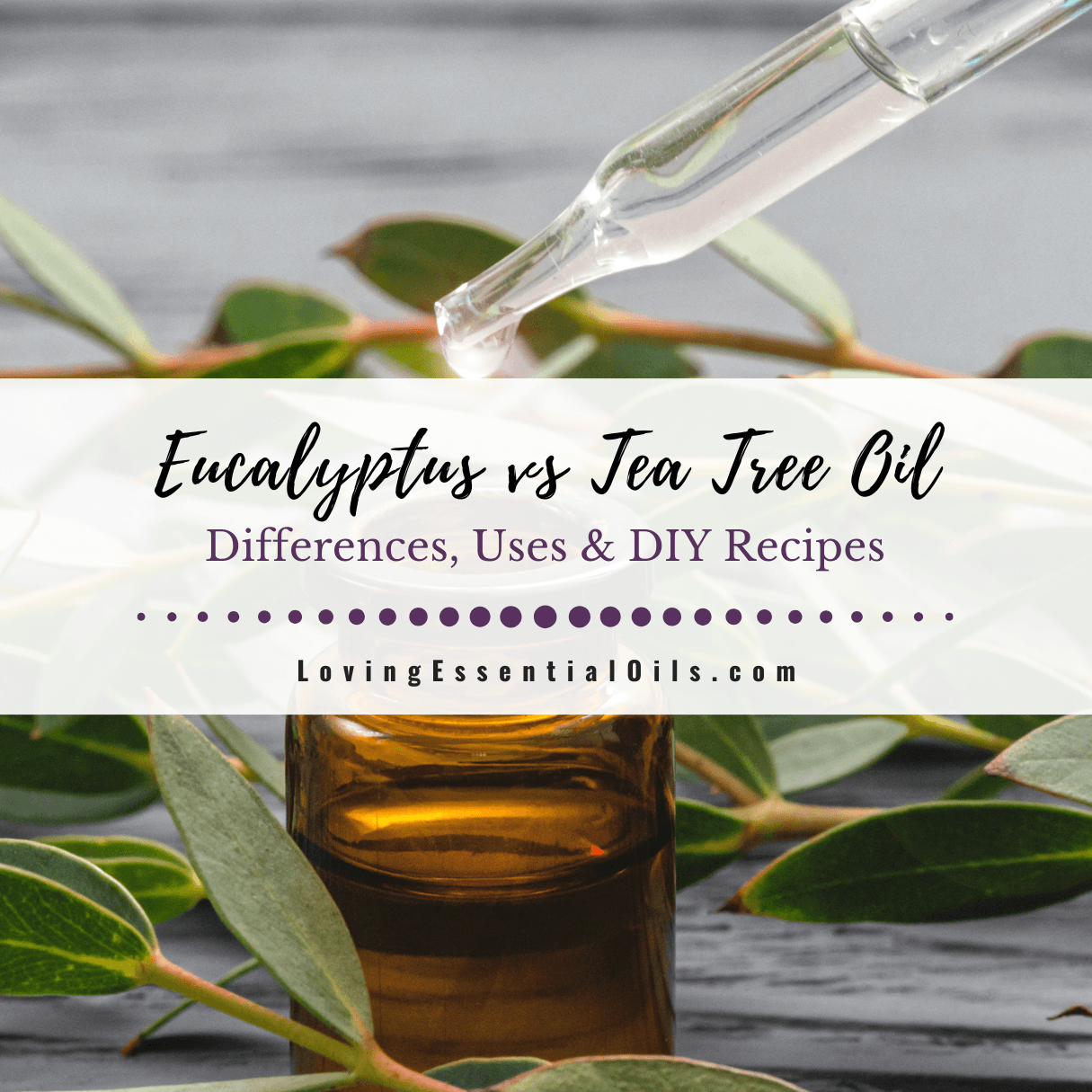
Eucalyptus and tea tree are cousins from the same plant family, and they blend beautifully together. The quick difference: eucalyptus is the one I reach for when I want to breathe easier, and tea tree is the one I reach for for skin, feet and scalp. For cleaning and freshening the house, they're even better as a team. Here's a side-by-side comparison, which to choose, and four easy recipes that use both.
Eucalyptus vs Tea Tree at a Glance
| Eucalyptus | Tea Tree | |
|---|---|---|
| Botanical name | Eucalyptus radiata or globulus | Melaleuca alternifolia |
| Plant family | Myrtaceae (leaves) | Myrtaceae (leaves) |
| Scent | Fresh, crisp, sharply medicinal, cooling | Medicinal, earthy, warmly woody |
| Note | Top | Top to middle |
| Main component | 1,8-cineole (eucalyptol) | Terpinen-4-ol |
| Traditionally used for | Stuffy noses, easier breathing, muscle aches, mental fatigue, cleaning | Blemish-prone skin, foot care, itchy scalp, minor scrapes, cleaning |
| Max dilution | Up to 3% (adults) | Up to 3% |
| Kids | Avoid under age 10; never near a child's face | 1% for kids 2+ |
| Shelf life | 3 to 4 years | 2 to 3 years |
| Substitutes | Rosemary, Tea Tree, Niaouli | Niaouli, Manuka, Ravensara |
Eucalyptus Essential Oil
Eucalyptus has that clean, cooling scent most people know from chest rubs and spa steam rooms. Its main component, 1,8-cineole, is why it feels so clearing. I prefer Eucalyptus radiata for home use because it's a little milder than globulus. Best for:
- Diffusing when you're stuffy or feeling foggy
- A steam bowl or shower steam (adults)
- Chest and back rubs, and muscle rubs
- Natural cleaning sprays
Find 10 recipes in my eucalyptus diffuser blends, or explore Eucalyptus dives.
Tea Tree Essential Oil
Tea tree is fresh, medicinal and earthy, and it's been a staple in Australian homes for generations. Its main component is terpinen-4-ol. Best for:
- Blemish-prone skin at 1%
- Foot soaks and foot care
- An itchy, flaky scalp
- Minor scrapes (after cleaning) and natural cleaning
Learn more in my full tea tree essential oil guide and what blends well with tea tree.
Which One Should You Choose?
- For stuffy noses and easier breathing: eucalyptus.
- For skin, blemishes, feet and scalp: tea tree.
- For cleaning and freshening: both, especially together with lemon.
- For homes with young kids: tea tree is the more flexible choice. Keep eucalyptus for adults and kids 10 and up.
Can You Mix Eucalyptus and Tea Tree?
Yes. Both are fresh, medicinal top notes from the same plant family, so they blend easily. On their own they can smell a bit clinical, so I like to add something softer like lemon, lavender or rosemary.
Eucalyptus and Tea Tree Recipes
Breathe Easy Diffuser Blend
Adults and kids 10+
- 3 drops Eucalyptus
- 2 drops Tea Tree
- 2 drops Lemon
Add to a standard diffuser and run for 30 to 60 minutes at a time in a ventilated room.
Chest and Back Rub
Adults only
- 2 drops Eucalyptus
- 2 drops Tea Tree
- 2 drops Lavender
- Carrier oil to fill a 10 ml roller (3%)
Roll onto the chest and upper back and massage in. Keep it away from the face, eyes and nose.
Fresh Home Room Spray
For rooms and fabrics, not skin
- 1 tablespoon high-proof alcohol (like vodka)
- 6 drops Eucalyptus
- 6 drops Tea Tree
- 4 drops Lemon
- Distilled water to fill a 2 oz glass spray bottle
Add the essential oils to the alcohol first, then top with water. Shake before each use and mist into the air or lightly over fabrics. Don't spray toward pets or children.
Clean Sweep Counter Spray
For surfaces
- 10 drops Tea Tree
- 10 drops Eucalyptus
- 1 cup white vinegar
- 1 cup water
Mix in a glass spray bottle and shake before use. Skip vinegar on granite and marble. See more ways to clean with essential oils.
Safety Tips
- Dilute both oils before using them on skin, and patch test first.
- Never swallow eucalyptus or tea tree oil. Both are toxic if swallowed, so store them out of reach of children.
- Don't use eucalyptus on or near the face of young children, and avoid it for kids under 10.
- Keep both away from cats, and diffuse only where dogs can leave the room.
- Use fresh oils. Oxidized tea tree in particular is more likely to irritate skin.
Read my 7 essential oil safety tips and dilution guide for more. Want to compare more oils? Browse my list of 150 essential oils.
Essential Oil Guide for Beginners - Getting Started
$ 5.99
Beginner's Essential Oil Guide - Download/Printable Learn how to safely and effectively make essential oils a part of your everyday life. Everything you need to know about essential oils. If you have ever been around anyone who loves using essential… Read More