

Table of Contents
- How to Use This List
- List of Essential Oils A–Z
- A
- B
- C
- 20. Cajeput
- 21. Camphor
- 22. Caraway
- 23. Cardamom
- 24. Carrot Seed
- 25. Cassia
- 26. Catnip
- 27. Cedarwood, Atlas
- 28. Cedarwood, Himalayan
- 29. Cedarwood, Texas
- 30. Cedarwood, Virginian
- 31. Celery Seed
- 32. Chamomile, German
- 33. Chamomile, Roman
- 34. Cilantro
- 35. Cinnamon Bark
- 36. Cinnamon Leaf
- 37. Cistus
- 38. Citronella
- 39. Clary Sage
- 40. Clementine
- 41. Clove
- 42. Coffee
- 43. Cognac
- 44. Copaiba
- 45. Coriander Seed
- 46. Cumin
- 47. Cypress
- D
- E
- F
- G
- H
- J
- K
- L
- M
- N
- O
- P
- R
- S
- T
- V
- W
- Y
- General Essential Oil Safety Precautions
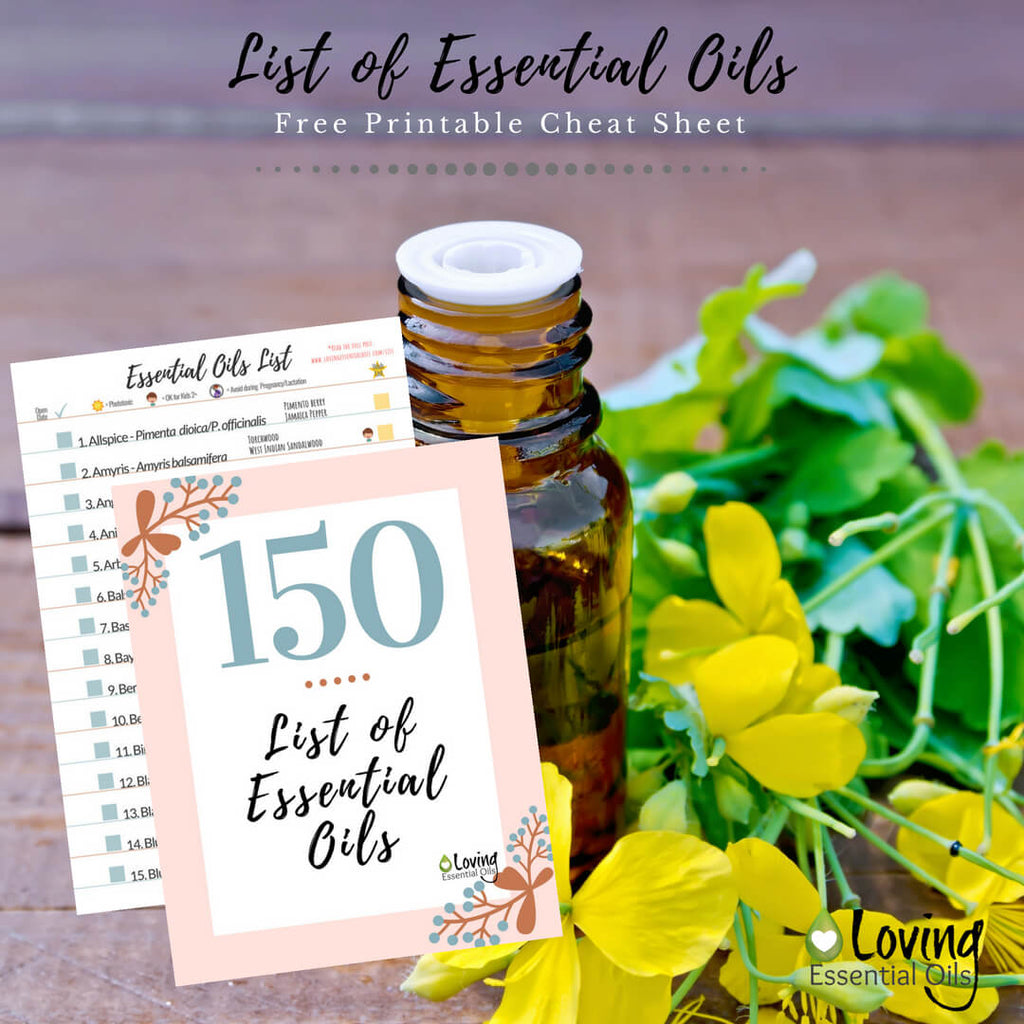
- Free Printable List of Essential Oils
- FAQs
Updated October 2026.
This is my A–Z list of 150 essential oils and their uses, with each oil's botanical name, what it's traditionally used for and the safety notes you need to know. New to oils? Start with the 15 beginner favorites below, then explore the full list or download the free printable PDF.
I'm a Certified Aromatherapist, and I don't recommend one brand over another. Instead, I share what to look for in a quality oil, so you can use this list with whatever brand you have on hand. Brands sometimes name oils differently, so always check the botanical (Latin) name on your bottle.
New to essential oils? Start with these 15
Lavender (True Lavender), Peppermint, Lemon, Orange, Sweet, Tea Tree, Eucalyptus, Radiata, Frankincense, Carterii, Cedarwood, Himalayan, Rosemary, Chamomile, Roman, Bergamot (FCF), Geranium, Grapefruit, Ylang Ylang, Copaiba.
How to Use This List
Each oil includes its botanical name, a short description, what it's traditionally used for, any safety notes and a link to my full guide when I have one. Look for these tags:
- Book Profile Featured in my upcoming essential oils book, with a full profile.
- Avoid in Pregnancy Skip during pregnancy (and usually breastfeeding).
- Photosensitive Can cause a sun reaction on skin. Diffusing is fine.
- Caution: Young Kids Not for use on or around young children. See notes.
- High-Risk Oil Read the safety notes before using.
About dilution: Max dilutions are a ceiling, not a target, and are formulated for adults. Figures marked "T&Y dermal max" come from Tisserand and Young's Essential Oil Safety; others are recommended ceilings from my aromatherapy practice. For kids, use 1% or less. See my dilution guide and essential oil safety tips.
List of Essential Oils A–Z
Jump to a letter: A · B · C · D · E · F · G · H · J · K · L · M · N · O · P · R · S · T · V · W · Y
A
1. Agarwood
Aquilaria crassna
Also called oud, a rare, deep, woody resin oil treasured in perfumery and meditation.
Traditionally Used For: Grounding, meditation, relaxation, natural perfume.
Read the full Agarwood guide →
2. Allspice
Pimenta dioica
A warm, spicy oil that smells like clove, cinnamon and nutmeg together.
Traditionally Used For: Cozy fall blends, tired muscles, chilly days, digestive comfort.
Safety: A skin irritant; keep dilution low (under 1%).
Read the full Allspice guide →
3. Amyris
Amyris balsamifera
A soft, woody oil sometimes called West Indian sandalwood, a budget-friendly sandalwood swap.
Traditionally Used For: Relaxation, sleep blends, meditation, grounding base note.
4. Angelica Root
Angelica archangelica Avoid in Pregnancy Photosensitive
An earthy, musky root oil that has been called the "oil of angels."
Traditionally Used For: Grounding, feeling run-down, digestive comfort, emotional support.
Safety: Phototoxic; keep under 0.8% on skin exposed to sun.
Read the full Angelica Root guide →
5. Anise
Pimpinella anisum Avoid in Pregnancy Caution: Young Kids
A sweet, licorice-scented seed oil.
Traditionally Used For: Digestive comfort, bloating, cozy blends.
Safety: Avoid during pregnancy, breastfeeding and with estrogen-sensitive conditions.
6. Anise, Star
Illicium verum Avoid in Pregnancy Caution: Young Kids
A sweet, licorice-like spice oil from the star-shaped seed pod.
Traditionally Used For: Holiday blends, digestive comfort, warming massage.
Safety: Avoid during pregnancy, breastfeeding and with estrogen-sensitive conditions.
Read the full Anise, Star guide →
7. Arborvitae
Thuja plicata Avoid in Pregnancy
Also called western red cedar, a fresh, woody, earthy oil.
Traditionally Used For: Natural bug repellent, grounding, outdoor-inspired blends.
Safety: Avoid during pregnancy.
Read the full Arborvitae guide →
B
8. Balm Mint Bush
Prostanthera melissifolia
A fresh, lemony-mint Australian oil.
Traditionally Used For: Easier breathing, mental clarity, uplifting blends.
Read the full Balm Mint Bush guide →
9. Basil
Ocimum basilicum ct. linalool Book Profile Avoid in Pregnancy
Sweet basil (linalool type) is a fresh, herbal oil that sharpens focus while calming the nerves.
Traditionally Used For: Mental fog, nervous exhaustion, head tension, digestive cramps, fatigue, tight muscles.
Max Dilution: Up to 3% · Safety: Avoid during pregnancy.
10. Basil, Holy (Tulsi)
Ocimum sanctum Avoid in Pregnancy
Also called tulsi, a spicy, clove-like basil revered in Ayurveda.
Traditionally Used For: Stress support, meditation, focus, warming blends.
Safety: Skin irritant; keep dilution under 1%.
Read the full Basil, Holy guide →
11. Basil, Lemon
Ocimum citriodorum
A bright, lemony basil with a fresh herbal scent.
Traditionally Used For: Uplifting blends, focus, natural bug repellent.
12. Benzoin
Styrax benzoin
A warm, vanilla-like resin often sold diluted for easier pouring.
Traditionally Used For: Cozy, relaxing blends, perfume base note, dry skin care.
Safety: Skin sensitizer; max 2% on skin.
13. Bergamot (FCF)
Citrus bergamia Book Profile
A bright, floral citrus that lifts the mood and eases stress. Choose FCF (bergaptene-free) for skin.
Traditionally Used For: Daily stress, anxious thoughts, mood swings, low mood, mental burnout, emotional eating, oily or blemish-prone skin.
Max Dilution: Up to 3% · Safety: Always choose Bergamot FCF (furocoumarin-free).
Read the full Bergamot guide →
14. Bergamot Mint
Mentha citrata
A soft, floral mint with hints of citrus and lavender.
Traditionally Used For: Uplifting blends, easier breathing, motivation, digestive comfort.
Read the full Bergamot Mint guide →
15. Birch
Betula lenta High-Risk Oil Avoid in Pregnancy Caution: Young Kids
A minty, sweet oil made almost entirely of methyl salicylate, the same compound as wintergreen.
Traditionally Used For: Muscle rubs, tired joints.
Safety: High-risk oil with the same safety as wintergreen. Max 2.4%, toxic if swallowed, never on or near children, avoid with blood thinners or aspirin sensitivity.
16. Black Pepper
Piper nigrum Book Profile
A warm, spicy oil for sore muscles, chilly hands and feet and sluggish days.
Traditionally Used For: Sore muscles, joint stiffness, poor circulation, slow digestion, physical exhaustion, nicotine cravings, cold limbs.
Max Dilution: Up to 2% · Safety: Replace bottles that smell sharp or off, as oxidized Black Pepper is more likely to cause skin irritation.
Read the full Black Pepper guide →
17. Blue Cypress
Callitris intratropica
A sweet, woody Australian oil with a blue color.
Traditionally Used For: Calming blends, skin care, grounding base note.
Read the full Blue Cypress guide →
18. Blue Tansy
Tanacetum annuum Book Profile
A deep blue, sweet-herbal oil loved for calming irritated skin and frazzled nerves.
Traditionally Used For: Skin flare-ups, irritated skin, seasonal allergies, hot flashes, irritability, nervous tension, muscle tension.
Max Dilution: Up to 2% · Safety: May temporarily stain skin or fabrics.
Read the full Blue Tansy guide →
19. Buddha Wood
Eremophila mitchellii
A smoky, woody Australian oil.
Traditionally Used For: Meditation, relaxation, sleep blends, grounding.
Read the full Buddha Wood guide →
C
20. Cajeput
Melaleuca cajuputi Caution: Young Kids
A fresh, camphor-like cousin of tea tree.
Traditionally Used For: Easier breathing, tired muscles, clearing blends.
Safety: Keep away from the faces of young children.
21. Camphor
Cinnamomum camphora Avoid in Pregnancy Caution: Young Kids
A sharp, penetrating oil best known in chest rubs. Use only white camphor.
Traditionally Used For: Chest rubs, muscle rubs.
Safety: Use white camphor only. Avoid during pregnancy, with epilepsy and around children.
22. Caraway
Carum carvi
A warm, spicy seed oil that smells like rye bread.
Traditionally Used For: Digestive comfort, bloating, warming massage.
23. Cardamom
Elettaria cardamomum Book Profile Caution: Young Kids
A sweet, spicy oil that settles the stomach and clears a cloudy mind.
Traditionally Used For: Digestive stagnation, nausea, cloudy thinking, stuffy chest, muscle tension, anxious mind.
Max Dilution: Up to 3% · Safety: Keep away from the faces of young children.
Read the full Cardamom guide →
24. Carrot Seed
Daucus carota Avoid in Pregnancy
An earthy, woody seed oil prized in skin care. It is an essential oil, not a carrier oil.
Traditionally Used For: Mature skin, skin care blends, grounding.
Safety: Avoid during pregnancy.
Read the full Carrot Seed guide →
25. Cassia
Cinnamomum cassia High-Risk Oil Avoid in Pregnancy
A hot, spicy oil similar to cinnamon bark.
Traditionally Used For: Diffuser blends, holiday scents.
Safety: Strong skin sensitizer; diffuse only or max 0.05% on skin.
26. Catnip
Nepeta cataria
A fresh, minty, herbal oil.
Traditionally Used For: Natural bug repellent, relaxing blends.
27. Cedarwood, Atlas
Cedrus atlantica
A warm, sweet, woody oil and one of the gentlest cedarwoods.
Traditionally Used For: Sleep, focus, calm, scalp care.
Read the full Cedarwood, Atlas guide →
28. Cedarwood, Himalayan
Cedrus deodara Book Profile
A warm, woody oil (Himalayan cedarwood) for racing thoughts, restless nights and scalp care.
Traditionally Used For: Racing thoughts, restless nights, difficulty focusing, muscle tension, thinning hair and scalp health, respiratory support.
Max Dilution: Up to 3% · Safety: None known.
Read the full Cedarwood, Himalayan guide →
29. Cedarwood, Texas
Juniperus mexicana
A dry, woody, smoky cedarwood.
Traditionally Used For: Grounding, bug repellent, woodsy blends.
30. Cedarwood, Virginian
Juniperus virginiana
A clean, pencil-shaving fresh oil that is botanically a juniper.
Traditionally Used For: Grounding, closet freshening, woodsy blends.
31. Celery Seed
Apium graveolens Avoid in Pregnancy
A warm, earthy, spicy seed oil.
Traditionally Used For: Digestive comfort, calming blends.
Safety: Avoid during pregnancy.
32. Chamomile, German
Matricaria chamomilla
A deep blue chamomile with a sweet, herbaceous scent.
Traditionally Used For: Irritated skin, calming blends, sensitive skin care.
Safety: Avoid if allergic to ragweed or daisies.
Read the full Chamomile, German guide →
33. Chamomile, Roman
Chamaemelum nobile Book Profile
Roman chamomile is a gentle, apple-sweet floral for bedtime, worries and sensitive skin.
Traditionally Used For: Bedtime worries, restless sleep, skin irritation, emotional overwhelm, muscle spasms, menstrual cramps.
Max Dilution: Up to 3% · Safety: Avoid if allergic to the Asteraceae family, including ragweed, daisies, or marigolds, due to potential cross-sensitivity.
Read the full Chamomile, Roman guide →
34. Cilantro
Coriandrum sativum
A fresh, green oil from the leaves of the coriander plant.
Traditionally Used For: Fresh kitchen blends, calming, skin soothing.
35. Cinnamon Bark
Cinnamomum zeylanicum High-Risk Oil Avoid in Pregnancy
The hottest, spiciest cinnamon oil, best kept for the diffuser.
Traditionally Used For: Cozy holiday diffuser blends, natural cleaning.
Safety: Strong skin sensitizer; diffuse only (T&Y max 0.07% on skin). Avoid during pregnancy.
Read the full Cinnamon Bark guide →
36. Cinnamon Leaf
Cinnamomum zeylanicum Book Profile Avoid in Pregnancy
Cinnamon leaf is a warm, spicy oil for cozy blends and circulation. Much gentler than cinnamon bark, but still a skin irritant.
Traditionally Used For: Poor circulation, immune support, digestive stagnation, seasonal blues, natural cleaning.
Max Dilution: Leaf: Up to 0.6% (T&Y dermal max). Bark: Diffusion only (T&Y dermal max 0.07%) · Safety: High skin irritant.
Read the full Cinnamon Leaf guide →
37. Cistus
Cistus ladanifer
Also called rock rose, a warm, honey-amber resin oil.
Traditionally Used For: Meditation, mature skin, rich perfume blends.
38. Citronella
Cymbopogon nardus Book Profile
A fresh, lemony-grass oil best known for keeping bugs away.
Traditionally Used For: Insect deterrence, household odors, mental fatigue, low energy, freshening the air.
Max Dilution: Up to 1.7% (T&Y dermal max) · Safety: May cause skin sensitization in those prone to fragrance allergies.
Read the full Citronella guide →
39. Clary Sage
Salvia sclarea Book Profile Avoid in Pregnancy
A musky, herbal oil and a favorite for women's monthly comfort and nervous exhaustion.
Traditionally Used For: Menstrual discomfort, hot flashes, hormonal fluctuations, nervous exhaustion, muscle spasms.
Max Dilution: Up to 2% · Safety: Avoid during pregnancy except under qualified guidance during labor.
Read the full Clary Sage guide →
40. Clementine
Citrus clementina
A sweet, bright citrus oil.
Traditionally Used For: Happy, uplifting blends, kids' diffuser blends, natural cleaning.
Read the full Clementine guide →
41. Clove
Syzygium aromaticum Book Profile Avoid in Pregnancy
A hot, spicy oil for warming blends and natural cleaning. Use it sparingly.
Traditionally Used For: Immune support, joint and muscle pain, mental fatigue, digestive comfort, air purifying.
Max Dilution: Up to 0.5% (T&Y dermal max) · Safety: High skin irritant.
42. Coffee
Coffea arabica Book Profile
A rich, roasted oil that wakes up a foggy mind.
Traditionally Used For: Mental fog, low mood, physical fatigue, poor circulation, under-eye puffiness, muscle soreness.
Max Dilution: Up to 2% · Safety: Caffeine content is negligible, but the stimulating effect remains strong.
43. Cognac
Vitis vinifera
A rich, fruity oil distilled from wine lees.
Traditionally Used For: Natural perfume, romantic blends.
44. Copaiba
Copaifera officinalis Book Profile
A soft, woody balsam oil for overworked muscles and anxious moments.
Traditionally Used For: Overworked muscles, joint stiffness, skin blemishes, anxiety, nervous exhaustion, respiratory comfort, spiritual grounding.
Max Dilution: Up to 3% · Safety: None known.
45. Coriander Seed
Coriandrum sativum Book Profile
A sweet, spicy seed oil for digestive comfort and nervous tension.
Traditionally Used For: Gas and bloating, nausea, digestive sluggishness, joint stiffness, nervous tension, mental fatigue.
Max Dilution: Up to 2% · Safety: None known.
Read the full Coriander Seed guide →
46. Cumin
Cuminum cyminum Photosensitive
A warm, earthy, spicy seed oil.
Traditionally Used For: Digestive comfort, warming blends.
Safety: Phototoxic; keep under 0.4% on skin exposed to sun.
47. Cypress
Cupressus sempervirens Book Profile
A fresh, woody oil for heavy legs, circulation and times of change.
Traditionally Used For: Poor circulation, heavy legs, sluggish lymph system, muscle stiffness, emotional transitions, mental fatigue.
Max Dilution: Up to 2% · Safety: None known.
D
48. Davana
Artemisia pallens Avoid in Pregnancy
A rich, fruity, boozy floral oil.
Traditionally Used For: Natural perfume, uplifting blends.
Safety: Avoid during pregnancy.
49. Dill
Anethum graveolens Avoid in Pregnancy
A fresh, sweet, herbaceous seed oil.
Traditionally Used For: Digestive comfort, calming blends.
Safety: Avoid dill seed oil during pregnancy.
E
50. Elemi
Canarium luzonicum
A fresh, lemony, peppery resin oil.
Traditionally Used For: Mature skin, meditation, easier breathing.
51. Eucalyptus, Dives
Eucalyptus dives
A minty eucalyptus, also called peppermint eucalyptus.
Traditionally Used For: Easier breathing, muscle rubs, uplifting blends.
Read the full Eucalyptus, Dives guide →
52. Eucalyptus, Globulus
Eucalyptus globulus Caution: Young Kids
The most common eucalyptus, with a strong camphor-like scent.
Traditionally Used For: Easier breathing, muscle rubs, clearing blends.
Safety: Avoid around children under 10.
Read the full Eucalyptus, Globulus guide →
53. Eucalyptus, Lemon
Corymbia citriodora
A sweet, lemony eucalyptus that smells like citronella.
Traditionally Used For: Natural bug repellent, fresh blends.
54. Eucalyptus, Radiata
Eucalyptus radiata Book Profile Caution: Young Kids
Eucalyptus radiata is the gentlest common eucalyptus, fresh and clearing for stuffy days.
Traditionally Used For: Respiratory congestion, sinus pressure, cold season support, muscle aches, mental fatigue.
Max Dilution: Up to 3% · Safety: Keep away from the faces of young children.
Read the full Eucalyptus, Radiata guide →
55. Eucalyptus, Smithii
Eucalyptus smithii Caution: Young Kids
A gentle eucalyptus with a soft, fresh scent.
Traditionally Used For: Easier breathing, gentle clearing blends.
Safety: Use caution around young children.
F
56. Fennel
Foeniculum vulgare Avoid in Pregnancy Caution: Young Kids
A sweet, licorice-like seed oil.
Traditionally Used For: Digestive comfort, bloating.
Safety: Avoid during pregnancy, breastfeeding and with estrogen-sensitive conditions.
57. Finger Root
Boesenbergia rotunda
A warm, spicy root oil in the ginger family.
Traditionally Used For: Warming massage, digestive comfort.
58. Fir, Balsam
Abies balsamea
The classic Christmas tree scent, sweet and balsamic.
Traditionally Used For: Holiday blends, easier breathing, tired muscles.
59. Fir, Douglas
Pseudotsuga menziesii
A bright, fresh, lemony fir.
Traditionally Used For: Easier breathing, focus, uplifting forest blends.
60. Fir, Siberian (Fir Needle)
Abies sibirica
Also called Siberian fir, a crisp, clean evergreen oil.
Traditionally Used For: Easier breathing, tired muscles, forest blends.
Read the full Fir, Siberian guide →
61. Fir, White and Silver
Abies concolor Book Profile
A crisp, fresh fir for easier breathing, tired muscles and low energy. True white fir is Abies concolor, but some brands sell silver fir (Abies alba) under the white fir name, so check the botanical name on your bottle.
Traditionally Used For: Respiratory congestion, muscle tension, joint pain, emotional depletion, low energy, immune support.
Max Dilution: Up to 2% · Safety: Replace bottles that smell sharp or off, as oxidized Fir is more likely to cause skin irritation.
Read the full Fir, White and Silver guide →
62. Fragonia
Agonis fragrans
A gentle, fresh Australian oil with notes of eucalyptus and citrus.
Traditionally Used For: Easier breathing, calming blends.
63. Frankincense, Carterii
Boswellia carterii Book Profile
A warm, resinous oil for skin care, deep breathing and quiet reflection.
Traditionally Used For: Skin rejuvenation, scar tissue, shallow breathing, emotional burnout, spiritual connection, mental overstimulation.
Max Dilution: Up to 2% · Safety: None known.
Read the full frankincense guide →
64. Frankincense, Frereana
Boswellia frereana
A soft, lemony frankincense.
Traditionally Used For: Meditation, skin care, calming blends.
65. Frankincense, Sacred
Boswellia sacra
A prized, sweet, resinous frankincense from Oman.
Traditionally Used For: Meditation, mature skin, calming blends.
G
66. Galangal Root
Alpinia galanga
A warm, spicy ginger-family root oil.
Traditionally Used For: Digestive comfort, warming massage, travel blends.
67. Galbanum
Ferula galbaniflua
An intensely green, earthy resin oil.
Traditionally Used For: Mature skin, perfume blends.
68. Geranium
Pelargonium graveolens Book Profile
A rosy, green floral that balances skin and moods.
Traditionally Used For: Unbalanced skin, hormonal fluctuations, low mood, grief, poor circulation, nervous exhaustion, menopausal support.
Max Dilution: Up to 3% · Safety: None known.
Read the full Geranium guide →
69. Ginger
Zingiber officinale Book Profile
A warm, spicy root oil for nausea, motion sickness and stiff muscles.
Traditionally Used For: Nausea, motion sickness, gas and bloating, poor circulation, muscle and joint stiffness, lack of confidence.
Max Dilution: Up to 1% · Safety: Generally considered safe during pregnancy at low dilutions, but consult your healthcare provider first.
70. Gingergrass
Cymbopogon martinii var. sofia
A grassy, sweet oil related to palmarosa.
Traditionally Used For: Tired muscles, stress, skin care.
71. Goldenrod
Solidago canadensis
A sweet, herbaceous oil from the golden flower.
Traditionally Used For: Seasonal comfort, easier breathing, calming blends.
72. Grapefruit
Citrus paradisi Book Profile Photosensitive
A tart, sparkling citrus for brain fog, motivation and a happy mood.
Traditionally Used For: Brain fog, low mood, lack of motivation, fluid retention, sugar cravings, cellulite, oily skin.
Max Dilution: Up to 4% (T&Y dermal max for cold-pressed) · Safety: Phototoxic.
Read the full Grapefruit guide →
H
73. Helichrysum
Helichrysum italicum Book Profile
A treasured, honey-herbal oil for bumps, bruises and skin care.
Traditionally Used For: Bruising, scar tissue, nerve pain, sports injuries, emotional stress, grief.
Max Dilution: Up to 3% · Safety: None known.
Read the full Helichrysum guide →
74. Hemlock
Tsuga canadensis
A fresh, sweet evergreen oil.
Traditionally Used For: Easier breathing, tired muscles, forest blends.
75. Hemp
Cannabis sativa
A green, herbal oil distilled from the hemp plant. It contains no THC or CBD.
Traditionally Used For: Relaxing blends, grounding.
76. Hinoki
Chamaecyparis obtusa
A fresh, lemony, woody oil from the Japanese cypress, used to build traditional bathhouses and temples.
Traditionally Used For: Forest bathing at home, calm, focus, grounding.
77. Ho Wood
Cinnamomum camphora ct. linalool
A soft, floral, woody oil rich in linalool, a sustainable rosewood swap.
Traditionally Used For: Relaxation, skin care, rosewood substitute.
78. Hyssop
Hyssopus officinalis var. decumbens High-Risk Oil Avoid in Pregnancy Caution: Young Kids
A sweet, herbaceous oil. Choose the gentler decumbens variety.
Traditionally Used For: Easier breathing, herbal blends.
Safety: Avoid during pregnancy, with epilepsy and around children. Use only the decumbens variety.
J
79. Jasmine Absolute
Jasminum grandiflorum Book Profile
An intensely sweet, exotic floral for confidence, romance and stress.
Traditionally Used For: Social anxiety, low libido, low self-esteem, chronic stress, dry or sensitive skin.
Max Dilution: Up to 0.7% (T&Y dermal max) · Safety: Use sparingly to avoid skin sensitivity or headaches.
Read the full Jasmine Absolute guide →
80. Juniper
Juniperus communis Book Profile
A crisp, woody berry oil for puffiness, achy joints and mental burnout.
Traditionally Used For: Fluid retention, sluggish lymph, joint pain, mental burnout, digestive upset.
Max Dilution: Up to 3% · Safety: Often listed as one to avoid in pregnancy, a caution Tisserand and Young consider unnecessary.
K
81. Kumquat
Fortunella japonica
A sweet-tart, bright citrus oil.
Traditionally Used For: Happy, uplifting blends.
82. Kunzea
Kunzea ambigua
A fresh, sweet Australian oil.
Traditionally Used For: Easier breathing, tired muscles, bug repellent.
L
83. Laurel Leaf
Laurus nobilis
Also called bay laurel, a fresh, spicy, herbaceous oil.
Traditionally Used For: Focus, easier breathing, tired muscles.
Safety: Skin sensitizer; max 0.5% on skin.
Read the full Laurel Leaf guide →
84. Lavandin
Lavandula x intermedia
A hybrid lavender that is sharper and more camphorous than true lavender.
Traditionally Used For: Cleaning blends, easier breathing, muscle rubs.
Read the full Lavandin guide →
85. Lavender (True Lavender)
Lavandula angustifolia Book Profile
True lavender is the gentle, all-purpose oil for sleep, stress, skin and minor burns.
Traditionally Used For: Sleep disturbances, stress and burnout, skin inflammation, minor burns, headaches, bug bites, muscle tension.
Max Dilution: Up to 5% · Safety: Always choose Lavandula angustifolia for relaxation and skin care.
Read the full Lavender guide →
86. Lavender, Spike
Lavandula latifolia Avoid in Pregnancy Caution: Young Kids
A strong, camphor-rich lavender.
Traditionally Used For: Muscle rubs, easier breathing, clearing blends.
Safety: Use caution around young children.
Read the full Lavender, Spike guide →
87. Lemon
Citrus limon Book Profile Photosensitive
A bright, clean citrus for focus, energy and natural cleaning.
Traditionally Used For: Mental fog, low energy, stale indoor air, household cleaning, cold season support, poor productivity, skin brightening.
Max Dilution: Cold-pressed: Up to 2% (T&Y dermal max). Steam-distilled: Up to 3% · Safety: Cold-pressed Lemon is phototoxic.
88. Lemon Myrtle
Backhousia citriodora
An intensely lemony Australian oil.
Traditionally Used For: Fresh, uplifting blends, natural cleaning.
Safety: Skin sensitizer; max 0.7% on skin.
89. Lemon Tea Tree
Leptospermum petersonii
A lemony cousin of tea tree.
Traditionally Used For: Natural cleaning, bug repellent, fresh blends.
Safety: Skin sensitizer; max 0.8% on skin.
90. Lemongrass
Cymbopogon flexuosus Book Profile
A fresh, lemony-grass oil for stiff joints and tired muscles. Keep the dilution low.
Traditionally Used For: Stiff joints, muscle fatigue, strained ligaments, body odor, mental fatigue, digestive support.
Max Dilution: Up to 0.7% (T&Y dermal max) · Safety: High skin sensitizer.
Read the full Lemongrass guide →
91. Lime
Citrus aurantifolia Book Profile Photosensitive
A zesty, sparkling citrus for a tired mind and creative blocks.
Traditionally Used For: Mental exhaustion, low mood, creative blocks, cold season support, digestive comfort, immune support.
Max Dilution: Cold-pressed: Up to 0.7% (T&Y dermal max). Steam-distilled: Up to 3% · Safety: Cold-pressed Lime is phototoxic.
M
92. Magnolia
Michelia alba Book Profile
A soft, sweet floral for stress, restlessness and sleep.
Traditionally Used For: High stress, restlessness, sleep disturbances, anxiety, nervous system support, skin congestion.
Max Dilution: Up to 1% · Safety: None known.
Read the full Magnolia guide →
93. Mandarin
Citrus reticulata Book Profile
A sweet, gentle citrus for restless kids, bedtime and nervous tension.
Traditionally Used For: Physical restlessness, bedtime stalling, digestive upset, nervous tension, oily skin, stretch marks, low mood.
Max Dilution: Up to 3% · Safety: Non-phototoxic citrus.
94. Manuka
Leptospermum scoparium
A warm, honey-herbal New Zealand cousin of tea tree.
Traditionally Used For: Blemish-prone skin, foot care, calming blends.
95. Marjoram
Origanum majorana Book Profile Avoid in Pregnancy
A warm, herbal oil for muscle spasms, tension headaches and monthly cramps.
Traditionally Used For: Muscle spasms, tension headaches, menstrual cramping, digestive discomfort, grief and isolation.
Max Dilution: Up to 3% · Safety: Avoid during pregnancy.
Read the full Marjoram guide →
96. May Chang
Litsea cubeba
Also called litsea, a sweet, lemony oil.
Traditionally Used For: Uplifting blends, natural cleaning, oily skin.
Safety: Skin sensitizer; max 0.8% on skin.
97. Melissa
Melissa officinalis
Also called lemon balm, a precious, soft lemony oil.
Traditionally Used For: Calming blends, sleep, mood support.
Safety: Skin sensitizer; max 0.9% on skin.
98. Moldavian Dragonhead
Dracocephalum moldavica
A rare, lemony, herbal oil.
Traditionally Used For: Calming, uplifting blends.
Read the full Moldavian Dragonhead guide →
99. Myrrh
Commiphora myrrha Book Profile Avoid in Pregnancy
A warm, earthy resin for chapped skin, grief and grounding.
Traditionally Used For: Chapped skin, chest congestion, emotional burnout, spiritual disconnect, grief, immune support.
Max Dilution: Up to 3% · Safety: Avoid during pregnancy and breastfeeding.
100. Myrtle
Myrtus communis
A fresh, gentle, camphor-like oil.
Traditionally Used For: Easier breathing, calming blends.
N
101. Neroli
Citrus aurantium Book Profile
A precious, honeyed orange blossom for anxious moments, sleep and mature skin.
Traditionally Used For: Anxiety, insomnia, mature or sensitive skin, emotional exhaustion.
Max Dilution: Up to 3% · Safety: None known.
102. Niaouli
Melaleuca quinquenervia Caution: Young Kids
A fresh, camphor-like cousin of tea tree.
Traditionally Used For: Easier breathing, clearing blends.
Safety: Keep away from the faces of young children.
103. Nootka Tree
Cupressus nootkatensis
A sweet, woody, cypress-like oil.
Traditionally Used For: Grounding, bug repellent, woodsy blends.
Read the full Nootka Tree guide →
104. Nutmeg
Myristica fragrans Avoid in Pregnancy
A warm, sweet spice oil.
Traditionally Used For: Cozy blends, warming massage, digestive comfort.
Safety: Use low dilutions (under 0.8%).
O
105. Opoponax
Commiphora erythraea Avoid in Pregnancy
Also called sweet myrrh, a warm, sweet resin oil.
Traditionally Used For: Meditation, perfume blends, grounding.
Safety: Avoid during pregnancy.
106. Orange, Blood
Citrus sinensis
A sweet, slightly berry-like orange from red-fleshed oranges.
Traditionally Used For: Happy, uplifting blends, kids' diffuser blends.
107. Orange, Sweet
Citrus sinensis Book Profile
Sweet orange is the cheerful, budget-friendly citrus for a brighter mood.
Traditionally Used For: Low mood, nervous tension, digestive upset, anxious kids, immune support, illness recovery.
Max Dilution: Up to 3% · Safety: Non-phototoxic citrus.
Read the full Orange, Sweet guide →
108. Oregano
Origanum vulgare Book Profile Avoid in Pregnancy
A hot, herbal oil for seasonal wellness and natural cleaning. Use it sparingly.
Traditionally Used For: Immune support, fungal skin issues, respiratory congestion, digestive support, air purifying.
Max Dilution: Up to 1.1% (T&Y dermal max) · Safety: High skin irritant.
P
109. Palmarosa
Cymbopogon martinii Book Profile
A rosy, grassy oil for dehydrated skin and emotional ups and downs.
Traditionally Used For: Dehydrated skin, skin blemishes, emotional volatility, digestive support, creative blocks.
Max Dilution: Up to 3% · Safety: None known.
110. Palo Santo
Bursera graveolens
A sweet, woody, citrusy oil with a smoky note.
Traditionally Used For: Meditation, grounding, calming blends.
Safety: Choose sustainably sourced oil.
Read the full Palo Santo guide →
111. Patchouli
Pogostemon cablin Book Profile
A rich, earthy oil for grounding, mature skin and bug repellent.
Traditionally Used For: Unfocused energy, cracked or mature skin, spiritual disconnect, emotional instability, insect repellent, cellulite.
Max Dilution: Up to 3% · Safety: None known.
Read the full Patchouli guide →
112. Peppermint
Mentha x piperita Book Profile Caution: Young Kids
A cool, invigorating mint for tension headaches, digestion, focus and tired muscles.
Traditionally Used For: Mental fatigue, tension headaches, digestive discomfort, muscle aches, respiratory congestion, nausea.
Max Dilution: Up to 3% · Safety: Keep away from the faces of young children.
Read the full Peppermint guide →
113. Peru Balsam
Myroxylon pereirae
A rich, vanilla-like balsam.
Traditionally Used For: Diffuser and perfume blends.
Safety: Common skin allergen; best diffused.
Read the full Peru Balsam guide →
114. Petitgrain
Citrus aurantium Book Profile
A fresh, woody-floral citrus leaf oil for burnout and sleeplessness.
Traditionally Used For: Emotional burnout, sleeplessness, mental fatigue, oily skin, heavy sweating, muscle tension.
Max Dilution: Up to 3% · Safety: None known.
Read the full Petitgrain guide →
115. Pine
Pinus sylvestris Book Profile
A crisp, fresh forest oil for easier breathing and achy muscles.
Traditionally Used For: Respiratory congestion, muscle aches, joint pain, immune support, illness recovery, low vitality.
Max Dilution: Up to 3% · Safety: Avoid Dwarf or Mountain Pine (Pinus mugo), which is more likely to sensitize the skin.
116. Pink Pepper
Schinus molle Book Profile
A bright, peppery-fruity oil for motivation and cold hands and feet.
Traditionally Used For: Mental fatigue, lack of motivation, low mood, poor circulation, cold hands and feet, slow digestion.
Max Dilution: Up to 3% · Safety: May cross-react in those with cashew or mango allergy; patch test.
Read the full Pink Pepper guide →
117. Plai
Zingiber cassumunar
A cool, peppery Thai root oil in the ginger family.
Traditionally Used For: Tired muscles, massage blends.
R
118. Ravensara
Ravensara aromatica Avoid in Pregnancy
A spicy, anise-like oil from Madagascar.
Traditionally Used For: Easier breathing, tired muscles.
Safety: Avoid during pregnancy.
119. Ravintsara
Cinnamomum camphora ct. 1,8-cineole Caution: Young Kids
A fresh, eucalyptus-like oil from Madagascar.
Traditionally Used For: Easier breathing, clearing blends.
Safety: Keep away from the faces of young children.
120. Rhododendron
Rhododendron anthopogon
A rare, sweet, herbal oil from the Himalayas.
Traditionally Used For: Meditation, calming blends.
121. Rosalina
Melaleuca ericifolia
A gentle, fresh tea tree cousin with a soft, floral note.
Traditionally Used For: Easier breathing, calming blends, gentle skin care.
122. Rose (Rose Otto)
Rosa damascena
Also called rose otto, the steam-distilled rose oil, one of the most precious oils in the world.
Traditionally Used For: Mature skin, emotional support, natural perfume.
Safety: Use small amounts; max 0.6%.
123. Rose Absolute
Rosa damascena Book Profile
A rich, true rose scent for grief, self-love and mature skin.
Traditionally Used For: Deep grief, low self-esteem, monthly mood swings, loneliness, mature skin, hormonal support.
Max Dilution: Up to 0.6% · Safety: Highly potent.
Read the full Rose Absolute guide →
124. Rose Geranium
Pelargonium roseum
A geranium with a sweeter, rosier scent.
Traditionally Used For: Skin care, mood balance, floral blends.
125. Rosemary
Salvia rosmarinus ct. cineole Book Profile Avoid in Pregnancy Caution: Young Kids
A fresh, herbal oil (cineole type) for focus, memory, scalp care and stiff joints.
Traditionally Used For: Forgetfulness, mental fog, scalp health, thinning hair, stiff joints, chest congestion, poor circulation.
Max Dilution: Up to 3% · Safety: Avoid during pregnancy and if you have epilepsy or high blood pressure.
Read the full Rosemary guide →
126. Rosewood
Aniba rosaeodora
A soft, floral, woody oil from an endangered tree.
Traditionally Used For: Skin care, calming blends.
Safety: Endangered species. Choose ho wood as a sustainable swap.
Read the full Rosewood guide →
S
127. Sage
Salvia officinalis High-Risk Oil Avoid in Pregnancy Caution: Young Kids
A strong, herbaceous oil. Clary sage is a gentler choice for most uses.
Traditionally Used For: Herbal blends, diffusing.
Safety: Avoid during pregnancy, with epilepsy and around children. Max 0.4% on skin.
128. Sandalwood, Australian
Santalum spicatum Book Profile
Australian sandalwood is a soft, woody oil for calm, sleep and dry skin, and a sustainable choice.
Traditionally Used For: Restlessness, racing thoughts, sleeplessness, dry or aging skin, anxiety, spiritual disconnection.
Max Dilution: Up to 3% · Safety: None known.
Read the full Sandalwood, Australian guide →
129. Sandalwood, East Indian
Santalum album
The classic, creamy, rich sandalwood.
Traditionally Used For: Meditation, sleep, mature skin.
Safety: Over-harvested; choose sustainably sourced oil.
Read the full Sandalwood, East Indian guide →
130. Sandalwood, Hawaiian
Santalum paniculatum
A sweet, creamy sandalwood from Hawaii.
Traditionally Used For: Meditation, calming blends, skin care.
Safety: Choose sustainably sourced oil.
131. Saro
Cinnamosma fragrans Caution: Young Kids
A fresh, eucalyptus-like oil from Madagascar.
Traditionally Used For: Easier breathing, clearing blends.
Safety: Keep away from the faces of young children.
132. Savory, Summer
Satureja hortensis High-Risk Oil Avoid in Pregnancy
A hot, herbaceous, thyme-like oil.
Traditionally Used For: Diffusing, cleaning blends.
Safety: Strong skin irritant; best diffused or max 0.5%.
133. Savory, Winter
Satureja montana High-Risk Oil Avoid in Pregnancy
A hot, herbaceous oil similar to oregano.
Traditionally Used For: Diffusing, cleaning blends.
Safety: Strong skin irritant; best diffused or max 0.5%.
134. Spearmint
Mentha spicata Book Profile
A sweet, gentle mint for digestion, nausea and a fresh mind.
Traditionally Used For: Digestive discomfort, nausea, mental fatigue, headaches, bad breath, hormonal support.
Max Dilution: Up to 1.7% (T&Y dermal max) · Safety: None known.
Read the full Spearmint guide →
135. Spikenard
Nardostachys jatamansi Book Profile Avoid in Pregnancy
An earthy, musky root oil for grief, sleeplessness and letting go.
Traditionally Used For: Unresolved grief, sleeplessness, emotional exhaustion, feeling disconnected, difficulty forgiving, mature skin.
Max Dilution: Up to 3% · Safety: Avoid during pregnancy.
136. Spruce, Black
Picea mariana Book Profile
Black spruce is a fresh, sweet evergreen for burnout, easier breathing and tired muscles.
Traditionally Used For: Burnout, feeling run-down, respiratory congestion, muscle aches, spiritual clarity.
Max Dilution: Up to 3% · Safety: Replace bottles that smell sharp or off, as oxidized Spruce is more likely to cause skin irritation.
Read the full Spruce, Black guide →
T
137. Tangerine
Citrus reticulata Book Profile
A sweet, sunny citrus for stress, low mood and restless children.
Traditionally Used For: Low mood, chronic stress, digestive sluggishness, restless kids, stretch marks, creative blocks.
Max Dilution: Up to 3% · Safety: Non-phototoxic citrus.
Read the full Tangerine guide →
138. Tarragon
Artemisia dracunculus High-Risk Oil Avoid in Pregnancy
A sweet, anise-like herbal oil.
Traditionally Used For: Digestive comfort, herbal blends.
Safety: High in estragole; avoid during pregnancy and keep under 0.1% on skin.
Read the full Tarragon guide →
139. Tea Tree
Melaleuca alternifolia Book Profile
A fresh, medicinal oil for blemishes, itchy scalp and household cleaning.
Traditionally Used For: Skin blemishes, foot care, itchy scalp, minor wounds, household cleaning.
Max Dilution: Up to 3% · Safety: Replace bottles that smell sharp or off, as oxidized Tea Tree is more likely to cause skin sensitization.
Read the full Tea Tree guide →
140. Thyme
Thymus vulgaris ct. linalool Book Profile
Thyme linalool is a gentle, sweet herbal oil for seasonal wellness and fatigue.
Traditionally Used For: Cold season support, chest congestion, fatigue, burnout, difficulty concentrating, digestive upset.
Max Dilution: Up to 3% · Safety: Always verify the linalool chemotype.
141. Turmeric
Curcuma longa
A warm, earthy, spicy root oil.
Traditionally Used For: Tired muscles, warming massage, grounding.
V
142. Valerian
Valeriana officinalis Book Profile Avoid in Pregnancy
An earthy, musky root oil for sleeplessness and a racing mind.
Traditionally Used For: Sleeplessness, racing mind, restlessness, muscle tension, emotional overwhelm, nervousness.
Max Dilution: Up to 3% · Safety: Avoid during pregnancy.
143. Vanilla Absolute
Vanilla planifolia Book Profile
A sweet, warm, comforting absolute for stress and restless nights.
Traditionally Used For: Stress, anxiety, irritability, restless nights, emotional depletion, masking medicinal aromas.
Max Dilution: Up to 2% · Safety: None known.
Read the full Vanilla Absolute guide →
144. Verbena
Lippia javanica
A lemony, herbal oil, also known as fever tea in Africa.
Traditionally Used For: Fresh, uplifting blends.
Safety: Use low dilutions.
145. Vetiver
Vetiveria zizanioides Book Profile
A deep, smoky, earthy root oil for overwhelm, focus and sleep.
Traditionally Used For: Sensory overwhelm, scattered thoughts, troubled sleep, chronic stress, emotional instability, skin blemishes.
Max Dilution: Up to 3% · Safety: None known.
146. Vitex
Vitex agnus-castus Avoid in Pregnancy
Also called chaste tree, a peppery, herbal oil.
Traditionally Used For: Women's wellness blends.
Safety: Avoid during pregnancy and with hormone-sensitive conditions.
W
147. Wintergreen
Gaultheria procumbens Book Profile Avoid in Pregnancy Caution: Young Kids High-Risk Oil
A minty, sweet oil for muscle rubs. A high-risk oil, so read the safety notes first.
Traditionally Used For: Muscle aches, joint stiffness, head tension, post-workout recovery, congested chest, nerve discomfort.
Max Dilution: Up to 2.4% (T&Y dermal max) · Safety: High-risk oil. Avoid during pregnancy, nursing, and if taking blood thinners, sensitive to aspirin, or scheduled for surgery. Never use on or near children due to Reye’s Syndrome risk. Toxic if swallowed, even in small amounts. Store well out of reach of children.
Read the full Wintergreen guide →
Y
148. Yarrow
Achillea millefolium Avoid in Pregnancy
A deep blue, herbaceous oil.
Traditionally Used For: Tired muscles, skin care, calming blends.
Safety: Avoid if allergic to ragweed or daisies.
149. Ylang Ylang
Cananga odorata Book Profile
A sweet, tropical floral for stress, mood swings and romance.
Traditionally Used For: High stress, a racing heart from stress, mood swings, low self-esteem, restlessness, skin imbalances, low libido, dull hair.
Max Dilution: Up to 0.8% (T&Y dermal max) · Safety: May cause headaches or nausea at higher concentrations.
Read the full Ylang Ylang guide →
150. Yuzu
Citrus junos
A tart, floral Japanese citrus.
Traditionally Used For: Uplifting blends, stress relief, natural perfume.
General Essential Oil Safety Precautions
- Dilute before using on skin. Most adult blends are 1 to 3%. Respect the maximums listed above.
- Children: Wait until age 2 for most essential oils, use 1% or less (about 6 drops per ounce of carrier oil), and skip oils tagged "Caution: Young Kids". See my kid-safe essential oils list.
- Pregnancy and breastfeeding: Skip oils tagged "Avoid in Pregnancy" (based on Tisserand and Young, Essential Oil Safety) and check with your doctor or midwife first. See my list of essential oils for pregnancy.
- Sun sensitivity: Photosensitive oils can cause a sunburn-like reaction. Learn more about photosensitive essential oils.
- Skin sensitizers: Some oils, like lemongrass (0.7%), lemon myrtle (0.7%), lemon tea tree (0.8%), may chang (0.8%) and melissa (0.9%), have low maximum dilutions (Tisserand and Young).
- Never swallow essential oils and keep all bottles out of reach of children and pets.
- Patch test new oils first. See my skin patch test guide.
- Freshness matters. Old, oxidized oils are more likely to irritate skin. See expired essential oils.
For more, see the NAHA safety guidelines.
Free Printable List of Essential Oils
No email required! Download my printable list of essential oils to organize your collection. It includes common and botanical names, checkboxes for oils you have and want, a date-opened column, and notes on kid-safe oils and oils to avoid during pregnancy.
Get the Essential Oils List PDF.

Find more in my free essential oil guides.
Essential Oil Guide for Beginners - Getting Started
$ 5.99
Beginner's Essential Oil Guide - Download/Printable Learn how to safely and effectively make essential oils a part of your everyday life. Everything you need to know about essential oils. If you have ever been around anyone who loves using essential… Read More
Share on Pinterest