
Table of Contents
Updated November 2026
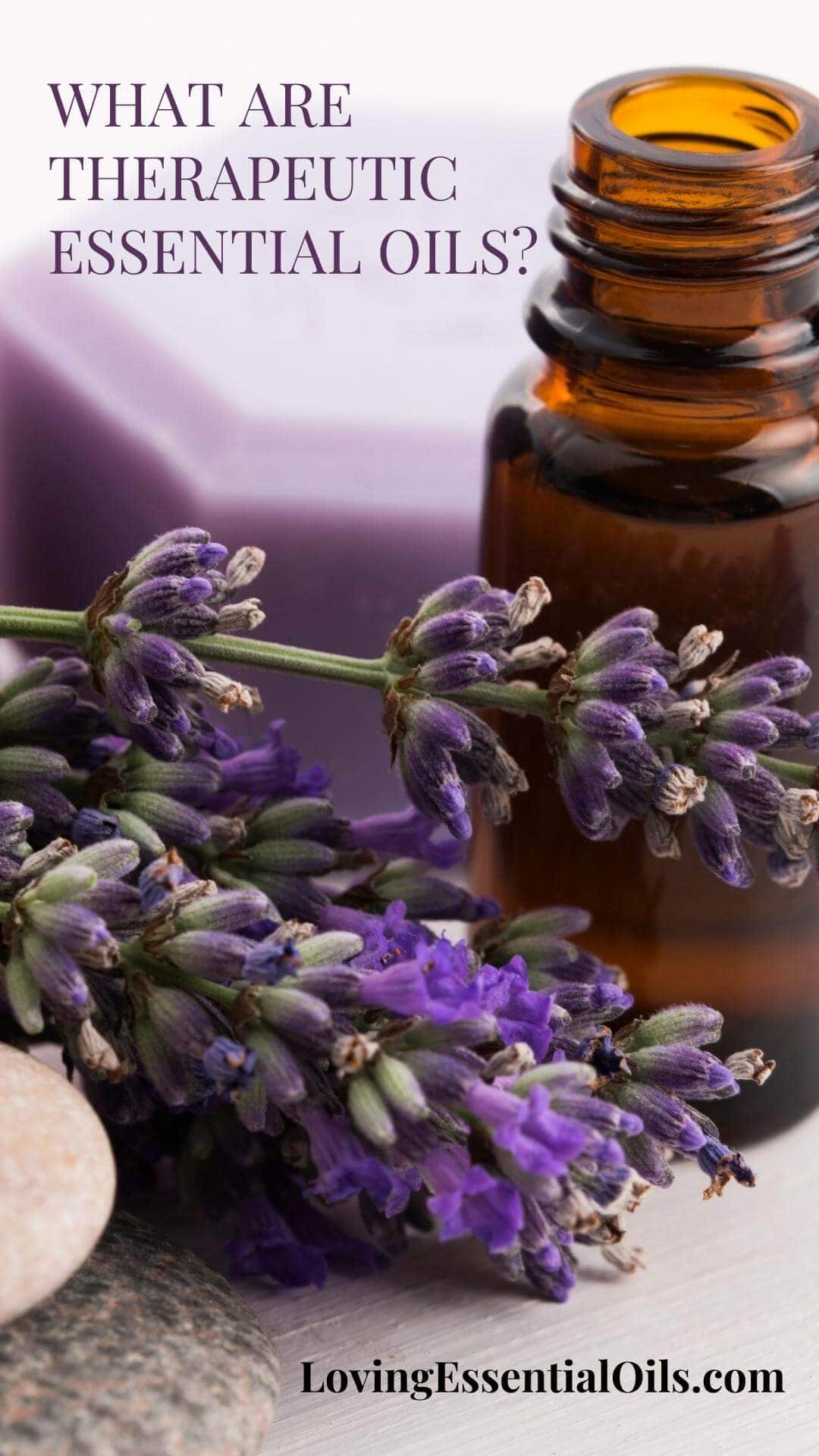
What are therapeutic essential oils? Therapeutic grade, certified pure therapeutic grade... what in the world does all this mean? Do essential oils need to be labeled as therapeutic in order to be good quality? Here's what these terms really mean and what to look for instead.
If you look up the word therapeutic in the dictionary, you'll find it defined as "relating to the healing of disease," with synonyms like healing, restorative, and beneficial. So why are some essential oils labeled as therapeutic and others are not?
What Are Therapeutic Grade Essential Oils?
First, let's clear something up. There's no official "therapeutic grade" for essential oils. What matters is whether an oil is pure, fresh, and correctly labeled, not whether the bottle uses the word therapeutic.
A pure essential oil is what aromatherapy is built on, whether people use it for relaxation, a bedtime routine, massage, skin care, or a lift in mood. A pure eucalyptus oil (ages 10+) will have the same fresh, clearing scent in your diffuser whether or not the label says therapeutic.
When you see oils labeled as therapeutic grade or certified pure therapeutic grade, you may be looking at a clever marketing tactic. No independent organization or government agency grades or certifies therapeutic essential oils in the United States.

Therapeutic Grade vs Certified Pure Therapeutic Grade
In an article written for NAHA, the National Association for Holistic Aromatherapy, aromatherapist Jade Shutes, co-founder of the New York Institute of Aromatic Studies, explains that the word therapeutic wasn't used in the aromatherapy world until sometime in the 1990s.
She goes on to say that the term started in marketing, to make buyers think that only a certain company's essential oils had therapeutic benefits while others did not.
CPTG Essential Oils
Later in the article, Shutes discusses Certified Pure Therapeutic Grade (CPTG), the designation used by doTERRA. In her view, the term is a marketing label, and the "certification" is the company's own trademark rather than a grade from an outside body.
You can see the "registered" mark on doTERRA bottles right beside the words Certified Pure Therapeutic Grade.
Some people believe CPTG is an FDA designation because doTERRA bottles have FDA-compliant labels. That isn't the case. Some doTERRA oils are labeled with Supplement Facts because the company markets them for internal use. No matter what the label says, I don't recommend swallowing essential oils.
The FDA regulates essential oils as cosmetics, drugs, or food depending on how a product is marketed, but it doesn't grade or certify essential oils for quality.
List of Essential Oil Marketing Terms
These terms aren't endorsed or verified by any independent or government body, so don't choose an oil based on them alone:
- Therapeutic grade essential oil
- Certified pure therapeutic grade (CPTG)
- Pure certified essential oil
- Food grade essential oil
- Pharmaceutical grade essential oil
- Premium essential oil
- Company quality programs like "Seed to Seal" (a brand's own trademark, not an outside certification)
Diffusing Essential Oils
Diffusing is one of the most common ways to enjoy essential oils. Ultrasonic diffusers (cool mist diffusers) are my favorite because they don't heat the oil, so the scent stays true. Use 3 to 8 drops for most diffusers and run it for 30 to 60 minutes.
People diffuse oils to freshen a room, lift their mood, relax, and add a natural scent to their home.
Read more: How to Use an Essential Oil Diffuser

Buying Quality Essential Oils
When it comes to therapeutic essential oils, purity is your main concern. A pure essential oil, free from fillers, synthetic fragrance, or hidden carrier oils, is what you want.
So what does this mean when you're shopping? You don't need to worry about whether the bottle says therapeutic. Instead, buy quality essential oils from a reputable company that shares GC/MS test results for its oils.
Trust the Oil Brand
Choose companies you'd like to do business with. They should describe their products accurately and back them up with testing.
Products should be properly labeled, GC/MS reports should be available, and staff should be well informed.
Good companies also support education and safe-use guidelines from groups like NAHA or AIA. Companies with environmental ethics avoid over-harvested oils and are committed to sustainable sourcing. Atlas cedarwood, rosewood, and spikenard are three to watch: use up what you have, and choose Virginian cedarwood, ho wood, or a sustainably sourced spikenard when buying new.
What to Look for on an Essential Oil Bottle's Label
A quality essential oil bottle should include the following:
1. Both the botanical (Latin) and common names
- For example, German chamomile is Matricaria chamomilla (also listed as Matricaria recutita), which shouldn't be confused with Roman chamomile, Chamaemelum nobile (formerly Anthemis nobilis). Some essential oils come from more than one species.
2. The plant part used
- Seeds, flowers, leaves, bark, or peel can all give very different oils. The bitter orange tree (Citrus aurantium) is a great example: the peel gives bitter orange oil, the leaves give petitgrain, and the blossoms give neroli. If this isn't on the bottle, it should be on the company's website or product page.
3. Extraction method
- Was the oil steam-distilled, cold-pressed, CO2 extracted, or solvent extracted (an absolute)? This matters for safety too, since cold-pressed citrus can be sun-sensitive and absolutes have their own limits.
4. Country of origin
- The country the plant was grown in should be listed on the bottle or the company's website.
5. Is it pre-diluted?
- Rose, neroli, and jasmine are often sold pre-diluted because of their high cost, usually in jojoba, fractionated coconut, or sweet almond oil. That's fine, as long as the label says so and the price reflects it.
6. Company information
- The company name, website, safety and usage guidelines, and a batch number or date.
7. Organic certification
- If it's certified organic, it should carry an organic logo.
The bottom line: therapeutic essential oils are simply pure, well-labeled oils from a company that tests them. Skip the buzzwords and check the label and the GC/MS report instead.
A Few Safety Basics
• Keep essential oils away from babies under 2, including diffusing in a room they're in.
• Always dilute oils before they touch skin, and patch test a new blend on your inner forearm for 24 to 48 hours.
• Check the age for every oil. Ages apply to diffusing too.
• If you're pregnant, check with your doctor or midwife first. For the first 16 weeks I use only six oils, and only in a diffuser or inhaler: lavender, sweet orange, lemon, ginger, cedarwood (Virginian), and frankincense. After that, skin blends stay at 0.5 to 1%.
• Never put oils on pets, and diffuse with a door open so they can leave. Cats are especially sensitive, including to tea tree, citrus, peppermint, eucalyptus, pine, wintergreen, cinnamon, clove, and ylang ylang.
• Never swallow essential oils, whatever the label says. If someone does, call Poison Control at 1-800-222-1222.
Share on Pinterest
More Essential Oil Basics
- How to Choose Quality Essential Oils
- Fragrance Oil vs Essential Oil
- What Is an Essential Oil Absolute?
- What Are CO2 Extracted Essential Oils?
- 7 Essential Oil Safety Tips Every Beginner Should Know
Ready to start blending? My Aromatherapy Supply Kits have the bottles and supplies you need, and my free essential oil guides are a great place to begin.
Essential Oil Guide for Beginners - Getting Started
$ 5.99
Beginner's Essential Oil Guide - Download/Printable Learn how to safely and effectively make essential oils a part of your everyday life. Everything you need to know about essential oils. If you have ever been around anyone who loves using essential… Read More