

Table of Contents
- What Does It Mean to 'Let Go' Emotionally?
- The Science Behind Essential Oils and Emotions
- How Scent Triggers Emotional Release
- Aromatherapy for Trauma and Stored Emotions
- Best Essential Oils for Letting Go
- 7 Essential Oil Blends for Letting Go
- How to Use Essential Oils for Emotional Release
- Safety Guidelines and Proper Dilution
- When to Seek Professional Support
Healing is rarely a straight line. Sometimes we carry emotional weight that feels heavy, even if we can't quite name it. Using Essential Oils for Letting Go is a gentle way to support your heart during these times. Let’s look at how we can use these plant essences to find more peace.
What Does It Mean to 'Let Go' Emotionally?
Letting go is the intentional process of releasing attachment to a specific outcome, a past event, or a painful feeling. It isn't about forgetting what happened or pretending it didn't hurt. Instead, it is about making peace with the past so you can live fully in the present.
When we hold onto old wounds, our bodies often tell the story. You might notice a tenseness in your body, a heavy feeling in your stomach, or a tendency to replay old conversations in your head.
Signs that you might be struggling to move forward include:
- Feeling stuck in a cycle of "what if" or "if only."
- Carrying a sense of heavy guilt or shame about past choices.
- Physical tension that doesn't go away with rest.
- Feeling a lack of hope for the future because the past feels so loud.
The Science Behind Essential Oils and Emotions
You might wonder how a simple scent can change how you feel. It all comes down to how your body is built. When you inhale an essential oil, the scent molecules travel through your nose and hit the olfactory bulb. This bulb is part of your brain's limbic system.
The limbic system manages your moods, memories, and your fight-or-flight response. Because the nose has a direct connection to this area, scent can trigger an emotional shift faster than almost any other sense. This is why a certain smell can instantly transport you back to a childhood memory.
How Scent Triggers Emotional Release
Most of our sensory input, like sight or touch, has to be processed by the "logical" part of the brain before it reaches our emotional center. Scent is different. It bypasses those cognitive barriers and goes straight to the amygdala.
The amygdala is the part of the brain that processes fear and trauma. By using specific oils, we can send a message of safety directly to this area. This allows the nervous system to relax. This makes it easier to process and release difficult feelings without getting overwhelmed by the "logic" of why we should or shouldn't feel a certain way.
Aromatherapy for Trauma and Stored Emotions
In my nursing practice, I’ve seen how the body stores what the mind tries to suppress. This is often called somatic memory. If you’ve ever felt a sudden surge of sadness or anxiety for no clear reason, it might be your body trying to release a stored emotion.
Essential oils act as a bridge. They help ground you in your physical body while you process these sensations. By using calming oils during emotional work, you tell your nervous system that it is safe to let these old energies move through you and out of your system.
Best Essential Oils for Letting Go
Every plant has a unique personality. When we choose oils for emotional release, we look for those that provide comfort, strength, and clarity.
Oils for Releasing Shame and Self-Judgment
- Bergamot: Helps clear feelings of unworthiness and low self-esteem.
- Geranium: This floral oil is wonderful for softening a hardened heart and encouraging us to be kind to ourselves.
- Rose: Rose is a gentle oil for self-love. It helps heal deep emotional wounds and reminds us that we are worthy of care.
Oils for Grounding During Dissociation
When emotions get too intense, we sometimes feel "spaced out" or disconnected from reality. This is dissociation. Earthy oils help pull us back to the earth.
- Vetiver: A thick, root-based oil that is incredibly grounding. It helps quiet a racing mind.
- Patchouli: This oil helps us reconnect with our physical bodies and feel present in our skin.
- Cedarwood: Known for its steadying influence, cedarwood provides a sense of security and stability.
Oils for Grief and Loss
- Frankincense: This resinous oil is used for spiritual transitions. It helps us find peace when we feel lost in sorrow.
- Cypress: Cypress is the oil of motion and flow. It is particularly helpful when we feel "stuck" in a stage of grief and need help moving forward.
Oils for Releasing Anger and Resentment
- Roman Chamomile: Just as it calms the skin, it calms the spirit. It is excellent for those who feel irritable or frustrated.
- Ylang Ylang: This sweet floral oil helps release pent-up anger and encourages a sense of joy.
7 Essential Oil Blends for Letting Go
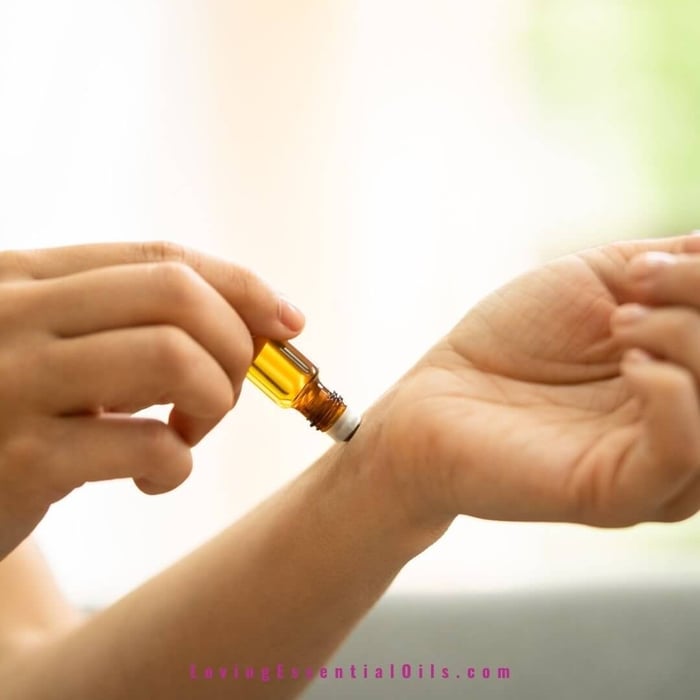
Here are some of my favorite recipes using essential oils for letting go. For the roller blends, use a 10ml glass bottle and fill the rest with a carrier oil like jojoba or fractionated coconut oil. For the diffuser blends, add the drops of essential oils to your diffuser with the required amount of water for your machine.
31 PC Deluxe Essential Oils Kit: Aromatherapy Supplies

$ 39.99
NEWLY UPDATED 31 PC Deluxe Essential Oils Kit! Jars added and a BONUS accessories pack. Aromatherapy supplies include a variety of tools needed for making DIY products with your essential oils. Use this kit to make roll on blends, inhaler… Read More
1. Release and Surrender Roller Blend
Use this roll on when you are trying to control a situation you can't change. Apply to the back of the neck and the heart. 4% dilution.
- 4 drops Cypress
- 2 drops Frankincense
- 2 drops Bergamot FCF
2. Shame Release Roller Blend
To combat the inner critic. Apply to the solar plexus (just above the navel). 4% dilution.
- 4 drops Bergamot FCF
- 2 drops Rose (or 3 drops Geranium)
- 2 drops Juniper Berry
3. Grounding and Presence Roller Blend
Roll on to stay focused and present. Apply to the bottoms of the feet and the wrists. 5% dilution.
- 4 drops Vetiver
- 4 drops Cedarwood
- 2 drops Orange
4. Emotional Cleansing Diffuser Blend
To clear the heavy feeling in a room after a difficult day or an argument.
- 3 drops Lemon
- 3 drops Juniper Berry
- 2 drops Sage
5. Letting Go of the Past Diffuser Blend
To break old habits and mental loops that keep you tied to the past.
- 3 drops Cypress
- 3 drops Grapefruit
- 2 drops Rosemary
6. Forgiveness and Healing Diffuser Blend
Diffuse this blend to soften feelings of resentment toward yourself or others.
- 4 drops Geranium
- 2 drops Roman Chamomile
- 2 drops Sandalwood
7. Fresh Start Diffuser Blend
Turn on this combination to invite energy and optimism for a new chapter in life.
- 4 drops Lime
- 2 drops Spearmint
- 2 drops Pine
How to Use Essential Oils for Emotional Release
Topical Application
Applying oils to the skin is a beautiful way to connect with the body. For emotional work, apply your roller blends to:
- The Heart Center: For grief and love.
- The Wrists: So you can easily inhale the scent throughout the day.
- The Solar Plexus: For issues involving power and control.
Aromatic Diffusion
Diffusing is perfect for changing your home's atmosphere. I recommend diffusing essential oils for 30–60 minutes in a room where you feel safe. This creates a space for your healing work.
Creating a Ritual of Letting Go
Try pairing your oils with a simple action. Apply your blend, take three deep breaths, and write down one thing you want to leave behind on a piece of paper. Then, safely shred that paper as a symbol of your freedom.
Safety Guidelines and Proper Dilution
As a nurse, safety is my priority. Essential oils are powerful, and more is not always better. Generally, the recommended topical application for adults is 2% dilution. With the nature of roller bottles and targeted application, I like to go up to 5% for adults (take is 10 drops per 10ml roller bottle).
Note: Always take the safety precautions for each individual essential oil in the blend.
Dilution Ratios for Roller Blends
- Adults (2-5%): For emotional support, a 3% dilution is usually perfect. This is about 6 drops of total essential oil in a 10ml roller. For a 5% blend, use 10 drops.
- Children (0.5-1%): Use only 1-2 drops per 10ml roller and stick to kid-safe oils like Lavender or Cedarwood.
- Sensitive Skin: Always perform a patch test on a small area of skin and wait 24 hours to check for a reaction.
Phototoxic Oils
Some oils can cause skin sensitivity if applied to skin that is then exposed to UV rays. Avoid sun exposure for 12 hours after applying: Lemon, Lime, Grapefruit, and Bitter Orange. Note: Bergamot is highly phototoxic unless you buy the FCF (furocoumarin-free) version.
When to Seek Professional Support
Essential oils are a wonderful tool, but they are not a replacement for medical or psychological care. If you are struggling with deep trauma or PTSD, please reach out to a health professional, licensed therapist, or counselor.
These oils work best when they support the hard work you are doing in therapy, not in place of it. You deserve to feel light and free. I hope these blends help you on your path to peace.
References:
- The influence of odors on emotions and mood (PubMed): https://pmc.ncbi.nlm.nih.gov/articles/PMC3794443/
- Essential Oils for Grief and Loss (ACHS): https://aromaticstudies.com/essential-oils-for-grief/
- How the Body Remember Trauma (Psychology Today): https://www.psychologytoday.com/us/blog/the-elusive-brain/201812/how-our-bodies-remember-trauma