
Table of Contents
- Tea Tree and Coconut Oil Dilution Chart
- Why Tea Tree Needs Dilution
- Which Coconut Oil Should You Use?
- How to Mix Tea Tree With Coconut Oil
- What Blends Well With Tea Tree
- Tea Tree and Coconut Oil Recipes
- More Ways to Use Your Blend
- Who Should Use Less Tea Tree
- Common Tea Tree Dilution Mistakes
- How Long Does Your Blend Keep?
- FAQs
Updated November 2026
Here's how to dilute tea tree oil with coconut oil: use 1 drop of tea tree per teaspoon of coconut oil for the face (1%) and up to 3 drops per teaspoon for the body or feet (3%). A little tea tree goes a long way. Below is my easy dilution chart, which kind of coconut oil to use, mixing steps, four simple recipes, and the mistakes I see most often. Jump to the recipes.
For everything else about this oil, see my full tea tree essential oil guide.
Tea Tree and Coconut Oil Dilution Chart
These amounts are based on about 20 drops per ml, so 1 teaspoon holds roughly 100 drops.
| Dilution | Best for | Per 1 tsp (5 ml) | Per 1 Tbsp (15 ml) | Per 1 oz (30 ml) |
|---|---|---|---|---|
| 0.5% | Very sensitive skin | ½ drop (make a bigger batch) | 1 to 2 drops | 3 drops |
| 1% | Face, kids 5 to 11, older adults | 1 drop | 3 drops | 6 drops |
| 2% | Body, scalp oil, ages 12+ | 2 drops | 6 drops | 12 drops |
| 3% | Feet and small spots, ages 12+ | 3 drops | 9 drops | 18 drops |
The standard dilution guide allows up to 5% for ages 15 and up on a small spot for a short time, but for tea tree I stay at 3% or less. Stronger blends you may see online, like 1 part tea tree to 4 or 9 parts coconut oil (10% to 20%), are far more likely to irritate skin or cause an allergy over time.
Why Tea Tree Needs Dilution
Tea tree (Melaleuca alternifolia) has a fresh, sharp, medicinal scent that comes mostly from terpinen-4-ol. It's one of the most popular oils for skin blends, which is exactly why it causes so many skin reactions: people use a lot of it, often straight from the bottle.
Knowing how to dilute tea tree oil keeps those few drops gentle. A carrier oil spreads them over a bigger area, so your skin gets a softer amount, and your bottle lasts much longer. Freshness matters too. Tea tree breaks down faster than many oils once it's opened, and old, oxidized tea tree is more likely to irritate or sensitize skin. A diluted blend made from a fresh bottle is the kindest way to use it.
Which Coconut Oil Should You Use?
- Fractionated coconut oil: stays liquid, feels light, has no scent, and keeps for a long time. It's my pick for rollers and dropper bottles. Learn more about fractionated coconut oil.
- Virgin (unrefined) coconut oil: solid below about 76°F, with a coconut scent. Lovely for foot balms and body butters, but it can feel heavy on the face.
- Refined coconut oil: also solid when cool, but with little to no scent. A good choice if you want a balm without the coconut smell.
Coconut oil and tea tree make a good pair. Fractionated coconut oil lets tea tree's scent come through clean and bright, while virgin coconut oil's sweet scent softens tea tree's sharp edge, so a foot balm smells more like a treat than a medicine cabinet. Because virgin coconut oil melts on warm skin, it also turns a few drops of tea tree into a balm you can scoop and smooth on.
Not sure which to choose? Compare fractionated vs virgin coconut oil. For the face, jojoba is often a better fit; see fractionated coconut oil vs jojoba.
How to Mix Tea Tree With Coconut Oil
With Fractionated (Liquid) Coconut Oil
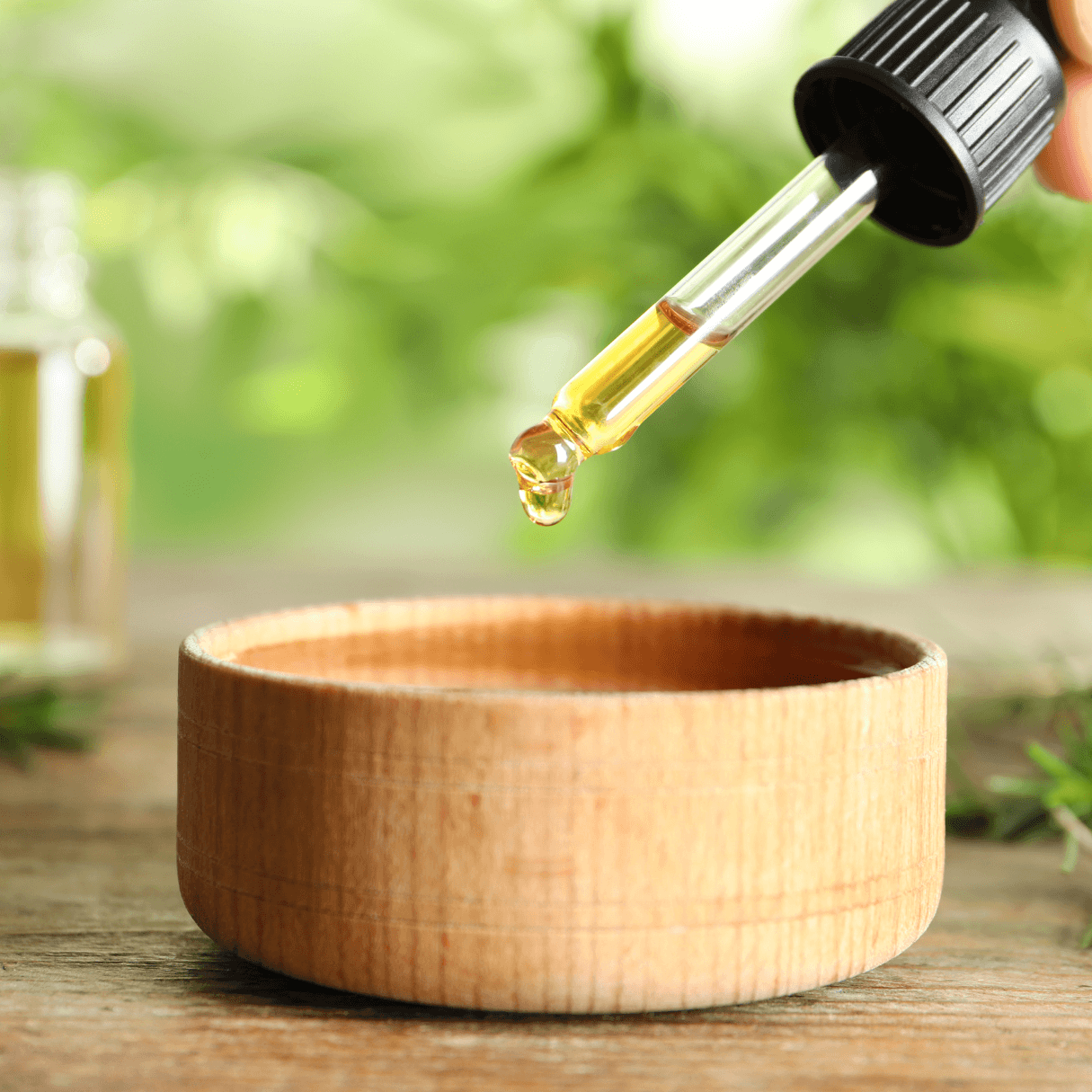
- Add the tea tree drops to a clean, dry glass bottle (a 10 ml roller or 1 oz dropper bottle).
- Fill with fractionated coconut oil.
- Cap and roll gently to mix. Label with the name, dilution, and date.
With Virgin or Refined (Solid) Coconut Oil
- Scoop the coconut oil into a small glass jar.
- If it's solid, set the jar in a bowl of warm water until it softens or just melts. Don't microwave it until hot.
- Let it cool slightly, then stir in the tea tree drops.
- Let it set at room temperature or in the fridge. Label and date it.
What Blends Well With Tea Tree
On its own, tea tree can smell a little like a first aid kit. A second oil makes it much more pleasant to use. Lavender is my favorite partner: its soft floral scent rounds off tea tree's sharp edges, and both are gentle enough for kids 5 and up at a low dilution. Lemon brings a clean, bright lift, though cold-pressed lemon needs to stay under its sun limit on skin. Peppermint adds a cool, tingly feel that's lovely in a foot balm for ages 12 and up, and eucalyptus gives a fresh, clearing scent for ages 10 and up. More ideas in my tea tree and lavender roller.
Tea Tree and Coconut Oil Recipes
| Recipe | Use | Ages |
|---|---|---|
| Tea Tree Foot Oil | Body oil | 12+ |
| Tea Tree Scalp Oil | Scalp oil | 12+ |
| Minty Tea Tree Foot Balm | Body butter | 12+ |
| Little Tea Tree Roller | Roller | 5+ |
Tea Tree Foot Oil
Body oil · Ages 12+ · 3%
A fresh, clean-smelling oil for tired feet at the end of the day.
- 12 drops tea tree (Melaleuca alternifolia)
- 6 drops lavender (Lavandula angustifolia)
- 1 oz fractionated coconut oil
Directions: Add the essential oils to a 1 oz glass dropper bottle, fill with fractionated coconut oil, cap, and shake gently. Massage a few drops into clean, dry feet before socks or bed. Label it with the name, the date, and "3%."
Tea Tree Scalp Oil
Scalp oil · Ages 12+ · 2%
A light pre-wash oil for a scalp that feels dry and tight in winter.
- 4 drops tea tree (Melaleuca alternifolia)
- 2 drops lavender (Lavandula angustifolia)
- 1 Tbsp fractionated coconut oil
Directions: Mix in a small glass bottle. Part your hair and massage a small amount into your scalp 20 to 30 minutes before washing, keeping it away from your eyes. Shampoo twice to rinse it out.
Minty Tea Tree Foot Balm
Body butter · Ages 12+ · 2%
A soft coconut balm with a cool, tingly peppermint finish.
- 2 Tbsp virgin coconut oil
- 8 drops tea tree (Melaleuca alternifolia)
- 4 drops peppermint (Mentha × piperita)
Directions: Soften the coconut oil in a bowl of warm water, stir in the essential oils, and spoon it into a small glass jar. Let it set, then smooth a little over your feet at bedtime and pull on cotton socks.
Little Tea Tree Roller
Roller · Ages 5+ · 1%
A gentle tea tree and lavender roller for kids' dry elbows and knees.
- 1 drop tea tree (Melaleuca alternifolia)
- 1 drop lavender (Lavandula angustifolia)
- Fractionated coconut oil to fill a 10 ml roller
Directions: Add the essential oils to the roller, fill with fractionated coconut oil, and roll to mix. Roll a little on dry spots, keep the bottle out of reach, and do the rolling yourself.
Note: Label it with your child's name and the dilution. No tea tree for children under 5.
More Ways to Use Your Blend
- Feet (3%): massage into clean, dry feet before socks or bed. See my post on coconut oil for dry feet.
- Blemish-prone spots (1%): dab on at night with a cotton swab, keeping it away from your eyes.
- Body (2%): a thin layer on dry, rough areas like elbows and knees.
Who Should Use Less Tea Tree
Tea tree is for ages 5 and up. Kids 5 to 11 stay at 0.5 to 1%, which is 1 drop per teaspoon at most, and children under 5 shouldn't use it at all. If your skin is sensitive, or you're an older adult with thinner skin, start at 0.5 to 1% and see how it feels.
If you're pregnant, check with your doctor or midwife first. Tea tree is on my list of favorite oils for after 16 weeks, but no oils go on skin during the first 16 weeks, and after that skin blends stay at 0.5 to 1%. Tea tree and cats don't mix: cats are especially sensitive to it, so keep blends where they can't lick them off your skin, and never put tea tree on a pet.
Common Tea Tree Dilution Mistakes
The biggest one is dabbing tea tree straight from the bottle onto a spot. It feels like the stronger choice, but undiluted tea tree is one of the most common ways people end up with red, itchy skin, and a skin allergy can stick around for good. The second is following ratios from the internet like 1:1 or 1:4, which work out to 50% or 20% tea tree, many times stronger than you need.
The third mistake is using an old bottle. If your tea tree smells harsher than you remember, or you can't remember when you opened it, retire it from skin use and use it in a cleaning spray instead. The last is making a big batch that sits on the shelf for a year. Small batches are better, and you can always mix more.
How Long Does Your Blend Keep?
Tea tree is one of the oils that ages faster, so I use an opened bottle within 1 to 2 years. Fractionated coconut oil keeps well, and so does virgin coconut oil when it's stored cool. Make your blend in a small dark glass bottle or jar, keep it out of the sun and heat, and write the date on the label. If a blend starts to smell sharp or off, toss it and make a fresh one. Read more in can I use expired essential oils.
A Few Safety Basics
• Keep essential oils away from babies under 2, including diffusing in a room they're in. No tea tree on skin under age 5.
• Always dilute tea tree, and patch test a new blend on your inner forearm, covered, for 24 to 48 hours. Stop if you see redness or itching.
• Don't apply it to broken skin, near your eyes, or inside your ears.
• If you're pregnant, check with your doctor or midwife first. For the first 16 weeks I use only six oils, and only in a diffuser or inhaler: lavender, sweet orange, lemon, ginger, cedarwood (Virginian), and frankincense. After that, skin blends stay at 0.5 to 1%.
• Never put oils on pets, and diffuse with a door open so they can leave. Cats are especially sensitive, including to tea tree, citrus, peppermint, eucalyptus, pine, wintergreen, cinnamon, clove, and ylang ylang.
• Never swallow tea tree oil; it's toxic if swallowed. If someone does, call Poison Control at 1-800-222-1222.
• See your doctor for skin problems that are painful, spreading, or not improving.
For more, see my dilution guide for all oils, is coconut oil a carrier oil?, and 7 essential oil safety tips.
Ready to make your own blends? My Aromatherapy Supply Kits have the rollers and bottles you need, and my free essential oil guides are full of recipe ideas.
Essential Oil Guide for Beginners - Getting Started
$ 5.99
Beginner's Essential Oil Guide - Download/Printable Learn how to safely and effectively make essential oils a part of your everyday life. Everything you need to know about essential oils. If you have ever been around anyone who loves using essential… Read More