

Table of Contents
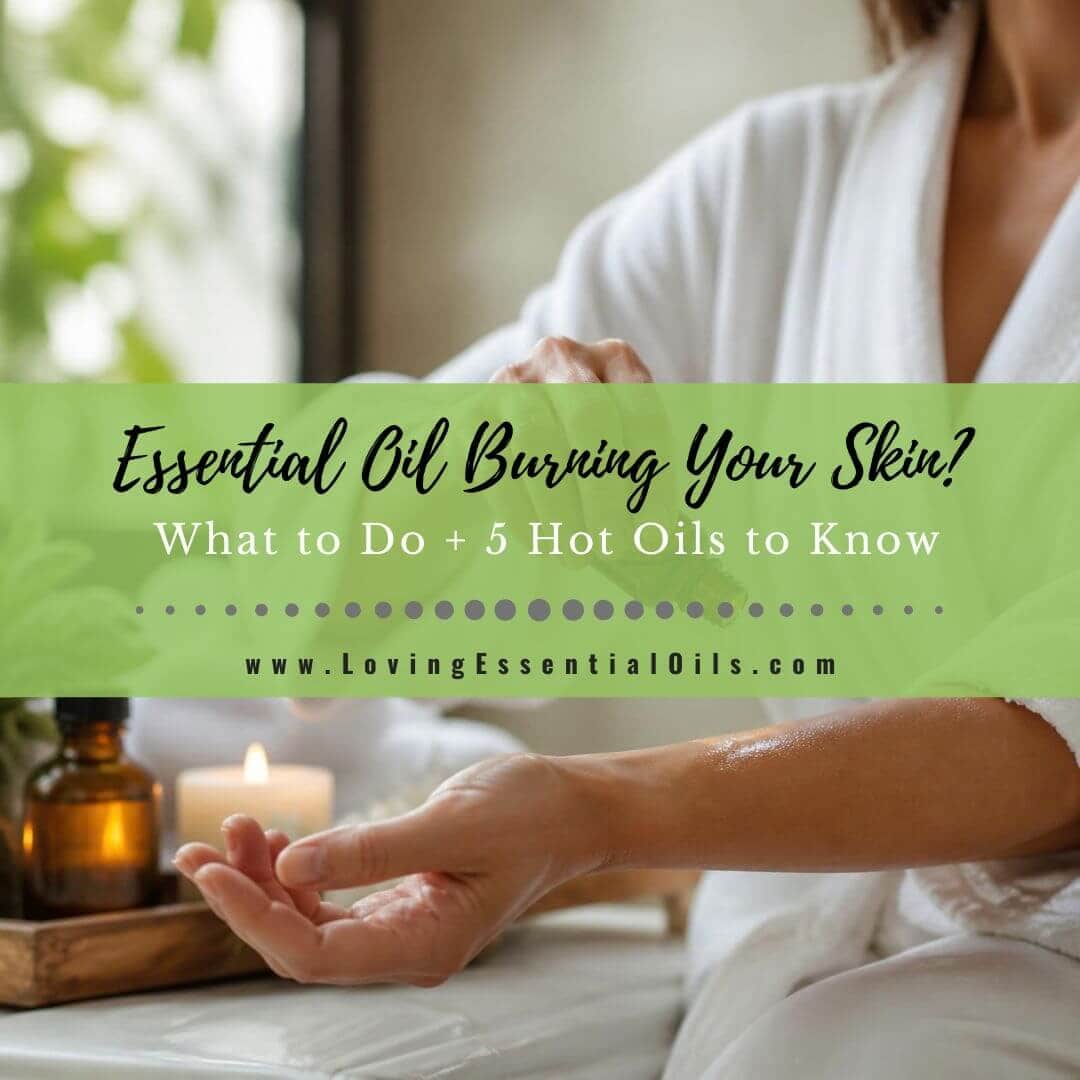
If an essential oil is burning your skin, gently wipe a plain carrier oil like jojoba, olive or coconut oil over the area, wipe it off with a soft cloth, then wash with mild soap and cool water. Don't reach for water alone first, because oil and water don't mix. See a doctor if the skin blisters, swells or the reaction spreads.
Below I'll walk you through exactly what to do, why some oils feel "hot," the five hot oils to know, and how to use them safely. Jump to the hot oils list.
What to Do Right Now
If a Blend Is Burning Your Skin
- Stop using the blend.
- Apply a plain carrier oil (jojoba, olive, sunflower or coconut) to dilute what's left on your skin.
- Wipe it off gently with a soft cloth or tissue.
- Wash with mild, unscented soap and cool water, then pat dry.
- Let your skin rest. No more essential oils on that spot until it's completely calm. A little plain aloe vera gel or a gentle, fragrance-free moisturizer can feel soothing.
Get medical help if you see blistering, swelling, hives, or a rash that spreads beyond where you applied the oil. Call 911 for any trouble breathing.
If oil gets in your eyes: flush with clean, lukewarm water for several minutes and call Poison Control (1-800-222-1222 in the US) or your doctor if the stinging doesn't ease. Don't rub your eyes.
If a child swallows essential oil: call Poison Control right away, even if they seem fine. Keep every bottle capped and out of reach.
Irritation vs Sensitization
There are two different reactions to watch for:
- Irritation: redness, heat or stinging soon after you apply a blend. It usually fades once you remove the oil.
- Sensitization: an allergic-type reaction that can build up over time with repeated use. Once you're sensitized to an oil, you may react to it every time, even at low dilutions.
Either way, your skin is telling you something. Take a break from that oil, and when you try again, use a lower dilution and patch test first. Here's how to do a patch test.
Why Did My Blend Burn?
In my experience, a burning blend usually comes down to one of these:
- It was too strong. More drops doesn't mean more benefit. Check your blend with my dilution calculator and chart.
- It contained a "hot" oil. Spice and herb oils like cinnamon, clove and oregano need very low dilutions. More on these below.
- The oil was old. Oxidized oils, especially citrus, pine and tea tree, are more likely to irritate. Use oils within their shelf life and store them cool and dark.
- A citrus oil met the sun. Some cold-pressed citrus oils can cause a serious reaction in sunlight. See my photosensitive essential oils guide.
- Oils went straight into the bath. Oil floats on water, so undiluted drops land right on your skin. Always mix them into a carrier oil or castile soap first.
- The skin was sensitive or broken. The face, freshly shaved skin, and scraped or irritated skin all react more easily.
What Makes an Essential Oil "Hot"?
It comes down to chemistry. Hot oils are high in phenols (like eugenol, carvacrol and thymol) or aldehydes (like cinnamaldehyde). These compounds give the oils their strong, spicy-herbal scents, and they're also what can irritate skin and mucous membranes. Many of them come from familiar kitchen spices, and you'll find more in my top 20 spice essential oils list.
5 Hot Essential Oils to Know
These are the classic hot oils, with the maximum skin dilutions from Tisserand and Young's Essential Oil Safety. For cinnamon bark and cassia, I simply don't use them on skin. I diffuse them instead. For limits on more than 50 other oils, see my maximum dilution list.
| Essential Oil | Max on Skin | Avoid If |
|---|---|---|
| Cinnamon bark (Cinnamomum verum) | Diffuse only | Pregnant or breastfeeding |
| Cassia (Cinnamomum cassia) | Diffuse only | Pregnant or breastfeeding |
| Clove bud (Syzygium aromaticum) | 0.5% | Pregnant or breastfeeding, on blood thinners |
| Oregano (Origanum vulgare) | 1.1% | Pregnant or breastfeeding |
| Thyme, thymol type (Thymus vulgaris) | 1.3% | Bleeding disorders, on blood thinners |
To put those numbers in drops: 0.5% is just 1 drop in a 10 ml roller, and 1% is 2 drops in a 10 ml roller or 3 drops in 1 Tbsp. Never go above the limit for any single hot oil, even if the rest of your blend is gentle.
1. Cinnamon Bark
Cinnamon bark has that sweet, spicy, unmistakable bakery scent. It's traditionally used to create a warm, cozy mood, and a single drop in the diffuser is enough to make a whole room smell like the holidays. It's also one of the most irritating oils you can put on skin, so I keep it in the diffuser only. Cinnamon leaf is a bit gentler (0.6%), but still a strong oil to use sparingly. Find ideas in my cinnamon diffuser benefits and substitutes and what blends well with cinnamon.
2. Cassia
Cassia is sometimes called Chinese cinnamon. Its scent is a little sharper and more rustic than cinnamon bark, and it's traditionally used for a warm, energizing aroma on gray days. Like cinnamon bark, it's high in cinnamaldehyde and has a high risk of skin sensitization, so it's another diffuser-only oil for me. Read more in my cassia essential oil spotlight.
3. Clove Bud
Clove bud is warm, sweet and spicy, and a favorite in fall blends. It's traditionally used in warming massage blends for tired muscles. Choose clove bud rather than clove leaf or stem, and keep it at 0.5% or less on skin. Check with your doctor before using it on skin if you take blood thinners. See my clove essential oil spotlight and which of cinnamon, clove and nutmeg has the strongest scent.
4. Oregano
Oregano smells exactly like you'd expect: strong, herbal and a little medicinal. It's traditionally used in winter diffuser blends and to freshen the air. It's very potent, so use 1 drop with milder oils like lemon in the diffuser. On skin, stay at 1.1% or less, and skip it entirely during pregnancy and breastfeeding. My oregano essential oil guide has more blends.
5. Thyme
Thyme has a fresh, herbal, slightly sharp scent. The type matters here. Thyme ct. thymol is the hot one, while thyme ct. linalool is much gentler on skin. If you want thyme in a massage oil or roller, the linalool type is the better pick. Learn the difference in my guide to essential oil chemotypes, and try my thyme diffuser blends.
Gentler Warming Oils to Try Instead
If you love a warm, spicy scent but have sensitive skin, these give you the cozy feeling with much less risk of irritation:
- Black pepper (Piper nigrum): spicy and warming, lovely in massage blends. See my black pepper essential oil recipes.
- Ginger (Zingiber officinale): warm and earthy. Try my warming ginger massage oil.
- Cardamom (Elettaria cardamomum): sweet, spicy and fresh. Read my cardamom spotlight.
Use these at 1 to 2% for massage oils and body blends. Old, oxidized black pepper and ginger can still irritate, so use fresh oils.
How to Use Hot Essential Oils Safely
My Hot Oil Safety Rules
- Never use hot oils undiluted, and never take essential oils internally.
- Stay at or below the max dilution for each oil, and keep hot oils off your face.
- Skip hot oils in the bath and on children's skin.
- Patch test before using a new blend.
- Check with your doctor if you're pregnant, nursing, on blood thinners or have a medical condition.
- Store oils cool and dark. Old, oxidized oils are more likely to irritate.
Diffusing around kids and pets: use just 1 to 2 drops of a hot oil mixed with gentler oils, and diffuse for 30 to 60 minutes in a ventilated room. Cats are especially sensitive to phenol-rich oils like clove, oregano and thyme, so don't diffuse these where your cat spends time, and always leave pets a way out of the room. For little ones, see my kid-safe essential oils list.
Easy Recipes With Hot Essential Oils
Cozy Spice Diffuser Blend
Adults and kids 6+ (not around cats; skip if pregnant or breastfeeding)
- 3 drops sweet orange (Citrus sinensis)
- 1 drop cinnamon bark (Cinnamomum verum)
- 1 drop clove bud (Syzygium aromaticum)
Method: Add the oils to your diffuser with the amount of water your machine recommends. Diffuse for 30 to 60 minutes, then take a break.
Warming Clove and Ginger Massage Oil (1%)
Adults only
- 1 drop clove bud (Syzygium aromaticum)
- 1 drop ginger (Zingiber officinale)
- 1 drop lavender (Lavandula angustifolia)
- 1 Tbsp (15 ml) jojoba or sweet almond oil
Method: Add the essential oils to the carrier oil in a small glass dish and stir. Patch test first, then massage into tired shoulders, calves or feet. Keep it away from your face and broken skin. This keeps clove well under its 0.5% limit.
Spiced Citrus Inhaler
Adults and teens
- 7 drops sweet orange (Citrus sinensis)
- 3 drops ginger (Zingiber officinale)
- 1 drop clove bud (Syzygium aromaticum)
- 1 blank personal inhaler
Method: Drop the oils onto the cotton wick, slide it into the inhaler and snap the cap on. Hold it under your nose and breathe in gently. Don't touch the wick to your skin. For another favorite, try my fall cheer uplifting inhaler blend.
Keep Exploring
- Maximum dilution for essential oils: safe limits for 50+ oils
- Diluting essential oils: free dilution calculator and chart
- Top 20 spice essential oils list
- 7 essential oil safety tips for beginners
- 10 spicy diffuser blends
- Cozy diffuser blends
Shop my Aromatherapy Supply Kits and grab one of my free essential oil guides.
Essential Oil Guide for Beginners - Getting Started
$ 5.99
Beginner's Essential Oil Guide - Download/Printable Learn how to safely and effectively make essential oils a part of your everyday life. Everything you need to know about essential oils. If you have ever been around anyone who loves using essential… Read More