
Table of Contents
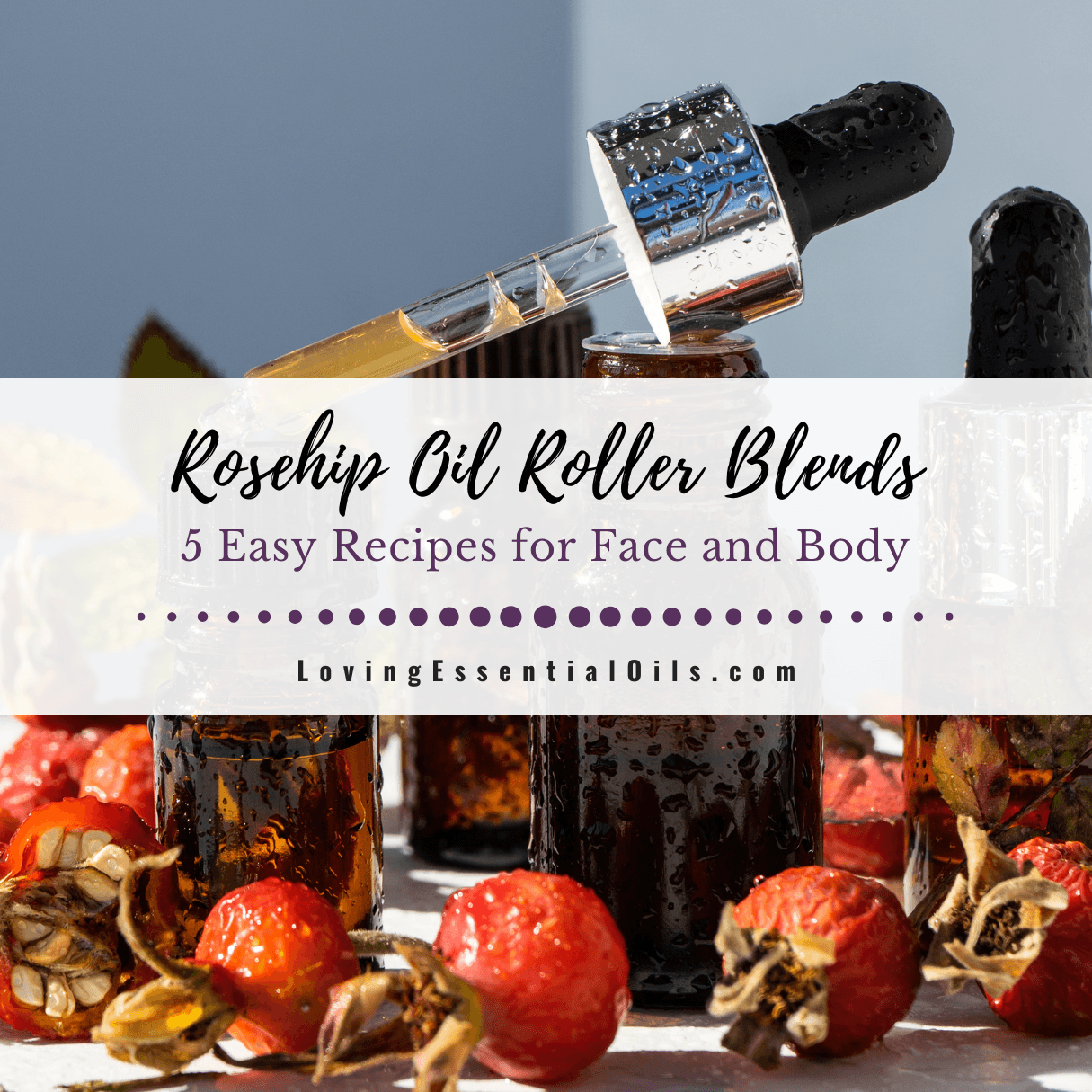
Rosehip oil makes a lovely roller bottle carrier because it's light, sinks in fast, and leaves skin feeling soft without a greasy film. My favorite way to make rosehip oil roller blends is half and half with another carrier like jojoba, which stretches this pricier oil and helps the blend stay fresh longer.
Below I'll show you how to mix rosehip with other carriers, how much essential oil to add, and five easy rosehip roller recipes for your face, cuticles, the look of old scars, and a calm moment on the go. For everything else about this oil, see my full rosehip oil guide. Jump to the recipes.
Why Use Rosehip Oil in Roller Bottles?
- Light, "dry" feel: it sinks in quickly without a greasy film, so a face roller works under makeup or sunscreen.
- A low comedogenic rating: rosehip rates a 1 on the 0 to 5 comedogenic scale. Read more in is rosehip seed oil comedogenic?
- A little goes a long way: a 10 ml roller only needs a couple of teaspoons, so a small bottle of rosehip goes further.
- A favorite for dry skin: it's a go-to for dry and mature skin, and many people massage it into old scars and stretch marks to keep the skin feeling soft and supple.
The trade-off is freshness. Rosehip's delicate fatty acids go rancid faster than most carriers, so make small batches and keep your rollers in the fridge.
How to Mix Rosehip Oil With Other Carriers
You can fill a roller with rosehip alone, but I usually mix it half and half with a second carrier. Here's how to choose:
| Carrier mix (10 ml roller) | Feel | Best for |
|---|---|---|
| Rosehip only | Light, rich | Dry and mature skin, small areas |
| 5 ml rosehip + 5 ml jojoba | Balanced, silky | Everyday face rollers, all skin types. Keeps longest |
| 5 ml rosehip + 5 ml hemp seed | Very light | Oily skin. Refrigerate |
| 5 ml rosehip + 5 ml fractionated coconut | Thin, non-greasy | Pulse points and body rollers on a budget |
| 5 ml rosehip + 5 ml argan | Extra silky | Dry skin and cuticles |
Trying to choose between the two most common partners? Here's my fractionated coconut oil vs jojoba comparison.
How Much Essential Oil to Add
Keep face rollers at 0.5 to 1%. Body and pulse-point rollers can go to 2 to 3% for everyday use at ages 12 and up, and up to 5% only for ages 15 and up, short-term, on a small spot.
| Dilution | Per 10 ml roller | Per 1 Tbsp (15 ml) | Use for |
|---|---|---|---|
| 0.5% | 1 drop | 1 to 2 drops | Kids 2 to 4 (six starter oils only), very sensitive skin |
| 1% | 2 drops | 3 drops | Face, sensitive skin, kids 5 to 11 |
| 2% | 4 drops | 6 drops | Everyday use, ages 12+ |
| 3% | 6 drops | 9 drops | Wrists, hands, and small areas, ages 12+ |
| 5% | 10 drops | 15 drops | Ages 15+, short-term, small spot only |
An oil's own max still applies, so check my maximum dilution list. My diluting essential oils guide has the full chart and a calculator.
How to Make a Rosehip Roller
- Start with a clean, dry 10 ml glass roller bottle. Amber or other colored glass helps protect rosehip from light.
- Add your essential oils first.
- Use a small funnel to add rosehip oil (and your second carrier, if using) up to the shoulder of the bottle.
- Press the roller top on firmly, cap it, and roll gently between your palms to mix.
- Label it with the name, the date, and the dilution, then store it in the fridge.
New to rollers? Read 5 mistakes when buying empty roller bottles and my colored vs clear glass roller bottle guide.
5 Easy Rosehip Oil Roller Recipes
Each recipe makes one 10 ml glass roller bottle, made the way described above.
| Recipe | Ages | Dilution |
|---|---|---|
| 1. Glow Face Roller | 12+ | 1% |
| 2. Tea Tree Spot Roller | 12+ | 1% |
| 3. Calm and Focus Pulse Point Roller | 12+ | 2.5% |
| Little Calm Pulse Point Roller | 5+ | 1% |
| 4. Frankincense and Lavender Cuticle Roller | 12+ | 2% |
| Little Hands Cuticle Roller | 5+ | 1% |
| 5. Scar and Stretch Mark Roller | 12+ | 2% |
1. Glow Face Roller
Roller · Ages 12+ · 1%
Soft frankincense and lavender in a silky rosehip and jojoba base, for an evening face routine.
- 1 drop frankincense (Boswellia carterii)
- 1 drop lavender (Lavandula angustifolia)
- 5 ml rosehip seed oil
- 5 ml jojoba oil
Directions: At night, roll a little onto your cheeks, forehead, and chin, staying well away from your eyes, then press it in with your fingertips. For more on frankincense, see my frankincense essential oil guide.
2. Tea Tree Spot Roller
Roller · Ages 12+ · 1%
A light, clean-smelling roller for a tiny dab on the occasional spot.
- 1 drop tea tree (Melaleuca alternifolia)
- 1 drop lavender (Lavandula angustifolia)
- 5 ml rosehip seed oil
- 5 ml hemp seed oil (or jojoba)
Directions: Roll a tiny amount onto the spot once a day at night, keeping it away from your eyes. This is my rosehip spin on my tea tree and lavender roller.
Note: See a dermatologist for painful or persistent breakouts.
3. Calm and Focus Pulse Point Roller
Roller · Ages 12+ · 2.5%
Bright bergamot over soft cedarwood, for a calm, steady moment on the go.
- 3 drops bergamot FCF (Citrus bergamia)
- 2 drops cedarwood Atlas (Cedrus atlantica) or Virginian (Juniperus virginiana)
- 5 ml rosehip seed oil
- 5 ml fractionated coconut oil
Directions: Roll onto your wrists, the back of your neck, or behind your ears whenever you want a calm moment. Bergamot FCF has the compounds that cause sun sensitivity removed, so it's fine for daytime. Learn more in bergamot emotional benefits and my frankincense and cedarwood blend.
Little Calm Pulse Point Roller
Roller · Ages 5+ · 1%
The same calm scent, made gentle for kids.
- 1 drop bergamot FCF (Citrus bergamia)
- 1 drop cedarwood Atlas (Cedrus atlantica) or Virginian (Juniperus virginiana)
- 5 ml rosehip seed oil
- 5 ml fractionated coconut oil
Directions: Make it the same way as the grown-up roller. Roll a little onto the wrists or the back of the neck, and keep the bottle out of reach so you do the rolling.
Note: Label it with your child's name and the dilution. See my kid safe essential oils list for more.
4. Frankincense and Lavender Cuticle Roller
Roller · Ages 12+ · 2%
Keep this one by the sink for soft, cared-for cuticles.
- 2 drops lavender (Lavandula angustifolia)
- 2 drops frankincense (Boswellia carterii)
- 5 ml rosehip seed oil
- 5 ml argan oil
Directions: Roll onto your nail beds and cuticles after washing your hands and massage it in. See more in rosehip oil for nails and cuticles.
Little Hands Cuticle Roller
Roller · Ages 5+ · 1%
A gentle version for little hands that pick at their cuticles.
- 1 drop lavender (Lavandula angustifolia)
- 1 drop frankincense (Boswellia carterii)
- 5 ml rosehip seed oil
- 5 ml argan oil
Directions: Make it the same way as the grown-up roller, and roll a little onto the cuticles at bedtime.
Note: Label it with your child's name and the dilution.
5. Scar and Stretch Mark Roller
Roller · Ages 12+ · 2%
Honeyed helichrysum and lavender in pure rosehip, for keeping old scars and stretch marks feeling soft.
- 2 drops helichrysum (Helichrysum italicum)
- 2 drops lavender (Lavandula angustifolia)
- Rosehip seed oil to fill a 10 ml roller
Directions: Massage into old scars or stretch marks once or twice a day. Results take regular use and vary from person to person. Learn more in what blends well with helichrysum.
Note: Use it only on skin that has fully closed, never on open wounds or fresh scabs. If you're pregnant or breastfeeding, use plain rosehip oil, or check with your doctor or midwife before adding essential oils.
A Few Safety Basics
• Keep essential oils away from babies under 2, including diffusing in a room they're in.
• Always dilute oils before they touch skin, and patch test a new blend on your inner forearm for 24 to 48 hours.
• Check the age on each recipe. Kids 2 to 4 use only six starter oils at 0.5%, after checking with your pediatrician. Kids 5 to 11 stay at 0.5 to 1%. Keep face rollers at 0.5 to 1% and away from the eyes.
• If you're pregnant, check with your doctor or midwife first. For the first 16 weeks I use only six oils, and only in a diffuser or inhaler: lavender, sweet orange, lemon, ginger, cedarwood (Virginian), and frankincense. After that, skin blends stay at 0.5 to 1%.
• Use bergamot FCF on skin, since regular bergamot can cause a sun reaction.
• Unrefined rosehip can tint white pillowcases and light fabric, so let it sink in first. Keep rollers in the fridge and toss any that smell sharp, fishy, or like old crayons.
• Never put oils on pets, and diffuse with a door open so they can leave. Cats are especially sensitive, including to tea tree, citrus, peppermint, eucalyptus, pine, wintergreen, cinnamon, clove, and ylang ylang.
• Never swallow essential oils. If someone does, call Poison Control at 1-800-222-1222.
Keep Exploring
- Rosehip oil: 6 uses, benefits, and easy DIY recipes
- Recipes for essential oil roller bottles
- How to make aromatherapy roll-ons
- Best non-comedogenic carrier oils with ratings chart
- How to make a custom facial oil
My Aromatherapy Supply Kits include the roller bottles and supplies to make your first blends, and you can grab one of my free essential oil guides.
Essential Oil Guide for Beginners - Getting Started
$ 5.99
Beginner's Essential Oil Guide - Download/Printable Learn how to safely and effectively make essential oils a part of your everyday life. Everything you need to know about essential oils. If you have ever been around anyone who loves using essential… Read More