
Table of Contents
- Must-Have DIY Natural Cleaning Ingredients
- Best Essential Oils for Cleaning
- 20 DIY Essential Oil Cleaning Recipes
- 1. Lime Essential Oil Soft Scrub
- 2. Peppermint Daily Shower Spray
- 3. Homemade All-Purpose Surface Cleaner
- 4. Tea Tree Toilet Cleaner
- 5. Tea Tree Cleaning Wipes
- 6. Pine Floor Cleaner
- 7. Dusting Spray
- 8. Simple Furniture Polish
- 9. Stain Remover Spray for Clothes
- 10. Mint Citrus Surface Spray
- 11. Window Spray Cleaner
- 12. Refrigerator and Microwave Cleaner
- 13. Shower Mildew Stain Spray
- 14. Homemade Citrus Dish Soap
- 15. Shower Head Cleaner
- 16. Mattress Refresh Spray
- 17. Garbage Disposal Cleaning Bombs
- 18. Grime and Grease Remover
- 19. Natural Stovetop Cleaner
- 20. Lavender Foaming Hand Soap
- 2 Bonus Cleaning Recipes
- More Essential Oil Cleaning Posts
- FAQs
Updated November 2026
To clean with essential oils, add a few drops of lemon, orange, tea tree, lavender, or peppermint oil to simple ingredients like white vinegar, baking soda, castile soap, and water. Here are my 20 favorite essential oil cleaning recipes for every room, from an all-purpose spray to dish soap and floor cleaner, plus 2 bonus recipes, a quick chart of the best oils for cleaning, and the safety tips I follow. Jump to the 20 recipes.
Cleaning isn't one of my favorite things, but homemade cleaners make it a lot more fun. I love any reason to use my essential oils, and these recipes are inexpensive, easy to make, and leave my house smelling fresh instead of like harsh chemicals.
This post contains affiliate links. If you buy through them, I may earn a small commission at no extra cost to you.
Must-Have DIY Natural Cleaning Ingredients
Here are the ingredients I use in my homemade cleaners. You may already have most of them at home.
Castile Soap
Castile soap lifts dirt and cuts grease. It's my must-have for foaming soap, dish soap, laundry, and many other recipes. I buy an unscented one so I can add my own oils. Shop castile soap (affiliate link). Learn more in essential oils and castile soap.
Baking Soda
Baking soda absorbs odors and gives gentle scrubbing power for counters, sinks, and tubs. Shop baking soda (affiliate link). Try my scented baking soda too.
White Vinegar
Buy the big jug, because you'll use it a lot. White vinegar cuts grease and grime and dissolves mineral deposits and soap scum. Keep it off granite, marble, and other natural stone, because the acid can dull these surfaces over time. Shop white vinegar (affiliate link)
Olive Oil
A basic olive oil works well as a polish for wood and leather. Save your nice cooking oil for the kitchen. Shop olive oil (affiliate link)
Microfiber Cloths
Microfiber cloths are great for windows, mirrors, dusting, and countertops. They absorb better than regular towels, leave a streak-free finish, and won't scratch. Shop microfiber cloths (affiliate link)
Glass Spray Bottles
Essential oils can break down some plastics, so I use glass. The 8 oz size is a good fit for most of these recipes. Water-based sprays have no preservative, so mix small batches fresh every week or two. Shop glass spray bottles (affiliate link)
Salt
Table salt is naturally abrasive, so it's good for scouring rust, soap scum, and grime on hard surfaces. A sprinkle also helps settle overflowing suds in the sink.
Borax
Borax (sodium borate) is a naturally occurring mineral that has been used in laundry and cleaning for over 100 years. It's a great laundry booster, stain remover, and toilet cleaner. It's still a strong cleaner, though. Wear gloves if your skin is sensitive, keep it away from your eyes, and store it out of reach of kids and pets, since it's harmful if swallowed. Shop borax (affiliate link)
Rubbing Alcohol or High-Proof Alcohol
Oils float on water and vinegar, so most of my sprays start with a tablespoon of alcohol. Swirl the oils into it first and they spread through the water much better. Rubbing alcohol is fine for surface and shower sprays, and it evaporates quickly for a streak-free finish. For fabric sprays like the mattress spray, and for room sprays, I use high-proof grain alcohol (like 190-proof). See my homemade essential oil sprays.
Vegetable Glycerin
Vegetable glycerin thickens homemade soaps and adds a soft, moisturizing feel for your hands. It doesn't help essential oils mix into water, so you'll still need to shake. Shop vegetable glycerin (affiliate link)
Other handy ingredients include lemon juice, washing soda (affiliate link), and hydrogen peroxide.
Cleaning Safety
• Never mix bleach with vinegar or ammonia, and never store vinegar and hydrogen peroxide together in one bottle.
• Don't mix vinegar or lemon juice with castile soap. They curdle into a greasy mess.
• Keep vinegar and citrus cleaners off granite, marble, and other natural stone, and test wood, fabric, and painted surfaces in a hidden spot first.
• Use glass bottles, label every one, and store cleaners and oils where kids and pets can't reach them.
• Let surfaces and floors dry before kids touch them. Recipes with peppermint are for rooms where the kids are 6 and up; with eucalyptus, 10 and up.
• Keep pets out of the room while you spray or mop.
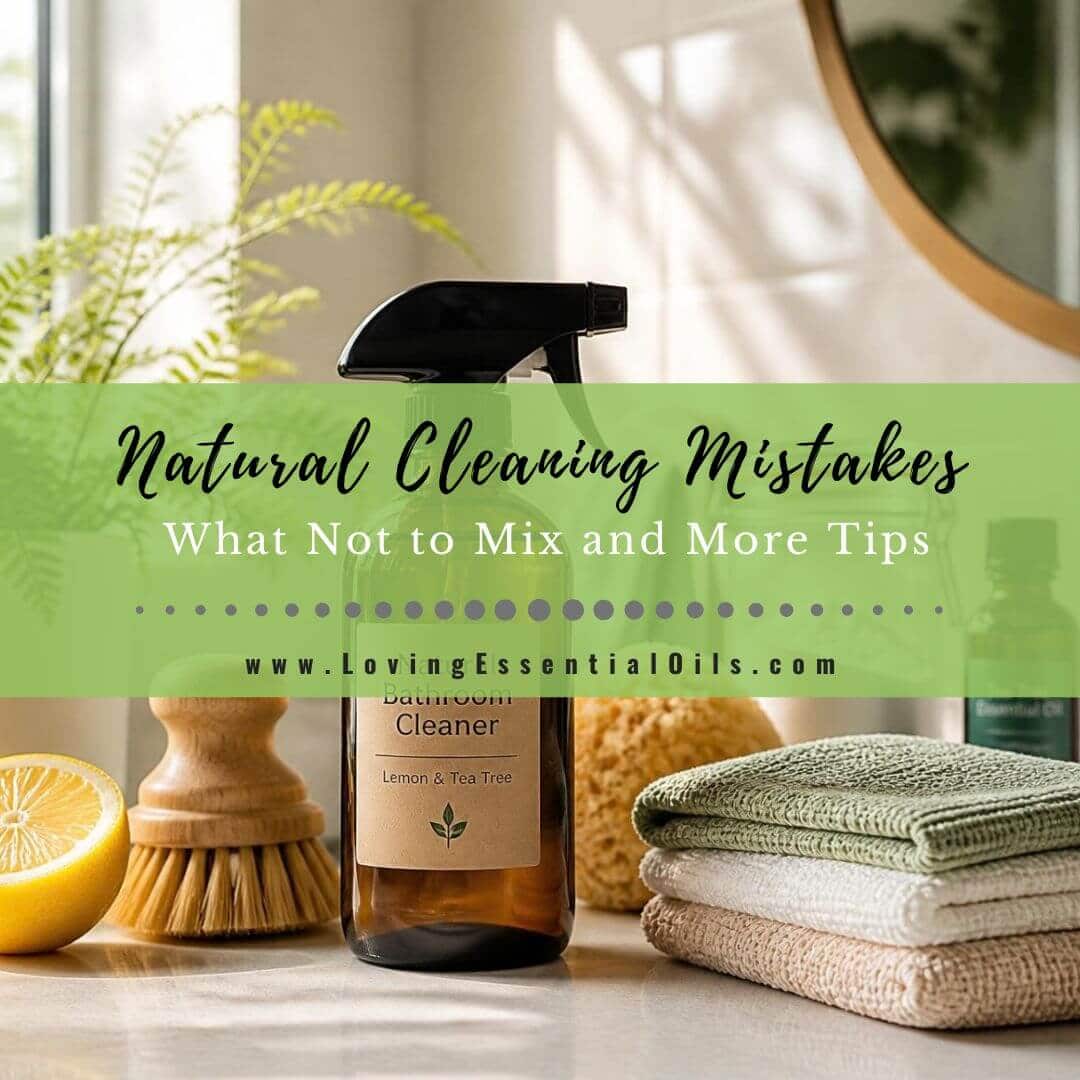
For more on what not to mix and which surfaces to skip, see my natural cleaning mistakes to avoid.
Best Essential Oils for Cleaning
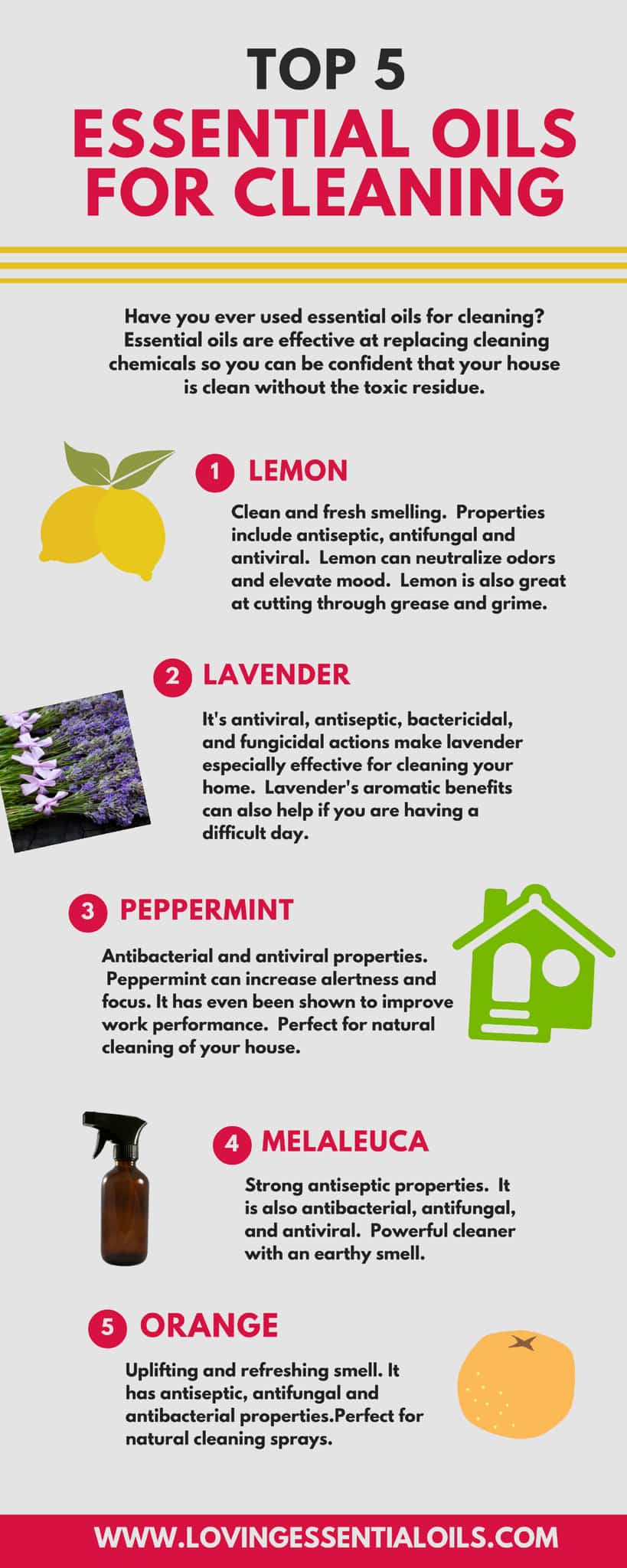
The basic ingredients, like vinegar, castile soap, baking soda, and a good microfiber cloth, do most of the cleaning work. Essential oils bring a fresh scent, and the citrus oils help loosen grease and sticky residue, since lemon and orange are mostly limonene. These recipes aren't disinfectants, so when you need to sanitize, like after raw meat or when someone in the house is sick, use an EPA-registered disinfectant and follow its label.
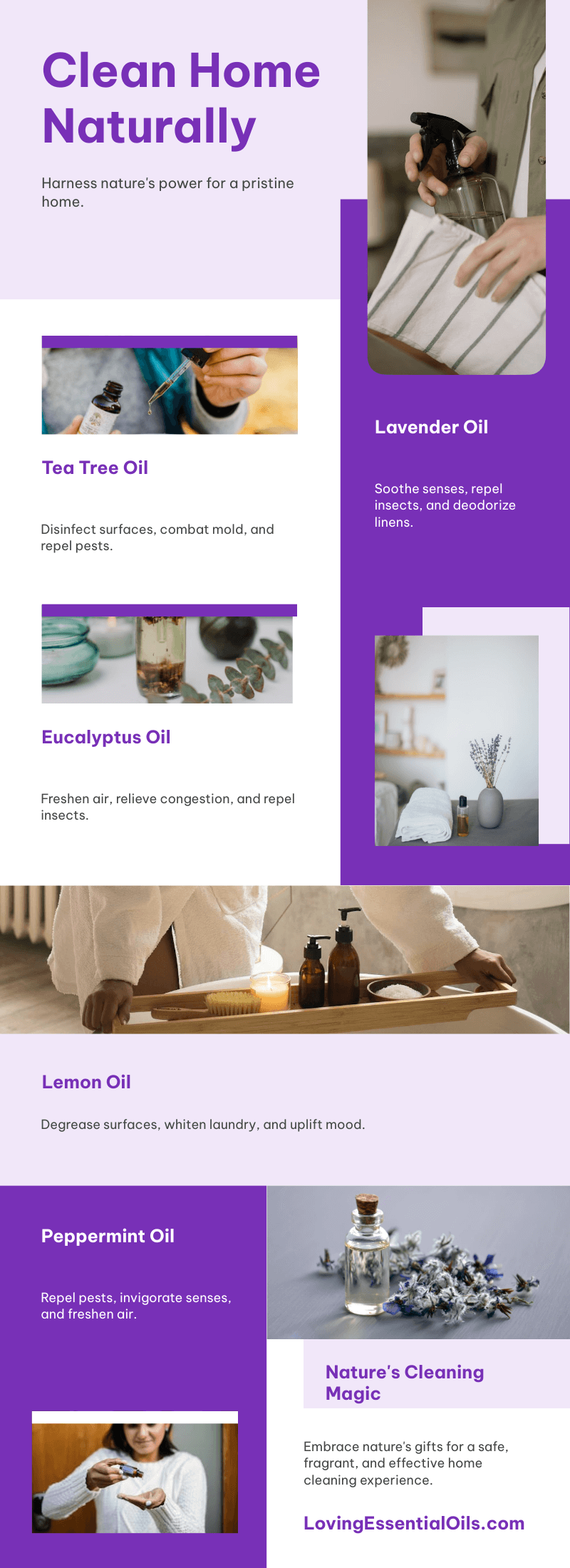
These are the five oils I use most for cleaning:
| Essential oil | Scent | Where I use it | Ages |
|---|---|---|---|
| Lemon (Citrus limon) | Bright, clean | Greasy stovetops, counters, faucets | 5+ |
| Sweet orange (Citrus sinensis) | Cheerful, sweet | Sticky residue, all-purpose sprays | 2+ |
| Tea tree (Melaleuca alternifolia) | Fresh, earthy | Bathrooms, toilets, laundry | 5+ |
| Lavender (Lavandula angustifolia) | Soft floral | Linens, mattresses, hand soap | 2+ |
| Peppermint (Mentha × piperita) | Cool, crisp mint | Trash cans, shower spray, closets | 6+ |
The ages are for the people breathing the scent while you clean. I also like lime and grapefruit for kitchens, white fir for floors, spearmint as a sweeter mint, and eucalyptus (10+) for a crisp bathroom scent.

20 DIY Essential Oil Cleaning Recipes
These essential oil cleaning recipes are for surfaces, not skin, except the hand soap. Shake sprays well before every use, since essential oils float on top of water and vinegar.
| Room | Recipes |
|---|---|
| Kitchen | 1, 3, 12, 14, 17, 18, 19, Trash Can Freshener |
| Bathroom | 2, 4, 13, 15, 20 |
| Floors, furniture, and glass | 6, 7, 8, 11 |
| Anywhere | 5, 10, Sticky Residue Remover |
| Laundry and bedroom | 9, 16 |
1. Lime Essential Oil Soft Scrub
Cleaning · For surfaces, not skin
A zesty paste for stovetops, sinks, and tubs.
- 1/2 cup baking soda
- 2 tablespoons castile soap
- 1 tablespoon water
- 10 drops lime (Citrus aurantifolia)
Directions: Mix in a bowl and use right away. Rinse well. Store leftovers in a glass jar and use within a week.
2. Peppermint Daily Shower Spray
Cleaning · For surfaces, not skin
A cool, minty mist for shower walls and doors, with no rinsing.
- 1/4 cup rubbing alcohol
- 3/4 cup water
- 10 drops peppermint (Mentha × piperita)
- 8 oz glass spray bottle
Directions: Add the peppermint to the alcohol and swirl, then add the water. After each shower, shake well and mist the walls and doors.
Note: Contains peppermint, so use it when kids under 6 aren't in the room.
3. Homemade All-Purpose Surface Cleaner
Cleaning · For surfaces, not skin
A soft floral and sweet citrus spray for everyday wipe-downs.
- 1 tablespoon rubbing alcohol
- 15 drops lavender (Lavandula angustifolia)
- 15 drops sweet orange (Citrus sinensis)
- 2 tablespoons white vinegar
- 3/4 cup distilled water
- 8 oz glass spray bottle
Directions: Swirl the essential oils into the alcohol in the bottle, then add the vinegar and water. Shake well, spray the surface, and wipe clean.
4. Tea Tree Toilet Cleaner
Cleaning · For surfaces, not skin
A fizzing powder and vinegar spray for the toilet bowl.
- 1 cup white vinegar in an 8 oz glass spray bottle
- 1 cup baking soda
- 1/4 cup salt
- 10 drops tea tree (Melaleuca alternifolia)
- A shaker container (a recycled spice jar works great)
Directions: Mix the baking soda, salt, and tea tree oil in the shaker. Spray vinegar into the toilet bowl, then sprinkle in the powder and let it fizz. Add more vinegar if needed. Let it sit 15 minutes, scrub with a toilet brush, and flush.
5. Tea Tree Cleaning Wipes
Cleaning · For surfaces, not skin
Homemade wipes for quick cleanups around the house.
- 1 roll sturdy paper towels (you'll use half per batch)
- 2 cups warm distilled water
- 15 drops tea tree (Melaleuca alternifolia)
- 1 tablespoon castile soap
- Container with an airtight lid, or a gallon zip-top bag
Directions: Cut the paper towel roll in half with a serrated knife and save the other half for your next batch. Stir the tea tree oil into the castile soap, then mix in the water. Place the half roll in the container and pour the mixture over it. Let it soak for 10 minutes, flip the container, and soak 10 more. Pull out the cardboard tube and pull wipes from the center. Keep covered, and use within a week.
6. Pine Floor Cleaner
Cleaning · For surfaces, not skin
A fresh, crisp evergreen scent for mopping day.
- 1 gallon warm water
- 2 tablespoons castile soap
- 15 drops white fir (Abies alba or A. concolor)
- 5 drops lemon (Citrus limon)
Directions: Mix the essential oils into the castile soap first, then add to the water in a mop bucket. Mop floors and let them air dry.
Note: If you have cats, follow with a plain water mop so oils don't end up on their paws.
7. Dusting Spray
Cleaning · For surfaces, not skin
A light mist for a microfiber cloth that picks up dust.
- 1 tablespoon rubbing alcohol
- 10 drops white fir (Abies alba or A. concolor) or lemon (Citrus limon)
- 1 teaspoon olive oil
- 3 tablespoons white vinegar
- 3/4 cup distilled water
- 8 oz glass spray bottle
Directions: Swirl the essential oil into the alcohol in the bottle, then add the olive oil and vinegar. Fill with water and shake. Shake well before each use, lightly mist a microfiber cloth, then dust.
Note: Skip natural stone, since this spray has vinegar.
8. Simple Furniture Polish
Cleaning · For surfaces, not skin
A bright lemon polish for wood furniture.
- 1/4 cup olive oil
- 5 drops lemon (Citrus limon)
- 2 oz glass pump bottle
Directions: Shake to mix. Pump a little onto a microfiber cloth and rub into wood surfaces. Polish every month or two, and dust with the spray above in between.
Note: Test on a hidden spot first.
9. Stain Remover Spray for Clothes
Cleaning · For fabric, not skin
A pre-wash spray for everyday stains.
- 2 tablespoons vegetable glycerin
- 2 tablespoons castile soap
- 3/4 cup distilled water
- 10 drops lemon (Citrus limon)
- 8 oz glass spray bottle
Directions: Stir the lemon into the castile soap, then add the glycerin and water to the bottle and shake. Spray the stain, rub it in gently, let it sit 10 to 15 minutes, and wash as usual. Test on a hidden seam first. More tips are in my DIY stain remover for clothes.
10. Mint Citrus Surface Spray
Cleaning · For surfaces, not skin
A cool mint and sweet orange spray for counters, doorknobs, and handles.
- 1 tablespoon rubbing alcohol
- 10 drops peppermint (Mentha × piperita)
- 10 drops sweet orange (Citrus sinensis)
- 10 drops eucalyptus (Eucalyptus radiata or E. globulus)
- 3 tablespoons white vinegar
- Water to fill (about 3/4 cup)
- 8 oz glass spray bottle
Directions: Swirl the essential oils into the alcohol in the bottle, add the vinegar, and fill with water. Shake well, spray, and wipe clean.
Note: Contains eucalyptus and peppermint, so spray when kids under 10 are out of the room, and let it dry.
11. Window Spray Cleaner
Cleaning · For surfaces, not skin
A bright citrus spray for windows and mirrors.
- 1 tablespoon rubbing alcohol (it also helps prevent streaks)
- 10 drops lemon (Citrus limon), sweet orange (Citrus sinensis), or lime (Citrus aurantifolia)
- 3 tablespoons white vinegar
- 3/4 cup water
- 8 oz glass spray bottle
Directions: Swirl the essential oil into the alcohol in the bottle, add the vinegar, and fill with water. Shake well and use with a microfiber cloth for best results.
12. Refrigerator and Microwave Cleaner
Cleaning · For surfaces, not skin
A simple lemon and vinegar spray for inside the fridge and microwave.
- 1 tablespoon rubbing alcohol
- 5 drops lemon (Citrus limon)
- 1/4 cup white vinegar
- 3/4 cup hot water
- 8 oz glass spray bottle
Directions: Swirl the lemon into the alcohol in the bottle, then add the vinegar and water. Shake well, spray inside the fridge or microwave, then scrub and wipe with a damp cloth. For a stuck-on microwave, heat a cup of water with 3 drops of lemon essential oil in a microwave-safe container for about 4 minutes until steamy. Let it sit 5 minutes, carefully remove the hot cup, and wipe the inside clean.
13. Shower Mildew Stain Spray
Cleaning · For surfaces, not skin
A vinegar and borax spray for grout, caulk, and shower corners.
- 1 tablespoon rubbing alcohol
- 5 drops tea tree (Melaleuca alternifolia)
- 5 drops lavender (Lavandula angustifolia)
- 5 drops sweet orange (Citrus sinensis)
- 5 drops eucalyptus (Eucalyptus radiata or E. globulus)
- 2/3 cup white vinegar
- 1/4 cup distilled water
- 1 teaspoon borax
- 8 oz glass spray bottle
Directions: Swirl the essential oils into the alcohol in the bottle, then add the vinegar, water, and borax. Shake well and spray. Let it sit 15 minutes, then wipe with a damp microfiber cloth. Run the fan to keep things dry. For large or recurring mold, fix the moisture source and call a professional.
Note: Contains eucalyptus, so spray when kids under 10 are out of the room, and let it dry.
14. Homemade Citrus Dish Soap
Cleaning · For dishes, not skin
A cheerful citrus soap for the sink.
- 3/4 cup liquid castile soap
- 2 teaspoons vegetable glycerin
- 1 1/2 teaspoons baking soda
- 10 drops lemon (Citrus limon)
- 5 drops sweet orange (Citrus sinensis)
- 5 drops tea tree (Melaleuca alternifolia)
- 8 oz glass pump bottle
Directions: Gently whisk everything in a bowl, then funnel into the bottle. Add a few squirts to dish water, or a little to a washcloth to hand wash dishes. Rinse dishes well.
Note: Wear gloves if your hands are sensitive.
15. Shower Head Cleaner
Cleaning · For surfaces, not skin
A vinegar soak for mineral buildup on the shower head.
- White vinegar
- 5 drops lemon (Citrus limon)
- Gallon zip-top bag and a rubber band
Directions: Put the shower head in the bag with enough vinegar to cover it and add the lemon oil. Soak a few hours. If you can't remove the shower head, fill the bag, slip it over the head, and hold it in place with a rubber band. Run the water for a minute before showering.
Note: Skip this on brass, gold-tone, or specialty finishes.
16. Mattress Refresh Spray
Cleaning · For surfaces, not skin
A light, fresh mist for a bare mattress on sheet-changing day.
- 1/4 cup high-proof grain alcohol (like 190-proof)
- 3/4 cup distilled water
- 8 drops lavender (Lavandula angustifolia)
- 4 drops peppermint (Mentha × piperita)
- 4 drops tea tree (Melaleuca alternifolia)
- 4 drops eucalyptus (Eucalyptus radiata or E. globulus)
- 8 oz glass spray bottle
Directions: Add the essential oils to the alcohol and swirl, then add the water. Shake well, lightly mist a bare mattress, and let it dry completely before making the bed.
Note: Contains eucalyptus and peppermint, so use it on beds for ages 10 and up. Make a fresh batch every week or two. This freshens a mattress, but it won't get rid of bed bugs. If you suspect them, call a pest professional.
17. Garbage Disposal Cleaning Bombs
Cleaning · For surfaces, not skin
Fizzy orange and mint pods for a fresher-smelling sink.
- 2 cups baking soda
- 1 cup salt
- 1/4 cup liquid castile soap
- 15 drops sweet orange (Citrus sinensis)
- 15 drops peppermint (Mentha × piperita)
- About 1/2 cup water
Directions: Mix the baking soda and salt, then blend in the castile soap and essential oils. Slowly add water while stirring until the mix feels like damp sand and holds together when pressed. Too wet? Add baking soda. Too dry? Add a little water. Pack into a tablespoon or roll into balls, set on wax paper, and let dry about 24 hours. Store in a glass jar. To use, drop one in the disposal, run the water, and turn on the disposal. See my garbage disposal cleaner pods for more.
Note: Contains peppermint, so use it when kids under 6 aren't in the kitchen.
18. Grime and Grease Remover
Cleaning · For surfaces, not skin
A fizzing lemon cleaner for under appliances and on top of kitchen cabinets.
- 1 cup white vinegar in an 8 oz glass spray bottle
- 1/4 cup baking soda
- 4 drops lemon (Citrus limon)
- Paper towels
Directions: Mix the baking soda and lemon oil in a shaker. Spray the greasy area with vinegar, sprinkle on the baking soda, then spray again and let it fizz. Let sit 15 minutes, then wipe with paper towels and toss them.
19. Natural Stovetop Cleaner
Cleaning · For surfaces, not skin
A scrubbing paste for a cool stovetop and burners.
- 1/4 cup baking soda
- 1/4 cup salt
- 1 tablespoon white vinegar
- 2 tablespoons water
- 5 drops lime (Citrus aurantifolia)
Directions: Stir into a paste and spread over a cool stovetop and burners. Leave on for 15 minutes or longer for tough spots, scrub with a sponge, and wipe clean.
Note: Skip the salt on glass cooktops, which can scratch.
20. Lavender Foaming Hand Soap
Hand soap · Ages 2+ · 20 drops in a 10 oz foaming bottle
A soft lavender foam for the bathroom or kitchen sink.
- 2 tablespoons castile soap
- 2 teaspoons vegetable glycerin
- 20 drops lavender (Lavandula angustifolia)
- 1 cup distilled water
- 10 oz foaming soap pump
Directions: Add the water to the bottle first, then the castile soap, glycerin, and essential oil. Screw on the pump and tip gently to mix. Try my rosemary lemon foaming hand soap too.
Note: Make a fresh batch every few weeks.
2 Bonus Cleaning Recipes
Orange Sticky Residue Remover
Cleaning · For surfaces, not skin
My go-to for sticker residue, price tags, and crayon marks.
- 1 tablespoon olive oil or another carrier oil
- 5 drops sweet orange (Citrus sinensis)
Directions: Mix in a small dish. Rub a little onto the sticky spot with a cloth, let it sit a few minutes, then wipe it away. Wash the area with warm, soapy water to remove the oily film.
Note: Test on a hidden spot first, especially on plastic and painted surfaces.
Peppermint Trash Can Freshener
Cleaning · For surfaces, not skin
A crisp mint scent at the bottom of the kitchen trash can.
- 2 tablespoons baking soda
- 1 cotton ball
- 3 drops peppermint (Mentha × piperita)
Directions: Sprinkle the baking soda in the bottom of a clean trash can. Add the peppermint to the cotton ball and drop it in before adding a new bag. Replace every week or two.
Note: Keep the can covered if you have pets or little ones, and toss the old cotton ball so little hands don't find it.
Safety Basics
• Under 2: no essential oils, not even diffusing in a room they're in.
• Never put oils on skin undiluted, and never swallow them. If someone swallows one, call Poison Control at 1-800-222-1222.
• Patch test new blends on your inner forearm, covered, for 24 to 48 hours.
• Kids: follow the age on each recipe; some oils aren't safe for children at any dilution. See my kid safe essential oils list, and check with your pediatrician first.
• Pregnancy and breastfeeding: check with your doctor or midwife. For the first 16 weeks I use only six oils, only in a diffuser or inhaler: lavender, sweet orange, lemon, ginger, cedarwood (Virginian), and frankincense. After that, see my pregnancy list.
• Sun: cold-pressed lemon, lime, and bergamot can cause a sun reaction on skin. See my sun-sensitive oils guide.
• Medications and health conditions: if you take medication (including blood thinners), have a bleeding disorder, or are under a doctor's care, ask your doctor first.
• Peppermint: skip it with heart rhythm problems (like atrial fibrillation) or G6PD deficiency, and choose spearmint instead.
• Pets: never put oils on pets, and diffuse with a door open so they can leave. Cats are especially sensitive; see my pet safety guide.
• Diffuse for 30 to 60 minutes, then take a break.
• Not sure how much to use? My dilution chart and calculator lists the amount for each age.
Share on Pinterest

More Essential Oil Cleaning Posts
Cleaning Basics
- Natural Cleaning Mistakes to Avoid
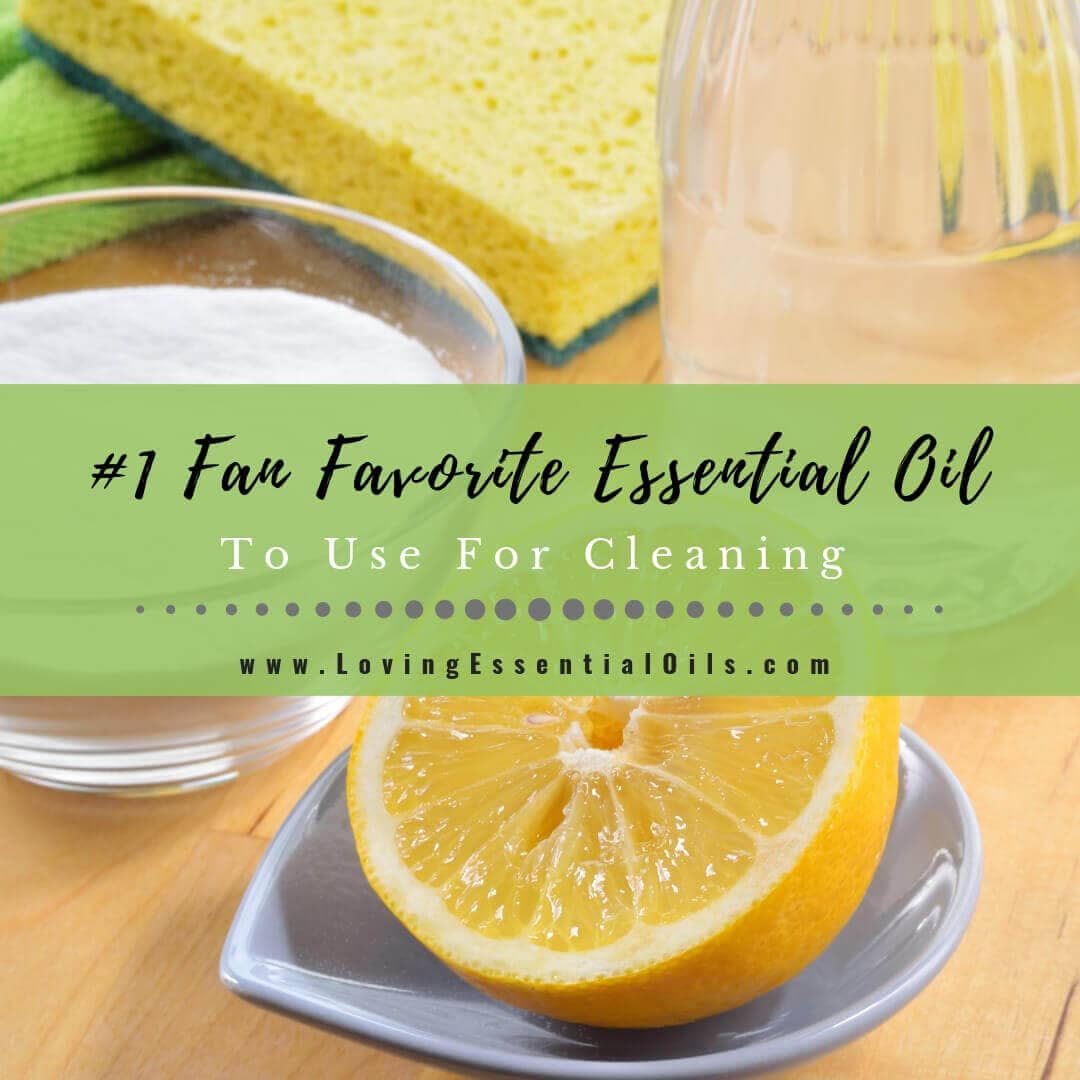
- Lemon Essential Oil for Cleaning
- Essential Oils and Castile Soap
- Benefits of Castile Soap
- Kumquat Essential Oil
Kitchen and Bathroom
Laundry, Soap, and Around the House
- DIY Stain Remover for Clothes
- DIY Foaming Hand Soap
- Makeup Brush Cleaner
- How to Clean and Reuse Empty Essential Oil Bottles
Fresh-Smelling Home
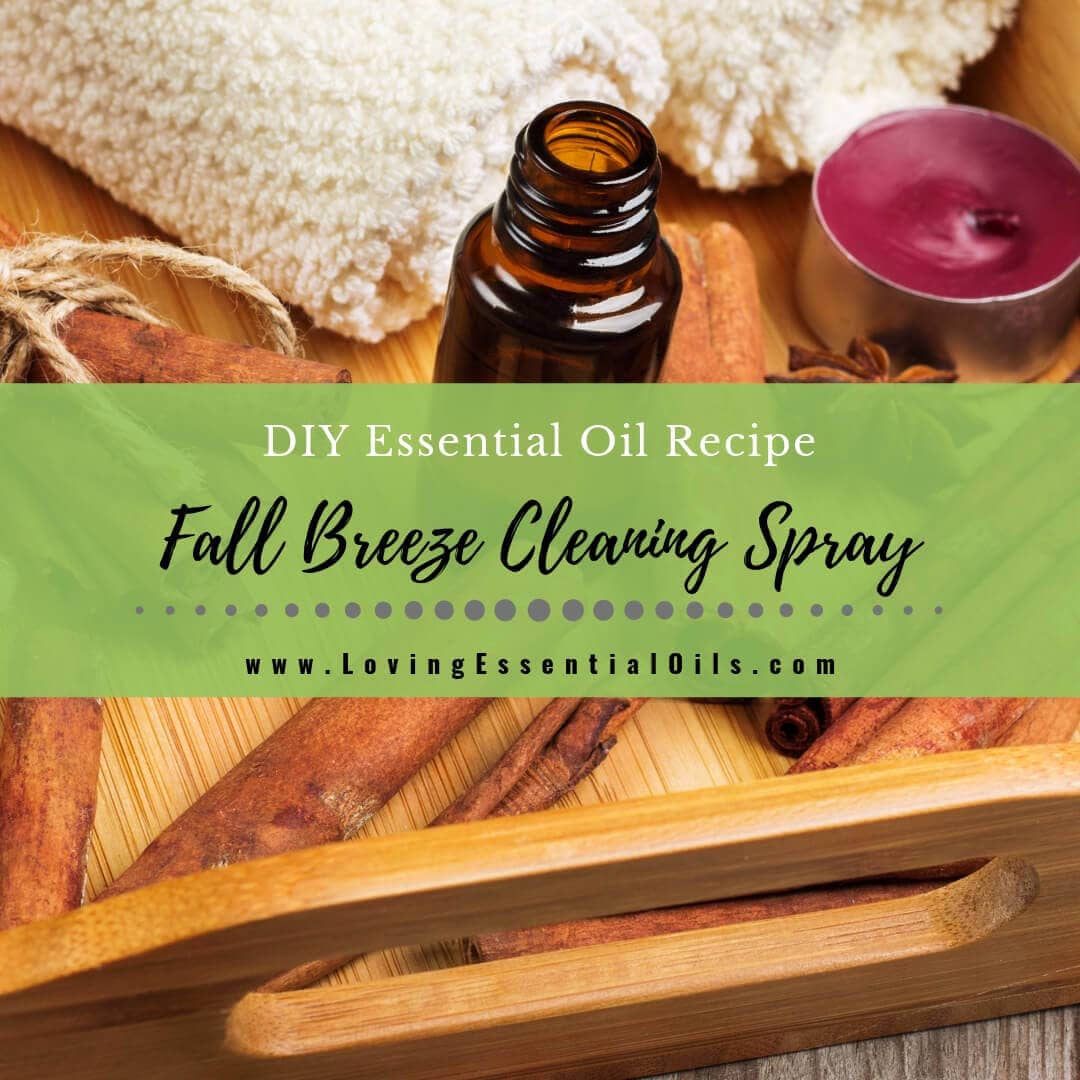
- Fall Essential Oil Cleaning Spray
- Homemade Essential Oil Sprays
- Baking Soda Air Freshener
- Peppermint Air Freshener
- Spring Diffuser Blends
Ready to make your own cleaners? My Aromatherapy Bottle Kits have the spray bottles and supplies you need, and my free essential oil guides have even more recipes.
Essential Oil Cleaning Guide with Printable Labels
$ 7.99
Looking for a safe and easy way to clean your home? Learn how to naturally clean your home with essential oils! You can get rid of all the toxic chemical cleaning products and enjoy natural cleaning with this DIY Guide.… Read More

FAQs
What are the best essential oils for cleaning?
Lemon, sweet orange, tea tree, lavender, and peppermint are the five I use most. Lemon and orange are mostly limonene, which helps loosen grease and sticky residue, tea tree has a fresh scent I like in bathrooms, lavender is soft for linens and hand soap, and peppermint is crisp for trash cans and the shower. My readers voted lemon their favorite by a landslide.
How long do homemade essential oil cleaners last?
Can I mix vinegar and castile soap in a cleaner?
Are essential oil cleaners safe for granite countertops?
Are homemade essential oil cleaners safe around pets?
Do essential oil cleaners disinfect?
How many drops of essential oil do I add to a cleaning spray?
Most of my sprays use 10 to 30 drops in an 8 oz glass bottle. Swirl the oils into a tablespoon of rubbing alcohol first so they spread through the water, and shake before every spray, since oils float on top of water and vinegar.